
Stephen King has published more than 60 novels and 200 short stories, and he has spent decades explaining exactly how he does it. His advice, collected most famously in On Writing: A Memoir of the Craft, cuts through the noise with plain, honest guidance any novelist can put to work today. At ClearARC, we cover the craft resources and habits that help writers finish books the old-fashioned way, word by word, chapter by chapter, without shortcuts. Here are the King tips that hold up.
How We Ranked These Tips

King has given writing advice in dozens of forums: On Writing, his 1986 Writer magazine essay, interviews, and guest posts. We prioritized the ideas he repeats across all of them, and the ones that translate directly into what a novelist does at the desk tomorrow morning.
- Direct applicability to novelists at any stage, from first chapter to final draft.
- Repetition across sources, not one-off remarks.
- Craft and habit together, because finishing a book requires both.
- Concrete practices over vague motivational maxims.
- Full coverage of drafting, revision, reading, voice, and daily routine.
The tips below are ordered by how much traction they give a working novelist, not by how quotable they are. If you want a companion framework for the actual shape of your book, our beginner’s guide to story writing structure pairs well with almost everything King recommends.
Quick Summary: Stephen King’s Best Writing Tips
- Read a lot and write a lot, King reads up to 80 books a year and writes 2,000 words a day. Best Overall.
- Set a daily word count and a project deadline, 2,000 words, first draft in three months. Best for Momentum.
- Use failure as fuel, the rejection nail, later replaced by a spike. Best for Resilience.
- Write with the door closed, rewrite with the door open, protect the first draft. Best for First Drafts.
- Write in your own voice, not the voice you think you should have. Best for Authenticity.
- Treat the story as a fossil to be uncovered, not engineered. Best for Pantsers.
- Ask “what if” questions to find ideas. Best for Idea Generation.
- Keep vocabulary simple and honest. Best for Clarity.
- Remove everything that is not the story during revision. Best for Revision.
- Build a distraction-free writing environment. Best for Daily Output.
- Finish the draft before seeking feedback. Best for Protecting Your Work.
- Set every day as a writing day, including holidays. Best for Consistency.
- Introduce the character first, let the details follow. Best for Character Writing.
Tips 1–4: The Foundations of the Writing Life
1. Read a Lot and Write a Lot (Best Overall)
King’s most quoted line from *On Writing* is blunt: “If you want to be a writer, you must do two things above all others: read a lot and write a lot.” He reads up to 80 books a year and credits that habit with teaching him dialogue, pacing, and, just as usefully, what not to do. Treat reading as part of the job, not a reward for finishing it.
2. Set a Daily Word Count and a Project Deadline (Best for Building Momentum)
King aims for 2,000 words a day, roughly ten pages, and targets a completed first draft in about three months. The deadline matters as much as the word count; a draft that stretches past a season starts to feel foreign to the writer who began it. If you need help holding a schedule against a novel-length project, our guide on how to plot a novel step by step breaks the work into manageable weekly milestones.
3. Use Failure as Fuel (Best for Resilience)
Before Carrie sold, King had written three unpublished novels and driven a nail into his bedroom wall to hold rejection slips. Eventually the nail could not carry the weight, and he replaced it with a spike. The story is not decoration. It is the working philosophy: keep going long enough that the pile becomes evidence of work, not evidence of failure.
4. Write with the Door Closed, Rewrite with the Door Open (Best for First Drafts)
The first draft is for you. The revision is for readers. King writes the initial version with no outside voices in the room, then opens the manuscript to trusted early readers only once a full draft exists. Showing pages too soon invites feedback the story is not yet strong enough to defend.
Takeaway: habit beats inspiration. Read daily, write daily, protect the draft, and treat rejection as tuition.
Tips 5–8: Voice, Story Discovery, and Vocabulary

5. Write in Your Own Voice (Best for Authenticity)
King warns against reaching for long words to sound literary. “It’s like dressing up a household pet in evening clothes,” he writes. “The pet is embarrassed, and the person who committed this act of premeditated cuteness should be even more embarrassed.” Your natural speaking rhythm is usually closer to your best prose than any borrowed style.
6. Treat Your Story Like a Fossil to Uncover (Best for Pantsers)
King describes stories as relics from a pre-existing world; the writer’s job is to dig one up as intact as possible. If you write without a full outline, this framing keeps you honest. Our piece on writing by the seat of your pants develops the same idea for novelists who resist rigid planning, and the pantser’s obstacle guide covers where the fossil metaphor runs out of runway.
7. Ask “What If” Questions to Find Your Ideas (Best for Idea Generation)
Many of King’s novels started as one-line questions. “What if vampires invaded a small New England village?” became ‘Salem’s Lot. “What if a mother and son were trapped in a stalled car by a rabid dog?” became Cujo. The trick is not manufacturing the question but recognizing the ones your mind is already asking on the walk home.
8. Keep Your Vocabulary Simple and Honest (Best for Clarity)
Elaborate vocabulary breaks a reader’s trust in the narrator and slows the scene down. Use the plain word first. Save the rarer word for the moment only it will do. Clarity is not the enemy of style; it is the delivery system for it.
Takeaway: voice is discovered by writing, not chosen in advance. Let the story lead, and keep the language honest.
Tips 9–12: Revision, Discipline, and Your Writing Space
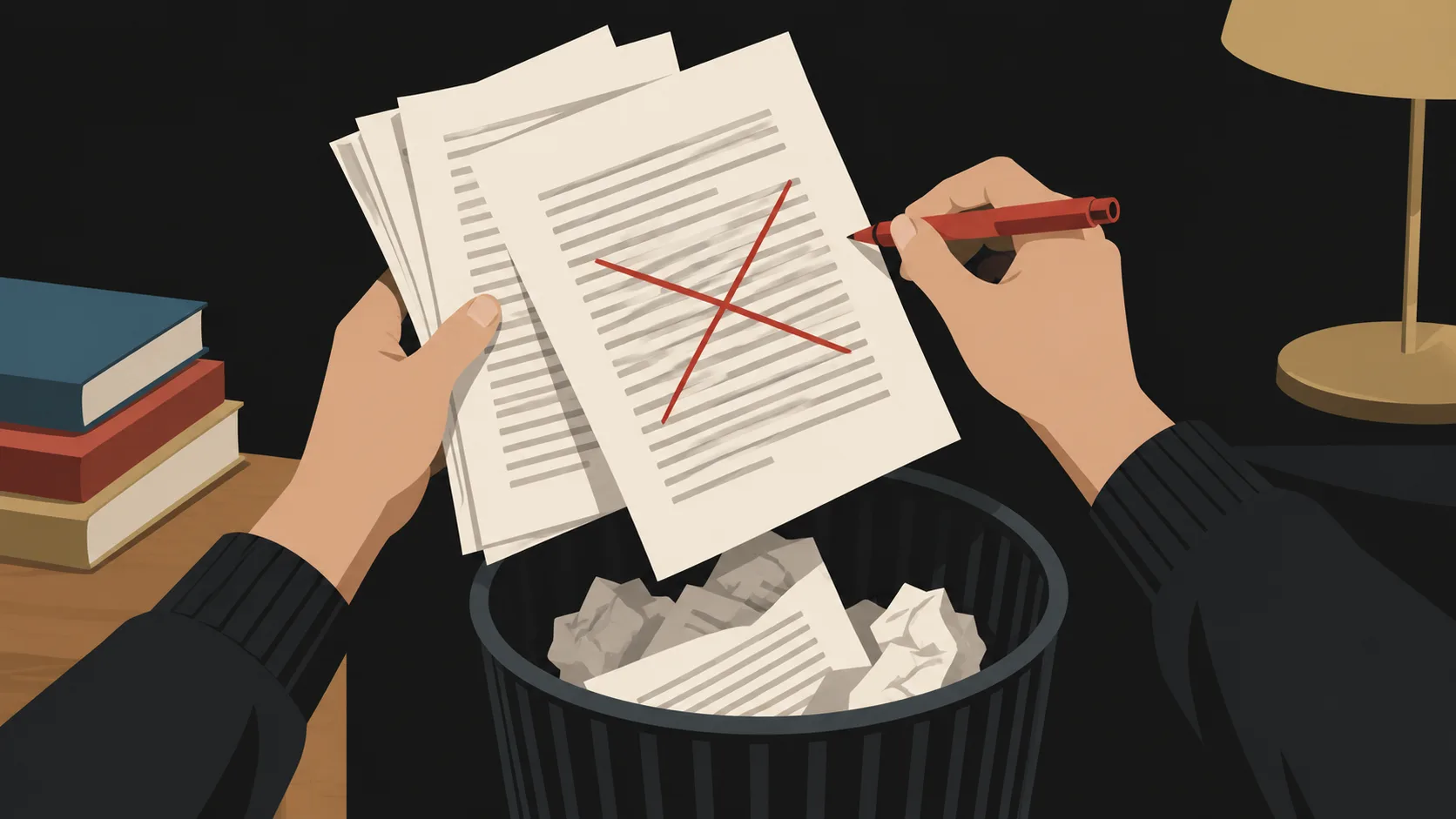
9. Remove Everything That Is Not the Story (Best for Revision)
King credits his early editor John Gould with the core revision rule: “When you write a story, you’re telling yourself the story. When you rewrite, your main job is taking out all the things that are not the story.” Cut the scene you love if it does not push the main narrative forward. That is the discipline.
10. Create a Distraction-Free Writing Environment (Best for Daily Output)
King’s desk faces a corner, not a window. Metal plays. The phone is off. He removes distractions before the first word goes down, and the room’s job is to make writing the easiest thing to do in it. If you cannot dedicate a room, dedicate a chair, a time, and a rule about the phone.
11. Finish the Draft Before Seeking Feedback (Best for Protecting Your Work)
Half-finished drafts are fragile. Outside opinions, however well meant, can stall a story before its shape is clear enough to defend. Finish the draft. Then invite the readers. Our note on finishing the novel that’s been living in your head makes the same case in different words.
12. Set Every Day as a Writing Day (Best for Long-Term Consistency)
King writes every day, holidays included. His reasoning, quoted in Hunting the Muse‘s breakdown of his routine, is that skipped days let characters “stale off” and start feeling like constructs rather than people. Continuity of attention protects the characters as much as it protects the calendar.
Takeaway: revision is subtraction, environment is a decision, and daily contact keeps the cast alive.
Tips 13 and Beyond: Character First, and Never Stop Reading

13. Introduce the Character First, Let Details Follow (Best for Character Writing)
Name the character. Let the reader meet them as a person. Backstory, physical description, and biography accumulate naturally over chapters. Front-loading exposition signals that you do not trust the reader to be patient, and patience is the reader’s default setting when the character is alive on the page. A chapter planning template can help you sequence when to reveal what.
Bonus: Never Stop Learning from Other Writers
King’s output is partly explained by refusing to separate reading from writing. Read outside your genre. Read writers whose sentences you envy and writers whose choices you disagree with. Both teach you scene structure, pacing, and dialogue. Even outline-driven novelists benefit from leaving room for discovery; the seven basic plots framework is a good reminder that the shapes are old and the surprise lives inside them.
At a Glance: Which Tip Solves Which Problem
| Problem you’re stuck on | King tip to apply first | Why it helps |
|---|---|---|
| No consistent output | Daily word count and deadline | Turns a vague project into a scheduled one |
| Draft keeps stalling | Write with the door closed | Removes premature feedback |
| Prose feels borrowed | Write in your own voice | Realigns rhythm to how you actually think |
| Manuscript feels bloated | Remove what is not the story | Cuts feature creep from the plot |
| Characters feel flat | Write every day | Keeps the cast psychologically present |
| Fear of rejection | Use failure as fuel | Reframes the pile as evidence of work |
How to Choose Which Tips to Apply First
If you are still drafting your first novel, start with the daily word count and the closed-door rule. Nothing else matters until a full draft exists. If you are stuck in revision, apply the “remove what is not the story” test to every scene and run the plain-vocabulary check on your first chapter. If confidence is the problem, King’s spike is the tip that matters: the point is to accumulate work, not verdicts.
Writers whose prose feels borrowed should focus on voice and the fossil metaphor. Writers whose plots feel mechanical often benefit from a lighter planning framework; our story structure template guide is a good compromise between total pantsing and rigid outlining. Two or three of these tips, applied honestly across a three-month drafting window, are enough to finish a novel.
FAQ: Frequently Asked Questions
What is Stephen King’s number one writing tip?
Read a lot and write a lot. King repeats this across On Writing and most interviews. Everything else, from voice to revision to daily output, depends on that base habit being in place first.
How many words does Stephen King write per day?
King targets 2,000 words per day, roughly ten manuscript pages, and writes every day including holidays. He treats the number as a hard minimum rather than a stretch goal, and he stops when he hits it.
Does Stephen King recommend outlining or writing without a plan?
King leans against rigid outlines. He describes stories as fossils to be uncovered rather than blueprints to be engineered, though he accepts that some writers need structure. Leaving room for discovery is his consistent recommendation.
What does “write with the door closed” mean?
It means drafting for yourself alone, without showing pages to readers or inviting feedback, until a complete first draft exists. Revising with the door open then means opening the manuscript to trusted early readers.
How did Stephen King handle rejection early in his career?
He kept every rejection slip on a nail in his bedroom wall. The nail eventually could not hold the weight, so he replaced it with a spike and continued writing. Three unpublished novels preceded Carrie.
What does Stephen King say about vocabulary and word choice?
He argues against reaching for long words to sound literary, comparing it to dressing up a household pet in evening clothes. Use the plain word first, and save the rarer word for the moment only it will do.
How long does Stephen King say a first draft should take?
King recommends finishing a first draft in about three months, even for long books. His reasoning is that a draft dragged out longer starts to feel unfamiliar to the writer, losing narrative momentum and character freshness.
What is the best Stephen King book on writing craft?
On Writing: A Memoir of the Craft, published in 2000. It combines autobiography with practical advice on habit, revision, vocabulary, and voice, and it is the source of most of the tips in this article.
The Takeaway
King’s advice endures because it is small enough to act on tomorrow morning: a word count, a closed door, a plain sentence, a rejection filed on the wall. Pick two or three of these tips, hold them for a three-month draft, and finish the book. For more craft guides and planning frameworks written for novelists working without shortcuts, browse the novel writing collection at ClearARC.