Category: writing

Anything that doesn’t fit anywhere else goes here.

  • How To Use A Three-Act Structure Template For Your Novel

    How To Use A Three-Act Structure Template For Your Novel

    Plotting a novel is easier when you have a proven framework to follow. A three-act structure template gives you a clear map of your story’s beginning, middle, and end, along with the key beats that keep readers turning pages. Whether you are writing your first draft or restructuring an existing manuscript, ClearARC offers tools designed to help novelists apply this classic framework with confidence, pen in hand and coffee within reach.

    Outcome: a filled-in three-act template for a novel-length project. Time: 2 to 4 hours across one or two sittings. Skill level: beginner.

    What You Will Need Before You Start
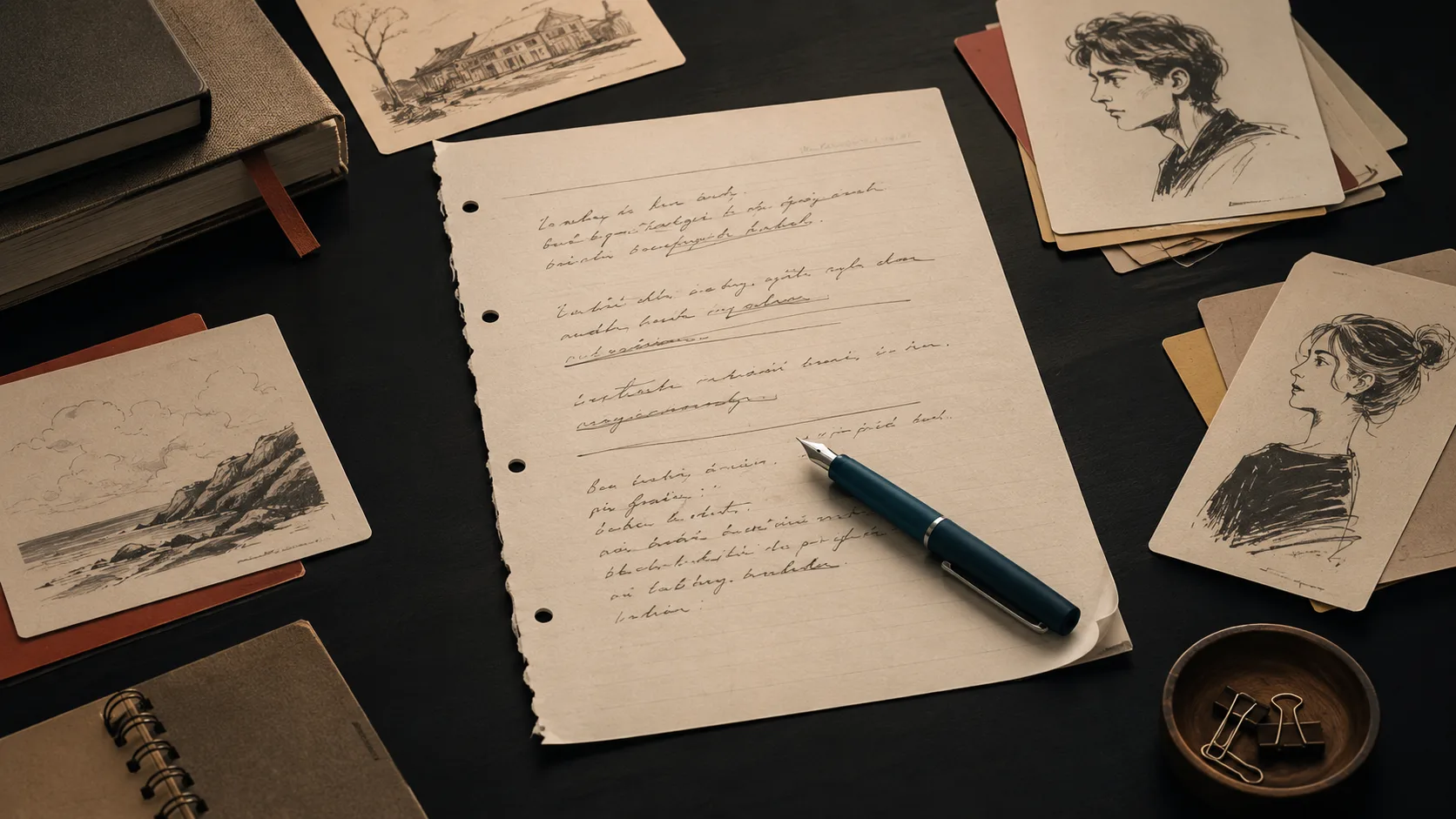
    A writer's workspace with scattered story premise notes and character sketches on paper, showing pre-planning materials.

    Before you open the template, gather the raw material. A template only works if you have a story premise to pour into it.

    Tools and materials

    • A working story premise: a protagonist, a central want or goal, and at least one major obstacle standing between them and it.
    • A three-act structure template, digital or printable, that labels Act 1 as roughly 25% of the story, Act 2 as 50%, and Act 3 as the final 25%.
    • Familiarity with the nine core beats that sit inside those acts: inciting incident, first plot point, first pinch, midpoint reversal, second pinch, second plot point, climax, and resolution.
    • A blank page or notes file for the ending you have in mind, even if it is only a rough sketch.

    If any of that feels shaky, spend an hour on premise work first. A companion piece on how to plan a novel in depth walks through the pre-template thinking that saves days of frustration later.

    Time and skill level

    Expect 2 to 4 hours to complete a full template for a novel-length project, split across one or two sittings so your subconscious can chew on it between sessions. The work is beginner-friendly; you do not need prior craft training, only a story you care about and enough patience to sit with hard questions. If you tend to write by instinct, the framing in writing by the seat of your pants will help you approach the template as a scaffold rather than a cage.

    Takeaway: show up with a premise, a printed template, and a rough sense of your ending. Everything else follows.

    Before You Start Filling In the Template
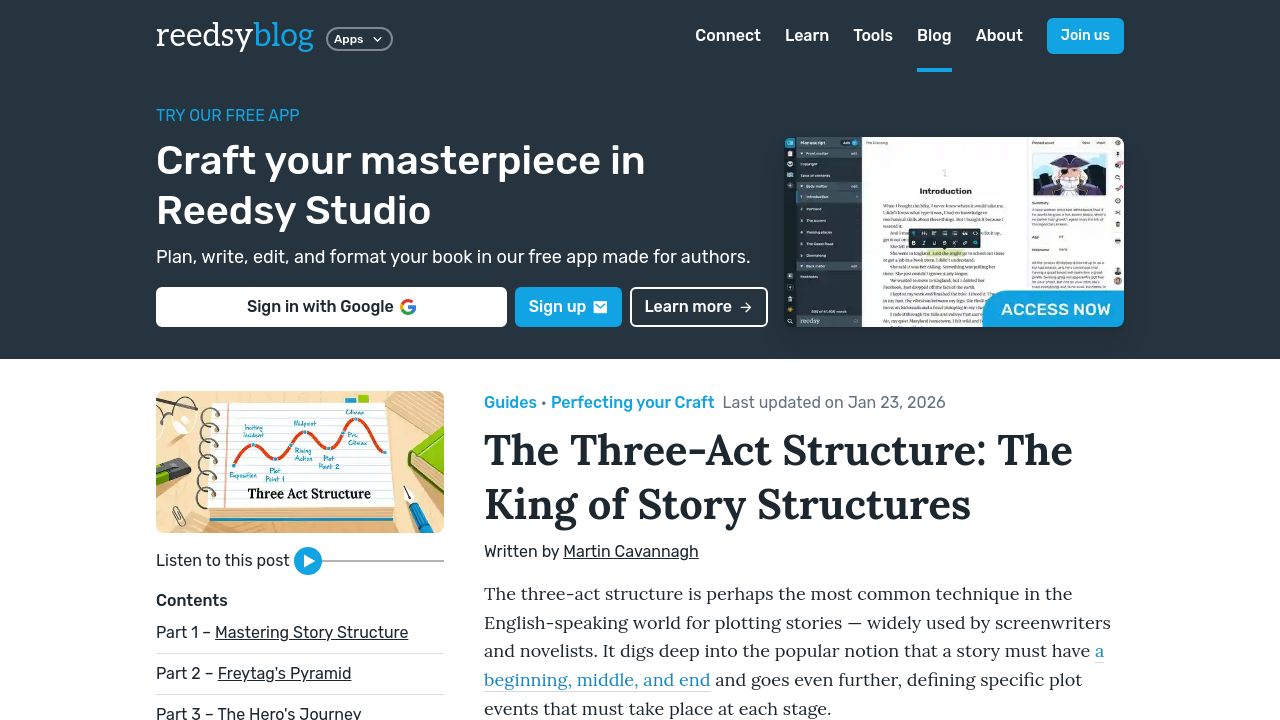
    Reedsy guide to three-act structure displayed on a laptop screen

    Two decisions save enormous rewrite time later: knowing your protagonist’s core drive, and knowing where the book lands.

    Identify your protagonist’s core want and wound

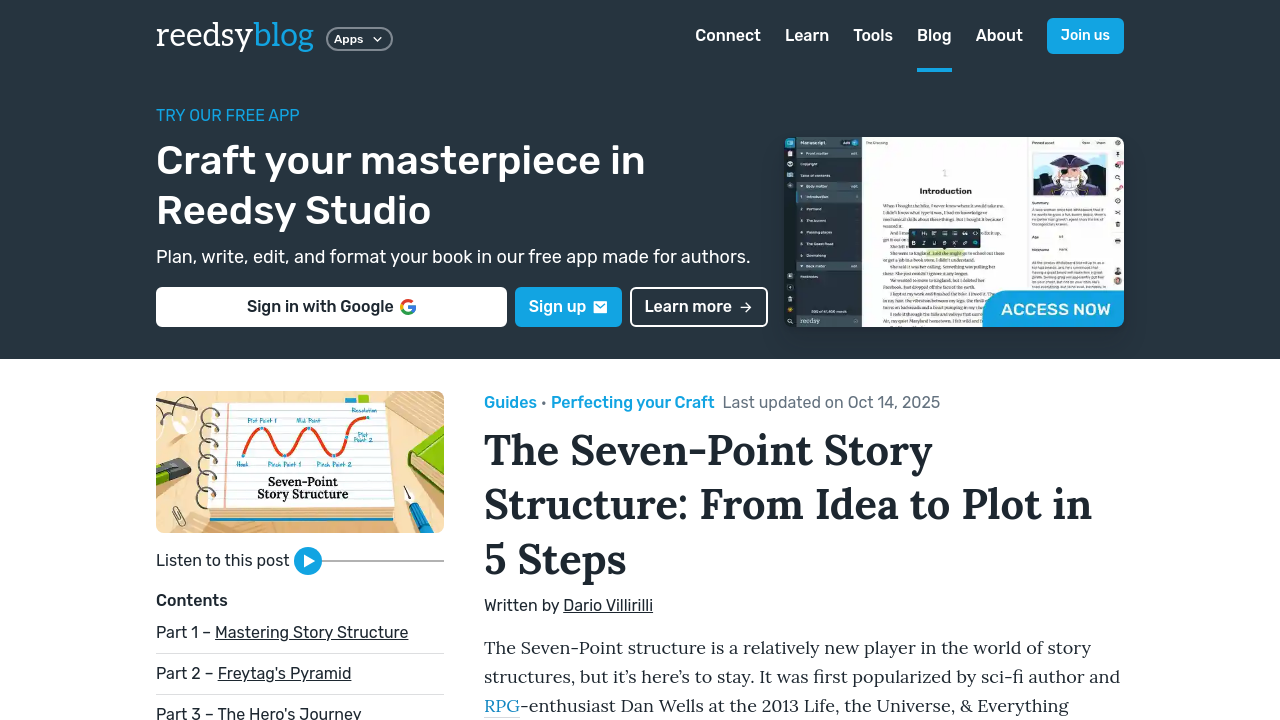
    Ask yourself three questions. Whose story is this? What does that character want? What keeps them from getting it? Editors at Reedsy point to exactly this trio as the foundation of a workable premise, according to Reedsy’s guide to three-act structure. A protagonist without a clear want produces a plot without a clear shape, which is the most common reason middle acts collapse. Pair the want with a wound, the old hurt or false belief the character carries into the story. That inner ache is what turns plot into character arc, an idea developed further in character arc basics.

    Clarify your ending before plotting Act 1

    Editors consistently advise writers to know how the book ends before filling in a template, so every act moves toward a defined outcome rather than drifting. You do not need the final scene word-for-word, only a fixed target: who changes, what they choose, and what the world looks like after. The three-act structure is built on cause-and-effect, an idea Aristotle first documented in Poetics; each beat must result from the previous beat and cause the next. Working backward from the ending is how you enforce that logic. The essay on the gap between want and need is a useful primer for defining the internal ending, not just the external one.

    Nothing needs to be backed up before starting a template, but do save any prior outlines or notes in a separate file before overwriting them. Old drafts often contain the seed of the beat you are currently missing.

    Takeaway: name your protagonist’s want, name their wound, and sketch the ending. Then, and only then, open the template.

    Step-by-Step: Filling In Your Three-Act Structure Template

    A writer's hands filling in sections of a three-act structure template worksheet with a pen, working through story beats.

    Work through the acts in order. Resist the temptation to jump to your favorite scene; the template earns its keep by forcing you to answer the awkward questions first.

    Step 1: Map Act 1 (Setup)

    Act 1 covers roughly the first 25% of the story. Introduce the protagonist and their ordinary world in the first few scenes, showing the routines and relationships that will soon be disrupted. Then deliver the inciting incident, the moment that pushes them irrevocably into the central conflict. In the template, fill in three fields for this act: ordinary world, inciting incident, and first plot point (the point of no return at the 25% mark). A strong opening scene often depends on a protagonist worth following, which is the exact craft problem explored in how to open a book with a character worth following.

    Step 2: Map Act 2 (Confrontation)

    Act 2 occupies the middle 50% of your novel and is structured around a midpoint reversal that shifts the protagonist from reactive to active. Without that midpoint, the middle sags and readers drift. Fill in five fields: first pinch point (around 37%), midpoint reversal (50%), second pinch point (62%), rising complications, and the second plot point at 75% that launches Act 3. This is also where subplots need to earn their place; the diagnostic in is your subplot trying to tell you something is a good check once your Act 2 fields are populated.

    Two overlays are worth mentioning here. The “3 Acts, 9 Blocks, 27 Chapters” framework, popularised in writing communities, subdivides each act into three blocks of three segments, giving chapter-level scaffolding. Blake Snyder’s Save the Cat! beat sheet maps neatly onto three-act structure and is often used for finer control inside Act 2.

    Step 3: Map Act 3 (Resolution)

    Act 3 covers the final 25%. The climax forces the protagonist to use everything they have learned; the resolution shows the changed world that results. Fill in three fields: climax setup, climax, and resolution. Pay attention to the small closing gesture that signals your protagonist has genuinely changed, an idea unpacked in the tiny final action that makes your novel memorable. Readers remember endings more than any other beat.

    Takeaway: eleven fields, three acts, one page. If a beat resists definition, that is a signal to keep thinking, not to skip the row.

    Layering Character Arc Onto the Plot Template

    Plot structure and character arc templates layered on a desk

    External events are half a novel. The other half is who the protagonist becomes on the way through them.

    Add a column to your template for the protagonist’s emotional or psychological state at each beat. This turns the template into a two-track document: what happens, and what it costs. Writing educators consistently argue that character transformation is the ingredient that makes a story memorable, and the three-act structure explicitly makes room for it at the midpoint and climax. The mechanics of that transformation are covered in more detail in how to create unforgettable characters.

    The inciting incident should disturb not only the protagonist’s external situation but also challenge a core belief or wound, setting up the internal journey through Act 2. That challenged belief is often the false story the character has been telling themselves for years, explored in the lie your character tells themselves. By the start of Act 3, the template should show a clear gap between who the protagonist was in Act 1 and who they have become. When that gap is visible on the page, the climax feels earned. When it is missing, no amount of action will rescue it.

    Takeaway: track internal state in a parallel column. If Act 3 looks identical to Act 1 on that column, your character has not moved.

    Troubleshooting Common Template Problems

    Every writer hits the same snags. Here are four with clean fixes.

    Symptom: Act 2 feels shapeless

    Cause: the midpoint beat is missing or too weak. Fix: insert a clear reversal at the 50% mark that forces the protagonist to change tactics or raise the stakes. A midpoint often lands harder when it uses a genuine plot twist, and the techniques in how to write twists and unexpected turns in fiction transfer directly to that beat.

    Symptom: The climax feels unearned

    Cause: the protagonist’s growth in Act 2 is not tracked in the template. Fix: add a character state field to each beat and verify the arc is progressing. A climax feels earned when the reader has watched belief-by-belief change, which is the exact terrain covered in why your protagonist feels boring and how to fix it.

    Symptom: The template feels too rigid

    Cause: treating the template as a fixed script rather than a flexible guide. Fix: use the template as a checklist of story questions to answer, not a locked sequence of scenes. The Hero’s Journey and other structures fit inside three-act structure and can be layered on for variety, an approach discussed in Christopher Booker’s seven basic plots explained.

    Symptom: Acts are proportionally unbalanced

    Cause: writers commonly over-write Act 1, packing it with backstory. Fix: apply the 25/50/25 word-count check after your first draft and cut ruthlessly in Act 1. If the imbalance is chronic, the broader diagnostic in how to use a story structure template to plan your novel is worth a read.

    Takeaway: most template problems trace back to a missing midpoint, a missing character-state column, or too much Act 1 real estate. Check those first.

    Frequently Asked Questions

    What is a three-act structure template and how does it work?

    A three-act structure template is a plotting worksheet dividing your novel into setup, confrontation, and resolution. You fill in fields for each major beat, giving yourself a cause-and-effect map before you draft the manuscript.

    How long should each act be in a novel?

    Standard proportions are Act 1 at 25%, Act 2 at 50%, and Act 3 at 25%. In a 90,000-word novel that means roughly 22,500 words of setup, 45,000 of confrontation, and 22,500 of resolution.

    What are the key beats I need to include in a three-act structure?

    The nine core beats are the ordinary world, inciting incident, first plot point, first pinch, midpoint reversal, second pinch, second plot point, climax, and resolution. Everything else is scaffolding around those load-bearing moments.

    Can I use a three-act structure template for genre fiction like fantasy or romance?

    Yes. The three-act structure is genre-agnostic and underlies most commercial fantasy, romance, mystery, and literary fiction. Genre conventions layer on top of the template as required beats, such as the romance meet-cute or the mystery reveal.

    What is the difference between a three-act structure and the Hero’s Journey?

    The Hero’s Journey is a more granular seventeen-stage mythic pattern that fits inside three-act structure. Think of three-act as the shape of the room and Hero’s Journey as furniture arrangement; you can use one or both.

    How does the Save the Cat beat sheet relate to a three-act structure template?

    Blake Snyder’s Save the Cat! beat sheet maps fifteen specific beats onto three-act structure, giving finer resolution inside each act. Many novelists use three-act for the skeleton and Save the Cat for the connective tissue.

    Can I use a three-act structure template if I am a discovery writer (pantser)?

    Yes, though lightly. Discovery writers often fill in only the ending and midpoint, leaving the rest to emerge in drafting. The perspective in pantser planning obstacles is useful reading before deciding how much scaffolding you want.

    What is the midpoint reversal and why does it matter in Act 2?

    The midpoint reversal is a beat at the 50% mark that shifts the protagonist from reactive to active, often through a revelation or a raised stake. Without it, the middle of the novel drifts and readers lose engagement.

    Closing the Template, Opening the Draft

    A finished three-act structure template is not the novel; it is the map that lets you draft without getting lost. Fill it in slowly, revisit it after every few chapters, and let it evolve as your characters surprise you. When you are ready to move from plotting to prose, the writing tools at ClearARC are built for novelists who want structure without noise, and pages without the intrusions of AI. Keep your coffee close and your ending in view. The rest is craft.

  • Seven-Point Story Structure Explained For Fiction Writers

    Seven-Point Story Structure Explained For Fiction Writers

    The seven-point story structure gives fiction writers a clear, repeatable framework for plotting any genre of novel. Popularized by sci-fi author Dan Wells at the 2013 Life, the Universe, and Everything conference, it breaks a story into seven sequential plot points that carry a protagonist from an opening hook to a satisfying resolution. Writers who use ClearARC to develop their manuscripts often pair it with frameworks like this one to keep their narrative arc on track from the first draft onward.

    What Is the Seven-Point Story Structure

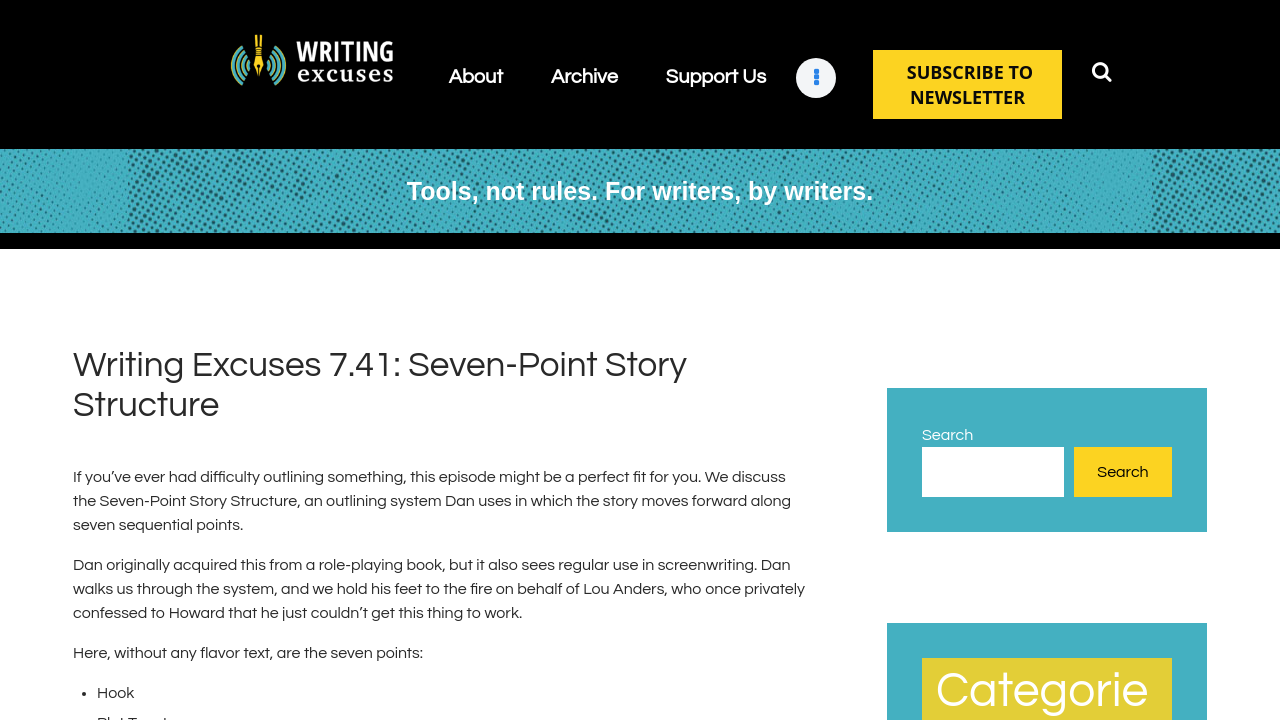
    Writing Excuses podcast page explaining the seven-point story structure with point definitions.

    A Precise Definition

    The seven-point story structure divides a narrative into seven sequential, functional plot points: Hook, Plot Turn 1, Pinch 1, Midpoint, Pinch 2, Plot Turn 2, and Resolution. Each point serves a specific job in moving the protagonist from an initial state of imbalance to a final, transformed state. Dan Wells adapted it from the Star Trek Roleplaying Game Narrator’s Guide and first presented it publicly in 2013, as documented on the Writing Excuses podcast. The same framework is common in screenwriting, and predates Wells’s popularization of it for novel writing. If you are new to plotting, this scaffolding pairs well with a broader story structure template that you can adapt to your own manuscript.

    In Plain English

    Think of the seven points as the load-bearing beams of your novel, not the whole house. They mark the places where the story pivots, where pressure spikes, and where your protagonist changes direction. Everything else, including subplots, quiet character beats, and the gap between want and need, lives in the rooms between those beams.

    How the Seven Points Work: A Step-by-Step Breakdown

    Character at pivotal moment pulled into the story's central conflict at Plot Turn 1

    Hook and Plot Turn 1

    The Hook establishes the world, the characters, and their starting state. It should be the mirror opposite of the Resolution, so that by the last page the reader can see clearly how far your protagonist has traveled. A fearful, isolated character in chapter one earns a brave, connected ending; that contrast is the point. Grounding the Hook in a character worth reading about matters more than a flashy opening image, which is why so many editors recommend you open on a character worth following rather than a set piece.

    Plot Turn 1 is the call to adventure or inciting incident. It kicks your protagonist out of the ordinary world and into the central conflict of the book. This is not a small nudge; it is the door slamming shut behind them. Their old life is no longer available on the same terms, and the story now has a direction that would not exist without this event.

    Pinch 1 and the Midpoint

    Pinch 1 introduces the antagonist or the major conflict in a way that raises the stakes and pressures the protagonist into action rather than passivity. A pinch is exactly what it sounds like: a squeeze applied from outside that forces a decision. It is also the ideal moment to make sure your antagonist reads as a living person, with pressures of their own, which is why many craft writers argue your antagonist needs a Tuesday morning rather than a lengthy backstory dump.

    The Midpoint is the structural pivot of the entire novel. Here the protagonist shifts from reactive mode to proactive mode and takes control of their situation for the first time. Before the Midpoint, the story happens to them; after the Midpoint, they happen to the story. This is often where the character finally sees, and starts to reject, the lie they have been telling themselves.

    Pinch 2, Plot Turn 2, and Resolution

    Pinch 2 raises the pressure to its peak. This is the “all is lost” moment, often involving the death or removal of a mentor, a betrayal by an ally, or the collapse of a plan the protagonist believed in. Plot Turn 2 delivers the final piece of information or insight the protagonist needs to act. It is not a rescue from outside; it is the moment they know what to do. The Resolution enacts the outcome, resolves the conflict, and shows the character’s changed state. For that final beat to land, spend real thought on the tiny final action that makes your novel memorable rather than a generic victory scene.

    How It Works in Practice: The Hunger Games Example

    Reedsy's detailed seven-point story structure walkthrough using The Hunger Games as a case study.

    Mapping the Seven Points to Katniss’s Arc

    Suzanne Collins’s The Hunger Games is the demonstration most craft teachers reach for, and Reedsy’s seven-point walkthrough maps it in detail. The Hook is Katniss’s constrained life in District 12: hunting, hunger, and the shadow of the reaping. Plot Turn 1 is Prim’s name being drawn and Katniss volunteering in her place, an act that hurls her out of District 12 and into the machinery of the Capitol. Pinch 1 is her arrival in the Capitol and the dawning weight of the lethal stakes she now lives under. Reading published novels this way, before you outline your own, is one of the fastest ways to internalize how deep plotting actually feels on the page.

    The Midpoint is Katniss’s decision to stop hiding in the arena and take active steps to survive and win, allying with Rue and going on the offensive. Pinch 2 is the rule reversal that threatens Peeta’s life. Plot Turn 2 is the berries gambit, where Katniss finds the specific move that resolves the impossible situation. The Resolution is survival, the couple’s return home, and a Katniss transformed from passive survivor to deliberate agent. Mapping a finished novel like this trains your eye for the underlying architecture, which is a useful discipline whether you are a plotter or one of those pantsers facing the planning obstacle head-on for the first time.

    Why This Structure Works and How It Compares to Other Frameworks

    Strengths for Plotters and Pantsers

    Wells recommends building the structure in reverse: start with the Resolution, then write the Hook as its opposite, then fill in the Plot Turns and Pinches. That order prevents directionless plotting, because every intermediate beat is now pulling toward a known destination. The structure is genre-agnostic and has been applied to fantasy, literary fiction, thriller, and romance by many published authors. It even accommodates writers who prefer to discover their material as they go, which is why some people who thought they were pure pantsers end up writing by the seat of their pants with a light scaffold underneath.

    Seven-Point vs. Three-Act Structure vs. Save the Cat

    Framework Beats Granularity at Midpoint Best For
    Three-Act 3 acts Implicit Broad shape checks
    Seven-Point 7 points Explicit pivot + two pinches Novelists who want scaffolding without rigidity
    Save the Cat 15 beats Prescriptive Writers who like page-count targets

    Compared to the three-act structure, the seven-point system is more granular at the midpoint and gives you explicit pressure points, the Pinches, that the three-act model leaves implicit. Compared to Save the Cat’s 15-beat sheet, it is deliberately minimal, which makes it accessible for writers who want structure without rigid word-count targets. If you also want a broader map of archetypal shapes to compare against, Christopher Booker’s seven basic plots sits alongside these frameworks as a story-type lens rather than a beat sheet.

    Common Misconceptions About the Seven-Point Structure

    Misconception: It Produces Formulaic Stories / Reality: Points Are Flexible Containers

    Each point is a functional milestone, not a rigid scene prescription. Writers can use one scene or a whole cluster of chapters to arrive at any given point, and two novels that share the same seven-point skeleton can feel wildly different on the page. What matters is that the beat lands, not that it lands on a specific page. Layered subplots, of the kind you get when your subplot is trying to tell you something, can weave through the same seven points without flattening the book.

    Misconception: It Only Works for Action-Driven Plots / Reality: It Applies to Character and Internal Arcs Too

    The structure applies equally to internal arcs. The Hook can be a character’s emotional starting state rather than an external situation, and the Resolution the transformed emotional state. Pinches can be internal pressures like grief or shame, not just external threats. Grounding those internal beats in something specific, like the self-deception scene that turns readers into fans, keeps the arc from feeling abstract.

    Misconception: Every Scene Must Map to a Point / Reality: Points Are Milestones, Not Scene Counts

    The seven points do not dictate page count or pacing. A Pinch can occupy one chapter in a taut thriller or a full act in an epic fantasy. Wells himself frames the seven points as key steps rather than exhaustive plot maps, which leaves plenty of room for secondary character arcs, quiet interludes, and the sort of texture you get from paying attention to character arc basics at the scene level.

    How to Get Started With the Seven-Point Structure Today

    Author reviewing single-sentence story premise for seven-point novel structure planning

    Step 1: Write Your Resolution First

    Write a single sentence that states the external outcome of your novel and the internal change in your protagonist. That sentence is the anchor for every other decision. Without it, later beats drift. If you already know your protagonist but the ending feels vague, spend some time on why your protagonist may feel boring before you commit the Resolution to the page.

    Step 2: Define Your Hook as Its Opposite

    Write the Hook as the logical inversion of the Resolution. If the character ends brave and connected, they begin fearful and isolated. If they end honest, they begin self-deceived. This opposition is what makes the arc legible to a reader. Anchoring the Hook in a network of relationships helps too, since other characters are the real engine of change in most novels.

    Step 3: Fill In the Remaining Five Points

    Draft one sentence for each of the five remaining points, checking that each creates a believable causal bridge toward the Resolution. Then expand each point into a scene list or chapter outline before you draft prose. You can also apply the structure recursively to subplots and act-level arcs within a longer novel, which is one of the cleanest ways to write twists and unexpected turns that still feel earned.

    Frequently Asked Questions

    What are the seven points in Dan Wells’s story structure?

    The seven points, in order, are Hook, Plot Turn 1, Pinch 1, Midpoint, Pinch 2, Plot Turn 2, and Resolution. Each is a functional milestone that moves the protagonist from their starting state to a transformed final state.

    What is the difference between the seven-point structure and the three-act structure?

    The three-act structure identifies broad phases: setup, confrontation, and resolution. The seven-point structure sits inside that shape and marks specific pivots, including two explicit pinch points and a midpoint that flips the protagonist from reactive to proactive behavior.

    How do you start building a seven-point story outline?

    Write your Resolution first as a single sentence covering external outcome and internal change. Then write the Hook as its opposite. Fill in Plot Turn 1, Pinch 1, Midpoint, Pinch 2, and Plot Turn 2 as causal bridges between the two endpoints.

    Can the seven-point structure be used for short stories or screenplays?

    Yes. Dan Wells adapted it from a role-playing manual, and it is widely used in screenwriting. For short stories, compress each point into a beat rather than a chapter; the seven functions still hold, even if each occupies only a paragraph.

    What is the Midpoint in the seven-point story structure and why does it matter?

    The Midpoint is the pivot where the protagonist stops reacting and starts acting. It matters because a novel with no midpoint shift feels aimless; the character never takes ownership of the conflict, and readers lose confidence that the story is going anywhere.

    What is the difference between Plot Turn 1 and the Hook?

    The Hook establishes the ordinary world and the character’s starting state. Plot Turn 1 is the event that breaks that world and forces the character into the central conflict. The Hook is the baseline; Plot Turn 1 is the disturbance that ends it.

    Is the seven-point story structure good for character-driven fiction?

    Yes. The seven points map cleanly onto internal arcs, with the Hook and Resolution capturing emotional states rather than external situations. Pinches can be internal pressures like grief, doubt, or shame, and the Midpoint marks the moment of internal ownership.

    Where did the seven-point story structure originally come from?

    Dan Wells adapted it from the Star Trek Roleplaying Game Narrator’s Guide and presented it publicly at the 2013 Life, the Universe, and Everything conference. The same beat pattern predates his version and is widely used in screenwriting circles.

    Conclusion

    The seven-point structure works because it is small enough to hold in your head and specific enough to keep a draft moving. Write the Resolution first, invert it for the Hook, and let the Pinches and Plot Turns do the pressure work between them. When you are ready to move from outline to manuscript, ClearARC is designed to keep your seven points, your subplots, and your character arcs visible in one place while you draft, without any AI writing your book for you.

  • How To Use A Story Structure Template To Plan Your Novel

    How To Use A Story Structure Template To Plan Your Novel

    Choosing the right story structure template before you write a single chapter can be the difference between a focused, satisfying novel and one that loses momentum halfway through. ClearARC gives writers an interactive space to map their story beats, track character arcs, and move plot points around until the shape of the book feels right. This guide walks through exactly how to pick and apply a template so a single planning session produces a workable outline you can draft from. Outcome: a complete first-pass outline. Time: 2 to 4 hours. Skill level: beginner to intermediate.

    What You Will Need Before You Start

    Writer's preparation materials including premise notes, character sketches, and planning timeline

    A story structure template works best when you already have a few raw ingredients on the page, not just in your head. If you are missing a protagonist or an ending, spend an evening on those first, then come back. You will save yourself hours of guessing at beats that have no story to hold.

    Tools and materials

    1. A core premise in one or two sentences.
    2. A protagonist with a rough sense of what they want and what they lack. Our guide to the gap between what your character wants and needs is a useful check here.
    3. A rough sense of your ending, even if only tonal.
    4. A place to capture beats: a dedicated planning app, a Google Doc, or a printed worksheet.
    5. Any existing notes, character sketches, or half-outlines you have already drafted.

    Time and skill level

    Budget two to four hours for a first-pass template fill and treat the result as a living document. Writers at any experience level can use a template. Beginners tend to get the most mileage from the Three-Act Structure, while writers who have finished a book or two often prefer the Hero’s Journey or Save the Cat. Whichever you pick, remember that you are sketching the skeleton of a deeper plan, not the final draft.

    Before You Start: What to Back Up and What Can Break

    Original draft notes preserved alongside new story structure template

    Story structure templates impose a shape on your narrative. That shape is helpful, but it is not neutral. Forcing every idea into a rigid template before you understand your characters produces a mechanical plot that hits the beats and moves nobody. The template is a scaffold, not a cage, and treating it as a contract is the most common planning mistake we see writers make.

    Save a copy of any existing notes or partial outline before mapping them into a new template. Reorganising can make earlier connections hard to recover, and you may want to compare an old thread against the new structure later. If you are a pantser who has already written pages, do not throw them out. You can reverse-engineer a template from your existing draft to find gaps, which is often less painful than starting over. Our thoughts on writing by the seat of your pants apply directly here.

    Finally, be honest about what the template cannot fix. Structure will not rescue a protagonist nobody cares about. If yours feels thin, work through why your protagonist might feel boring before you spend a Saturday on beats.

    Step-by-Step: Applying a Story Structure Template to Your Novel

    Story structure template being applied to novel outline with anchor points and plot beats

    The five steps below take you from a blank page to a scene-by-scene outline. Work in order. It is tempting to leap ahead to scene-level detail, but the anchor points come first for a reason.

    Step 1: Choose the right template for your genre and story

    Pick one of four common frameworks and commit to it for this planning pass. You can always try another next time.

    • Three-Act Structure: Setup, Confrontation, Resolution. Inciting incident closes Act One; a dark night of the soul sits just before the Act Three climax. Suits most commercial fiction.
    • Hero’s Journey: 12 named stages from the Ordinary World through the Ordeal to the Return, popularised by Joseph Campbell. Especially effective for fantasy, science fiction, and adventure. If you want a full walkthrough of common shapes, the seven major plots every fiction writer should know is a useful companion piece.
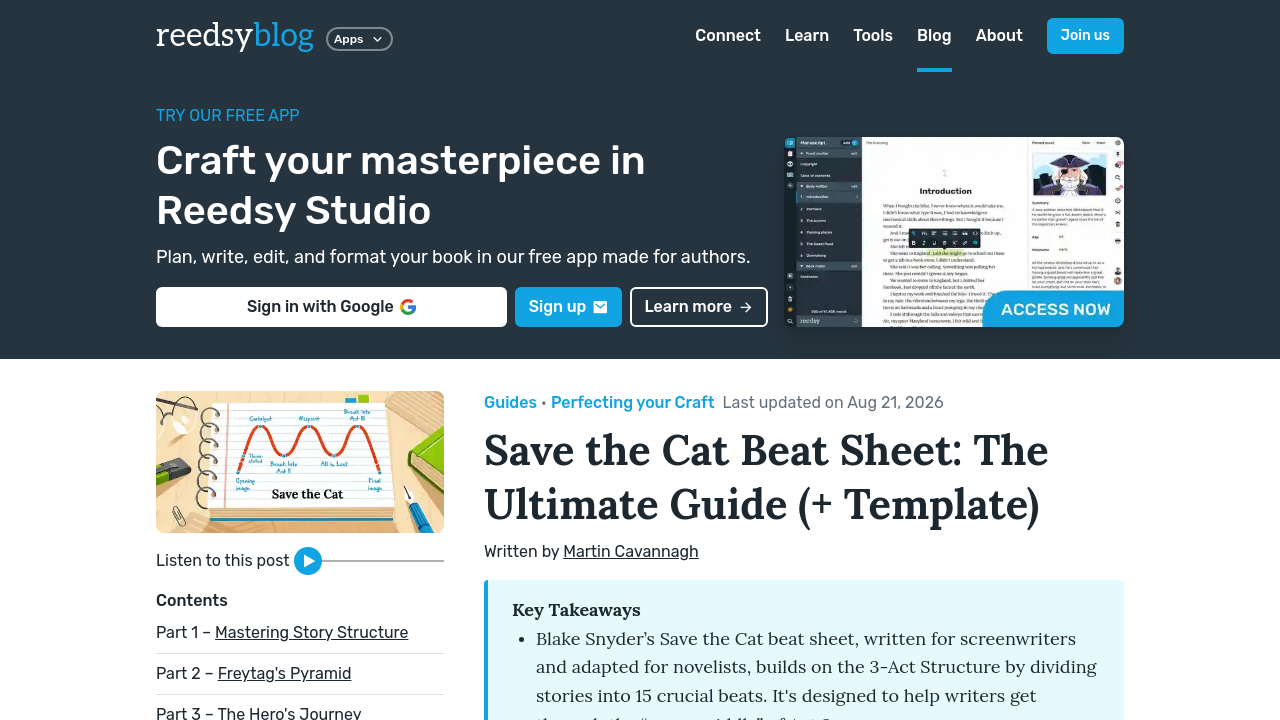
    • Save the Cat: 15 precise beats with suggested page and chapter ranges, developed by Blake Snyder for screenwriting and later adapted for novels. Concrete pacing targets built in.
    • Five-Milestone: Opening Image, Midpoint Shift, Dark Night, Climax, Resolution. A leaner alternative when 15 beats feel like too much.

    For a broader overview of how these frameworks compare, Self-Publishing School’s story structure guide is a straightforward reference.

    Step 2: Fill in the anchor points first

    Write your inciting incident, midpoint, and climax before anything else. These three beats carry the weight of the book. Filling them first prevents the classic trap of front-loading setup and then rushing the ending because you ran out of runway. When the anchors are locked, the supporting beats have somewhere to lean.

    Give yourself permission to write anchors that are half-formed. “Protagonist discovers the letter” is fine at this stage. You are naming rooms, not decorating them. If your midpoint has no emotional charge yet, revisit the lie your character tells themselves and see whether the midpoint is where that lie cracks.

    Step 3: Map your character arc alongside the plot beats

    Beside each plot beat, note one line about where the protagonist is internally. Are they in denial? Doubting their mentor? Willing, for the first time, to risk something they care about? Plot without arc feels like errands; arc without plot feels like a diary. You need both moving in step. Our character arc basics piece has a simple two-column format that works well here.

    Step 4: Test pacing by checking beat spacing

    Once every beat has a plot note and an arc note, check the rough word-count each act or segment will absorb. In the Three-Act model, Act Two should be roughly twice the length of Act One or Act Three. Look for beats stacked too close together, especially in Act Two, where rising action can quietly collapse into repetition. If Act Two feels thin, you may need a subplot that complements the main plot rather than another external obstacle.

    Step 5: Convert your filled template into a scene-by-scene outline

    Turn each beat into two to five scenes. A scene is a unit where something changes: information, relationship, stakes, location. Give each scene a one-line summary and note which character is driving it. By the end of this step you have a working outline you can draft from, chapter by chapter. Consider how you will open the book with a character worth following, because that first scene sets every promise the rest of the outline has to keep.

    Troubleshooting Common Template Problems

    Every template runs into the same handful of failures. Diagnose the symptom, then work backwards to the cause before applying the fix. F(r)iction’s overview on outlining a story is useful background if you want to double-check your instincts.

    • Symptom: Your story has no clear midpoint. Cause: The midpoint beat was skipped or treated as a soft transition. Fix: Identify the moment your protagonist shifts from reactive to proactive, then anchor every earlier beat to that pivot.
    • Symptom: Act Two feels padded or repetitive. Cause: Rising action lacks escalating stakes at each beat. Fix: Check that every scene in Act Two raises the cost of failure before the next beat begins. A useful sharpener here is how to write twists and unexpected turns.
    • Symptom: The climax feels unearned. Cause: The internal arc was not mapped alongside the external plot. Fix: Return to Step 3 and pair each plot beat with a corresponding character growth moment.
    • Symptom: The template does not fit your genre’s conventions. Cause: A genre-agnostic template was applied to a genre with specific structural requirements. Fix: Layer genre-specific beats, such as the romance black moment, on top of the base structure rather than replacing it.

    Choosing the Right Template for Your Genre

    Multiple genre novels displayed showing structural patterns and reader expectations

    Genre readers arrive with structural expectations already installed. Meeting or subverting those expectations is a craft decision, but you cannot do either without knowing which template your genre leans on.

    Templates for literary and commercial fiction

    Commercial fiction, including thrillers, romance, and YA, aligns closely with the Three-Act Structure and Save the Cat because readers have internalised those beat rhythms. Literary fiction writers sometimes reverse or subvert standard templates deliberately, which works when the writer knows the underlying rules well enough to break them precisely. If your literary novel hinges on interior change, the emotional beats matter more than the plot beats, and pieces like how to write a scene that makes readers cry become planning tools in their own right.

    Templates for genre fiction (fantasy, mystery, romance)

    Fantasy and science fiction benefit from the Hero’s Journey because it accommodates world-building stages and mentor relationships without straining. Mystery and crime fiction often use a modified Three-Act Structure that front-loads the crime as an early inciting incident and reserves the reveal for a late Act Three climax. Romance typically layers a Black Moment onto whichever base structure the writer prefers. Whatever the genre, your antagonist still needs texture; give your antagonist a Tuesday morning rather than a monologue of backstory.

    Frequently Asked Questions

    What is a story structure template?

    A story structure template is a reusable framework of named beats or stages that maps the shape of a novel from opening to resolution. Writers use it to plan pacing, arc, and turning points before drafting begins.

    Which story structure template is best for beginners?

    The Three-Act Structure is the most forgiving starting point because it uses only three broad phases and one required turning point per act. Once you have finished a novel with it, experimenting with 12- or 15-beat frameworks feels far less intimidating.

    Can I use a story structure template if I am a pantser?

    Yes. Pantsers often work best by drafting first and reverse-engineering a template from existing pages to spot structural gaps. Reading what pantsers actually face when planning a novel can reframe the process without forcing a full outline upfront.

    How detailed should my story structure template be before I start drafting?

    Detailed enough to name every anchor beat and sketch one line of character arc beside each, but not so detailed that every scene is written in miniature. Two to four hours of planning is usually the right investment for a first pass.

    What is the difference between the Three-Act Structure and the Hero’s Journey?

    The Three-Act Structure organises a story into Setup, Confrontation, and Resolution using two major turning points. The Hero’s Journey is a 12-stage cycle rooted in myth, tracking a protagonist from an Ordinary World through an Ordeal and back changed.

    Do I need a different template for each genre?

    Not a different template, but usually a layered one. Pick a base structure that fits your instincts, then add genre-specific beats such as a mystery’s False Solution or a romance’s Black Moment on top of the underlying framework.

    How do I adjust my template once I have started writing?

    Treat the template as a living document. When a new scene surprises you, update the beat sheet rather than forcing the draft back into the old plan. Structural revision during drafting is normal and usually improves the book.

    Where can I find free story structure templates for novels?

    Reputable writing sites, university writing centres, and dedicated planning apps publish free templates for the Three-Act Structure, Hero’s Journey, Save the Cat, and Five-Milestone models. Print one, or copy it into your planning tool, and start filling in anchors.

    Bringing It All Together

    A story structure template is only as useful as the honesty you bring to it. Fill anchors first, map the internal arc alongside the plot, check pacing before drafting, and let the shape flex as characters push back. The finished outline is not a promise you have to keep line by line; it is a map you can revise as the terrain reveals itself. If you want a quiet, no-AI space to lay out beats, drag them around, and watch the shape of your novel emerge, ClearARC’s planning canvas is built for exactly that kind of patient, craft-first work. Pour a coffee, open your notes, and start with the anchor points.

  • Christopher Booker’s Seven Basic Plots Explained For Writers

    Christopher Booker’s Seven Basic Plots Explained For Writers

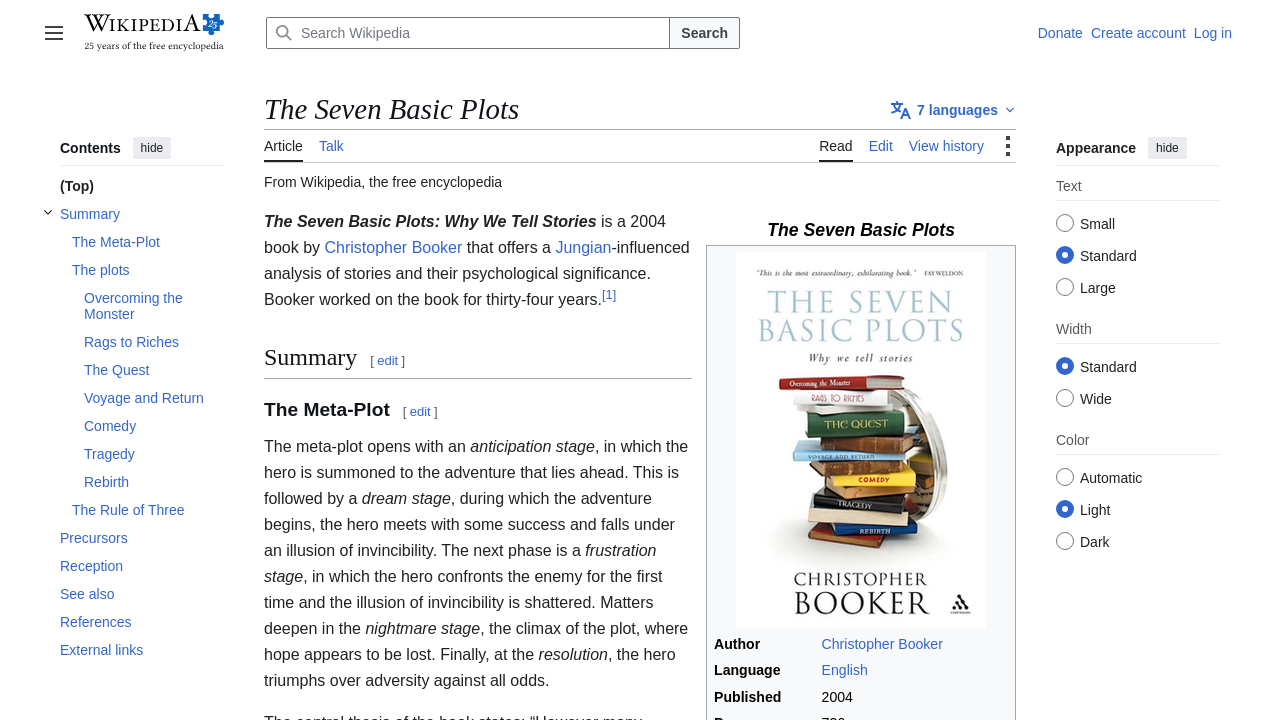
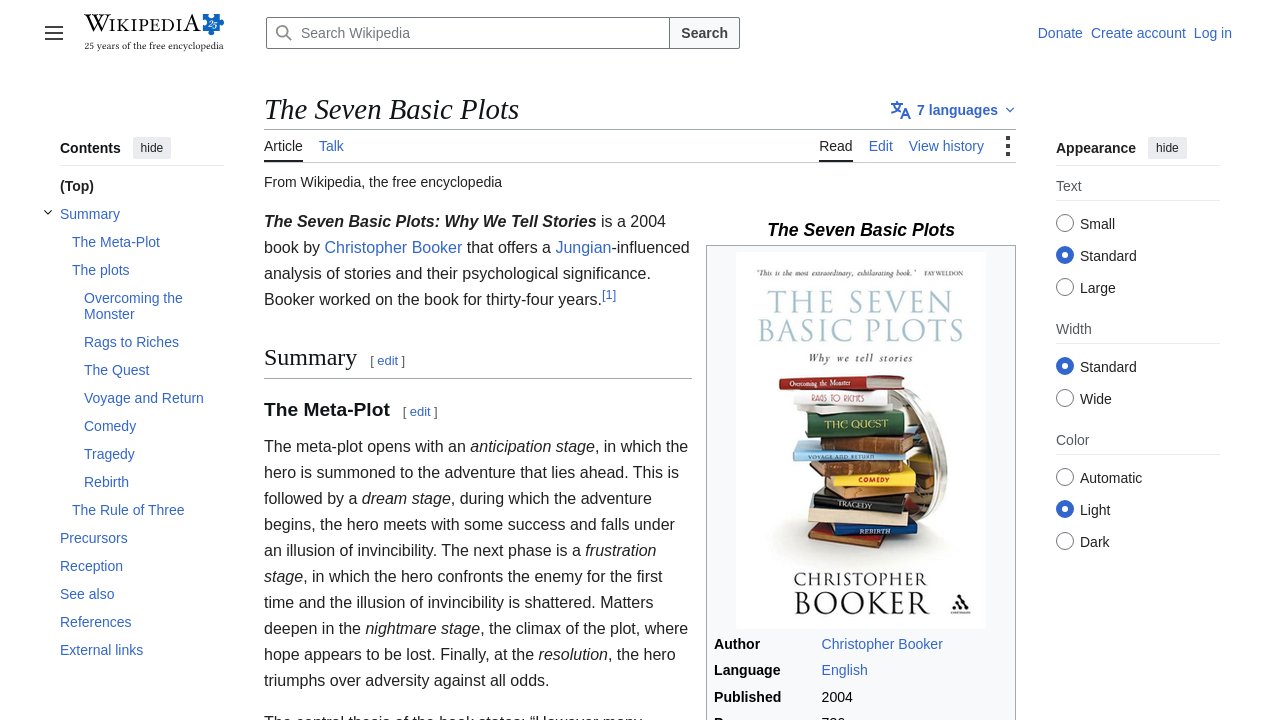
    Christopher Booker’s 2004 book The Seven Basic Plots: Why We Tell Stories argues that virtually every narrative in human history falls into one of seven archetypal patterns. Drawing on Jungian psychology and thirty-four years of research, Booker’s framework gives writers a practical lens for diagnosing story structure problems before they harden into draft problems. ClearARC helps writers apply patient, human frameworks like this one at every stage of a book, from first outline to final revision.

    What Are Christopher Booker’s Seven Basic Plots

    Wikipedia page on The Seven Basic Plots showing Booker's narrative framework and categories

    Booker’s central claim is simple: strip away setting, era, and genre, and stories repeat the same handful of shapes. He is not the first critic to argue this, but he is the one who committed most of a working life to defending it. For writers, the practical value is pattern recognition. If you can name the shape you are writing, you can spot the places where that shape usually strains. Compare his taxonomy with the seven major plots every fiction writer should know as you read on.

    The Book Behind the Theory

    Booker published The Seven Basic Plots: Why We Tell Stories in 2004 after thirty-four years of research; the book runs to 736 pages and draws heavily on Jungian archetypes. The framing treats stories as psychological road maps in which the protagonist moves from incompleteness toward self-realisation. That psychological reading matters, because it explains why the framework spends so much time on the hero’s inner state, an idea that dovetails with familiar advice about character arc basics in modern craft books.

    The Meta-Plot That Unifies All Seven

    Booker argues that all seven plots share a hidden five-stage engine, the meta-plot, which moves through anticipation, dream, frustration, nightmare, and resolution. He also insists that every story’s real concern is one hero whose fate readers identify with, and that other characters are aspects of that hero’s inner state. It is a strong claim, and one reason other characters can feel like the real engine of change in practice, even when Booker frames them as reflections.

    Takeaway: treat the seven plots as diagnostic shapes, not rules. Know the shape, then decide which conventions serve your story.

    The Seven Plots Broken Down

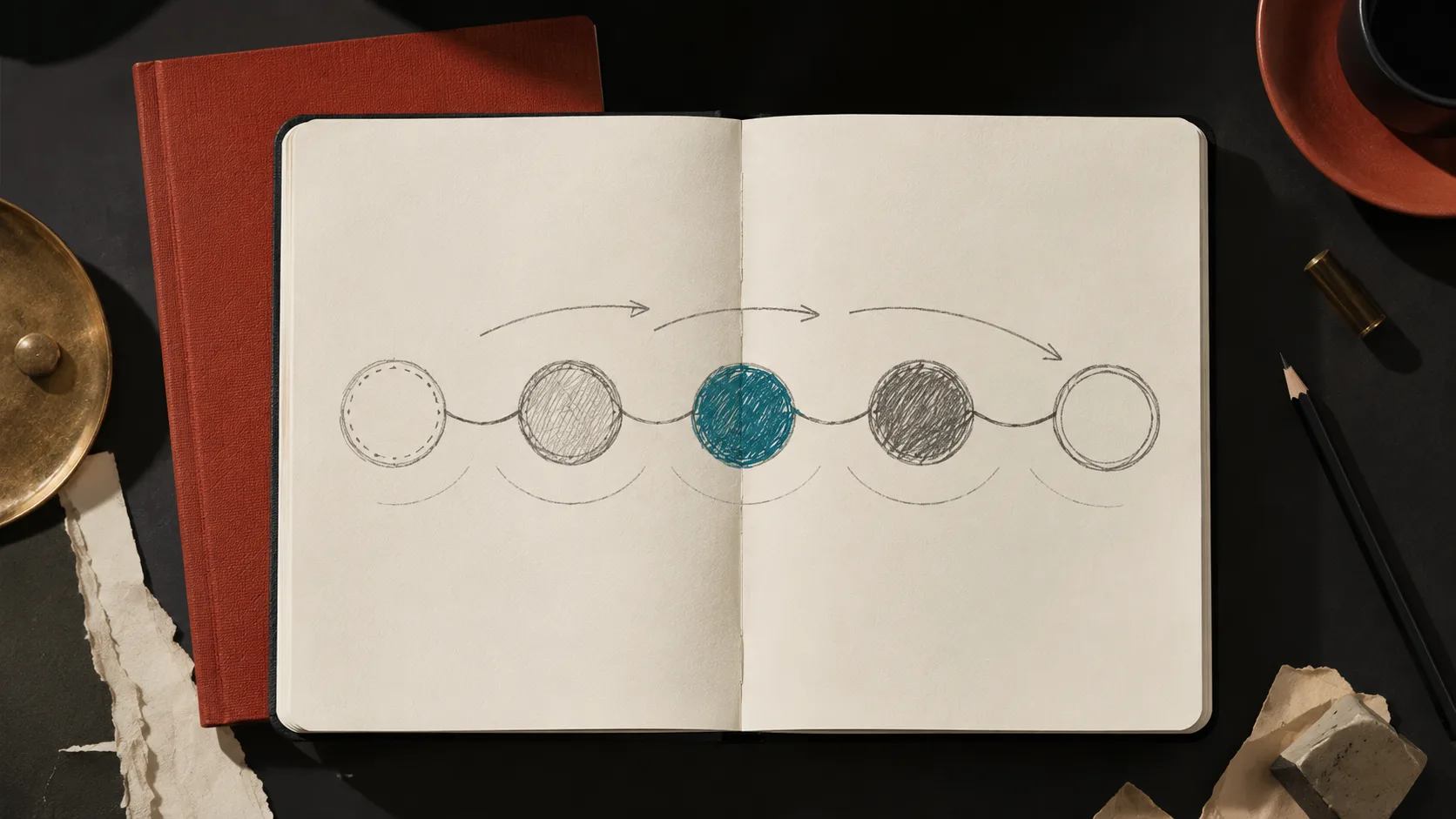
    Notebook page showing seven different narrative arc patterns, each representing a story structure

    Here is the short version of each plot, with the classic examples Booker cites. Keep a pen nearby; the point is to try each shape on your own manuscript.

    Overcoming the Monster

    The protagonist defeats an antagonistic force threatening their world. Booker’s examples run from Beowulf and Dracula to Jaws and Star Wars: A New Hope. The shape only works if the monster feels genuinely dangerous, which is why so much rewriting energy goes into hero and villain tension that crackles rather than into monster design.

    Rags to Riches

    A poor protagonist acquires power or wealth, loses it, and regains it while growing as a person. Think Cinderella, Great Expectations, Jane Eyre. The version that lands emotionally is not about the money; it is about who the character becomes after losing everything. That inner shift is where the gap between want and need in character arcs usually does its quiet work.

    The Quest

    A protagonist and companions travel toward an important object or location, facing temptations and obstacles along the way. The Lord of the Rings, The Iliad, and Raiders of the Lost Ark all sit here. Quests tend to sag in the middle, which is why writers benefit from planning waypoints carefully; a deep plan for your novel usually rescues a quest draft that has wandered off the map.

    Voyage and Return

    The protagonist enters a strange world, faces its dangers or learns its lessons, and returns changed. The Odyssey, Alice’s Adventures in Wonderland, and The Hobbit are Booker’s touchstones. The shape lives or dies on how strange the strange world actually feels, which is one reason making places in your novel feel believable matters more than any single plot mechanic.

    Comedy, Tragedy, and Rebirth

    Comedy resolves confusion and misunderstanding in a happy union. Tragedy traces a protagonist’s fatal flaw all the way to destruction. Rebirth sees a dark force trap a hero until a redemptive act frees them. All three depend on setups planted early, particularly the lie the hero believes; writers often lean on the lie your character tells themselves to seed exactly that.

    Takeaway: pick the shape closest to your book, then reread the classic example on Booker’s list. The comparison is faster than any workshop.

    How the Meta-Plot Works in Practice

    A manuscript being annotated with narrative stages, showing the five-stage arc structure in practice

    Underneath each of the seven plots, Booker plants the same five-stage arc. Once you can name the stages, you can pace them.

    The Five-Stage Story Arc

    1. Anticipation. The hero is called to adventure. Stakes and desire are established. This is also the moment to signal the character’s inner wound; a well-shaped opening often turns on opening a book with a character worth following rather than on plot mechanics.
    2. Dream. The adventure begins and early wins create an illusion of invincibility. Readers relax. Something is about to break.
    3. Frustration. The hero confronts the central opposing force for the first time, and the illusion of invincibility shatters. Momentum stalls; the story asks a harder question.
    4. Nightmare. The darkest moment. Hope appears lost. This is the emotional climax, the pressure point that makes the resolution earn its keep. It is also where scenes that make readers cry usually live.
    5. Resolution. The hero triumphs against the odds and completes their psychological journey toward self-realisation.

    Applying the Meta-Plot to Your Manuscript

    Print the five stages on an index card. Read your draft with the card next to your keyboard. Note the chapter number where each stage lands. If your Nightmare arrives on page 40 of a 300-page book, you have a pacing problem; if you cannot find one at all, you have a bigger one. The exercise pairs well with one field that holds your plot together, because it forces you to name the central pressure the plot is testing.

    Takeaway: the meta-plot is a ruler, not a recipe. Use it to measure what you already have.

    Practical Writing Applications of Booker’s Framework

    Multiple draft pages with handwritten revisions, demonstrating how writers apply Booker's framework to fix story structure

    Naming your plot is not the point; using the name to fix problems is.

    • Diagnose structural gaps. If your Rags to Riches draft skips the loss, readers will feel the win is unearned. If your Quest never reaches genuine Frustration, the middle drifts. Writers often find that subplots are trying to tell them something about a missing stage in the main plot.
    • Blend and layer plots. Many successful novels stack a primary plot with one or more secondary plots. A Quest narrative may carry a Rags to Riches arc for a supporting character, and the two arcs illuminate each other. Practical technique for this sits in writing subplots that complement the main plot rather than compete with it.
    • Combine frameworks. Booker’s shape works alongside three-act structure or the Hero’s Journey rather than replacing them. Tragedy and Comedy in particular need the protagonist’s flaw or the central misunderstanding planted in Act One for the resolution to pay off; this is where self-deception scenes that turn readers into fans do the heavy lifting.
    • Use the five stages as a checklist. Walk an existing draft against Anticipation, Dream, Frustration, Nightmare, Resolution and mark the page number where each occurs. Uneven gaps are pacing gaps. Writers who plan lightly especially benefit here; looping for pantsers to keep readers turning pages is a useful companion tactic.

    Takeaway: Booker is at his most useful as a revision tool, not a first-draft prescription.

    Criticisms and Limitations of the Seven Plots Theory

    Any framework this broad has honest limits. Booker’s has more than most, and pretending otherwise weakens your craft.

    Where the Framework Falls Short

    Booker is more likely to judge stories that fall outside his seven plots as flawed than to treat them as evidence that more than seven plots exist. He himself concedes that detective fiction and creation myths do not fit the structure. That is a large carve-out. When your book bends genre, the shape may not sit cleanly, and forcing it can flatten what makes the story yours; the corrective is often as small as the tiny final action that makes your novel memorable rather than a wholesale restructure.

    Gender, Jungian Bias, and Modern Storytelling

    Critics, including writer Rhiannon Grant, have noted that Booker’s Jungian mapping of masculine and feminine virtues onto characters reflects dated assumptions about gender roles. The romance genre and many works by women writers receive little attention, which limits the framework’s breadth. Read the seven plots as a broad pattern-recognition tool, not a prescriptive rule set; other lenses, including work on why major characters need strong beliefs, fill gaps Booker leaves open.

    Takeaway: keep Booker on the shelf, but never as the only book on it.

    Frequently Asked Questions

    What are Christopher Booker’s seven basic plots?

    The seven are Overcoming the Monster, Rags to Riches, The Quest, Voyage and Return, Comedy, Tragedy, and Rebirth. Booker argues almost every narrative in human history fits one of these archetypal shapes.

    How long did Christopher Booker spend writing The Seven Basic Plots?

    Booker worked on the book for thirty-four years before publishing it in 2004. The finished volume runs to 736 pages and includes both the taxonomy of plots and a lengthy critical and psychological analysis of storytelling.

    What is the meta-plot in Booker’s theory?

    The meta-plot is the underlying five-stage arc Booker says runs through all seven plots. Its stages are anticipation, dream, frustration, nightmare, and resolution, tracing the hero from initial call to psychological self-realisation.

    Is The Seven Basic Plots based on Jungian psychology?

    Yes. Booker draws heavily on Carl Jung’s ideas about archetypes and the shadow, treating stories as psychological road maps in which the protagonist moves from incompleteness to self-realisation. The Jungian frame shapes both his taxonomy and his interpretations.

    Can a story belong to more than one of Booker’s seven plots?

    Yes, and most long novels do. A primary plot often carries secondary plots for supporting characters, so a Quest may contain a Rags to Riches arc. Booker treats the primary shape as the story’s defining pattern.

    What are the main criticisms of Booker’s seven basic plots theory?

    Critics point to dated Jungian assumptions about gender, limited engagement with women writers and romance, and Booker’s tendency to dismiss stories that do not fit rather than expand the framework. Detective fiction and creation myths are acknowledged exceptions.

    How can writers use the seven basic plots in their own work?

    Identify the shape closest to your draft, then walk it through the five meta-plot stages to find pacing or setup gaps. Use the framework as a diagnostic during revision, not as a prescription during first drafts.

    What stories does Booker say do not fit the seven basic plots?

    Booker concedes that creation myths and detective stories do not fit neatly into his seven-plot structure. Many critics argue this exception, combined with limited coverage of romance, suggests the framework is descriptive rather than exhaustive.

    Bringing Booker to Your Desk

    The seven basic plots are most useful when you stop treating them as a claim about all of literature and start treating them as a set of shapes to lay over your own manuscript. Print the meta-plot stages. Mark the chapter where each lands. Notice where the shape strains, and ask whether the strain is a problem or the point. Frameworks like Booker’s belong in the toolkit next to ClearARC and any other patient method that helps you finish the book only you can write.

  • Generic 12-Chapter “Save the Cat” Book Outline

    Generic 12-Chapter “Save the Cat” Book Outline

    This template distributes the 15 Save the Cat beats across three acts, with four chapters assigned to each act. The chapters do not need to be equal in length: Act Two normally occupies about half the manuscript, while Acts One and Three each occupy roughly a quarter. Percentages should be treated as flexible calibration points rather than rigid requirements.

    The structure follows Blake Snyder’s original 15-beat framework and its adaptation for novels, including the percentage guidance summarized by ClearARC, Reedsy, and the official Save the Cat resources.


    Act One: The Protagonist’s Existing World

    Chapter 1 — Opening Image and the Existing World

    Description: Establish the protagonist’s ordinary world before the main conflict changes it. Introduce the protagonist through behavior, show the current state of their life, and reveal an internal flaw, false belief, or unmet need. The chapter should provide a baseline that the Final Image can later mirror.

    Chapter 1 — Scene 1 — Opening Image

    Description: Present a concentrated image or situation representing the protagonist’s life before transformation.

    • Chapter 1 — Scene 1 — Event 1: Show the protagonist performing an ordinary action that reflects their current identity.
    • Chapter 1 — Scene 1 — Event 2: Reveal an imbalance, limitation, or dissatisfaction in the protagonist’s world.
    • Chapter 1 — Scene 1 — Event 3: Introduce a visual, emotional, or behavioral motif that can return in altered form at the end.

    Chapter 1 — Scene 2 — Character in the Ordinary World

    Description: Demonstrate how the protagonist interacts with their environment and why a reader should care about what happens to them.

    • Chapter 1 — Scene 2 — Event 1: Give the protagonist an immediate, relatable problem or responsibility.
    • Chapter 1 — Scene 2 — Event 2: Show a sympathetic, admirable, or humanizing choice—the functional equivalent of “saving the cat.”
    • Chapter 1 — Scene 2 — Event 3: Suggest that the protagonist’s present way of handling problems will not succeed against the larger conflict.

    Chapter 2 — Theme and Setup

    Description: Expand the ordinary world by introducing important relationships, obligations, tensions, and deficiencies. State or imply the story’s thematic lesson, although the protagonist does not yet understand or accept it.

    Chapter 2 — Scene 1 — Theme Stated

    Description: Allow another character, situation, or contradiction to express the lesson the protagonist will need to learn.

    • Chapter 2 — Scene 1 — Event 1: Place the protagonist in a disagreement or conversation connected to their internal problem.
    • Chapter 2 — Scene 1 — Event 2: Have another character express a thematic observation, warning, or question.
    • Chapter 2 — Scene 1 — Event 3: Show the protagonist dismissing, misunderstanding, or resisting that idea.

    Chapter 2 — Scene 2 — Setup and Missing Pieces

    Description: Introduce the people and circumstances that define the protagonist’s current life while identifying what must eventually change.

    • Chapter 2 — Scene 2 — Event 1: Establish one or more important supporting characters and their relationships to the protagonist.
    • Chapter 2 — Scene 2 — Event 2: Reveal external problems already developing beneath the surface.
    • Chapter 2 — Scene 2 — Event 3: Demonstrate the protagonist’s internal flaw or false belief creating a practical consequence.

    Chapter 2 — Scene 3 — Pressure Beneath the Routine

    Description: Increase the sense that the ordinary world cannot remain stable.

    • Chapter 2 — Scene 3 — Event 1: Introduce a warning sign connected to the coming central conflict.
    • Chapter 2 — Scene 3 — Event 2: Let the protagonist attempt to preserve their normal routine.
    • Chapter 2 — Scene 3 — Event 3: End with an indication that a disruptive force is approaching.

    Chapter 3 — Catalyst

    Description: Deliver the event that disrupts the protagonist’s established world. The Catalyst creates a problem, opportunity, demand, revelation, or loss that cannot be permanently ignored.

    Chapter 3 — Scene 1 — Disruption Arrives

    Description: Introduce the inciting event in a direct and consequential form.

    • Chapter 3 — Scene 1 — Event 1: Interrupt the protagonist’s routine with unexpected information or action.
    • Chapter 3 — Scene 1 — Event 2: Connect the disruption to something the protagonist values, fears, or needs.
    • Chapter 3 — Scene 1 — Event 3: Remove the possibility of returning completely to the previous status quo.

    Chapter 3 — Scene 2 — Immediate Consequences

    Description: Show how the Catalyst affects the protagonist’s external circumstances and internal stability.

    • Chapter 3 — Scene 2 — Event 1: Force the protagonist to respond to the Catalyst’s first practical consequence.
    • Chapter 3 — Scene 2 — Event 2: Reveal conflicting interpretations of what the disruption means.
    • Chapter 3 — Scene 2 — Event 3: Present the broad choice the protagonist will have to make.

    Chapter 4 — Debate and Break into Two

    Description: Let the protagonist question whether they should enter the central conflict. The chapter ends when they make—or are forced into—a meaningful commitment that carries them from the familiar world into the unfamiliar world of Act Two.

    Chapter 4 — Scene 1 — Resistance and Debate

    Description: Explore the protagonist’s doubts, fears, alternatives, and attempts to avoid the main journey.

    • Chapter 4 — Scene 1 — Event 1: Have the protagonist consider the risks of accepting the central challenge.
    • Chapter 4 — Scene 1 — Event 2: Let the protagonist try a safer solution that preserves part of the old life.
    • Chapter 4 — Scene 1 — Event 3: Demonstrate why avoidance, delay, or compromise will not resolve the problem.

    Chapter 4 — Scene 2 — Point of Commitment

    Description: Create the decision or irreversible development that begins Act Two.

    • Chapter 4 — Scene 2 — Event 1: Increase the cost of remaining passive.
    • Chapter 4 — Scene 2 — Event 2: Force the protagonist to choose a goal, direction, or course of action.
    • Chapter 4 — Scene 2 — Event 3: Mark the crossing into a new situation governed by unfamiliar pressures or rules.

    Act Two: Confrontation, Experimentation, and Collapse

    Chapter 5 — B Story and the New World

    Description: Introduce or strengthen the secondary relationship or subplot that carries the theme. The protagonist begins learning how Act Two’s new world operates, usually while pursuing the external goal with an incomplete understanding of what success requires.

    Chapter 5 — Scene 1 — Arrival in the New World

    Description: Contrast Act Two’s conditions with the protagonist’s familiar Act One environment.

    • Chapter 5 — Scene 1 — Event 1: Confront the protagonist with a new rule, obstacle, culture, or power structure.
    • Chapter 5 — Scene 1 — Event 2: Let the protagonist rely on an old strategy that produces mixed or inadequate results.
    • Chapter 5 — Scene 1 — Event 3: Establish the immediate objective that will guide the first half of Act Two.

    Chapter 5 — Scene 2 — B Story Connection

    Description: Develop the relationship or secondary thread through which the protagonist can encounter the theme personally.

    • Chapter 5 — Scene 2 — Event 1: Bring the protagonist into meaningful contact or conflict with a B Story character.
    • Chapter 5 — Scene 2 — Event 2: Let the B Story character challenge the protagonist’s assumptions or behavior.
    • Chapter 5 — Scene 2 — Event 3: Create a reason for this relationship or subplot to continue alongside the main plot.

    Chapter 6 — Fun and Games: The Promise of the Premise

    Description: Deliver the central experiences implied by the book’s premise. The protagonist actively pursues the goal, tests new methods, and encounters escalating successes and failures. “Fun” refers to fulfillment of the premise, not necessarily comedy or happiness.

    Chapter 6 — Scene 1 — First Active Test

    Description: Let the protagonist engage directly with the kind of conflict readers came to experience.

    • Chapter 6 — Scene 1 — Event 1: Give the protagonist an opportunity to make measurable progress.
    • Chapter 6 — Scene 1 — Event 2: Introduce an obstacle that requires a new tactic or temporary alliance.
    • Chapter 6 — Scene 1 — Event 3: Allow a partial success that builds confidence without resolving the larger conflict.

    Chapter 6 — Scene 2 — Escalating Promise

    Description: Expand the premise through a more difficult or revealing challenge.

    • Chapter 6 — Scene 2 — Event 1: Increase the scale, visibility, or personal importance of the protagonist’s actions.
    • Chapter 6 — Scene 2 — Event 2: Show an unexpected consequence of earlier progress.
    • Chapter 6 — Scene 2 — Event 3: Deepen the B Story relationship through cooperation, disagreement, or vulnerability.

    Chapter 6 — Scene 3 — Progress with a Hidden Cost

    Description: Suggest that apparent forward movement is creating future complications.

    • Chapter 6 — Scene 3 — Event 1: Let the protagonist gain something useful toward the external goal.
    • Chapter 6 — Scene 3 — Event 2: Reveal that the antagonistic force is learning, adapting, or preparing a response.
    • Chapter 6 — Scene 3 — Event 3: Show the protagonist’s unresolved flaw quietly damaging the progress made.

    Chapter 7 — Midpoint and Raised Stakes

    Description: Deliver the major pivot near the center of the book. This may be a false victory, a false defeat, or a major revelation, but it should intensify the conflict, raise the stakes, and make the protagonist’s objective more urgent or personal.

    Chapter 7 — Scene 1 — Midpoint Confrontation

    Description: Bring the first half of the protagonist’s Act Two strategy to a decisive test.

    • Chapter 7 — Scene 1 — Event 1: Place a significant objective, discovery, or confrontation within reach.
    • Chapter 7 — Scene 1 — Event 2: Force the protagonist to act using everything learned so far.
    • Chapter 7 — Scene 1 — Event 3: Produce an apparent victory or defeat that changes the direction of the story.

    Chapter 7 — Scene 2 — Stakes Become Personal

    Description: Reveal why the Midpoint result is more complicated than it initially appears.

    • Chapter 7 — Scene 2 — Event 1: Expose new information that changes the meaning of the protagonist’s goal.
    • Chapter 7 — Scene 2 — Event 2: Raise the cost of failure through a deadline, threat, loss, or personal commitment.
    • Chapter 7 — Scene 2 — Event 3: Remove an easy route of escape, making withdrawal increasingly difficult.

    Chapter 7 — Scene 3 — A New Level of Opposition

    Description: Show the antagonist or opposing forces responding to the protagonist’s increased effectiveness.

    • Chapter 7 — Scene 3 — Event 1: Allow the opposition to identify or exploit a weakness.
    • Chapter 7 — Scene 3 — Event 2: Introduce distrust, disagreement, or vulnerability within the protagonist’s support system.
    • Chapter 7 — Scene 3 — Event 3: End with the protagonist proceeding under greater pressure and incomplete knowledge.

    Chapter 8 — Bad Guys Close In, All Is Lost, and Dark Night of the Soul

    Description: Collapse the protagonist’s external plans and internal certainty. Opposition tightens, allies become divided or unavailable, and the protagonist’s flaw contributes to a decisive low point. The chapter ends with reflection rather than immediate recovery.

    Chapter 8 — Scene 1 — Bad Guys Close In

    Description: Apply pressure from both external opposition and internal division.

    • Chapter 8 — Scene 1 — Event 1: Let the antagonist or opposing force counter the protagonist’s earlier progress.
    • Chapter 8 — Scene 1 — Event 2: Create a setback caused or worsened by the protagonist’s established flaw.
    • Chapter 8 — Scene 1 — Event 3: Damage an alliance, resource, assumption, or source of security.

    Chapter 8 — Scene 2 — All Is Lost

    Description: Deliver the story’s major low point, combining an external defeat with an internal collapse.

    • Chapter 8 — Scene 2 — Event 1: Strip away something the protagonist believed was essential to success.
    • Chapter 8 — Scene 2 — Event 2: Make the original goal appear impossible, meaningless, or too costly.
    • Chapter 8 — Scene 2 — Event 3: Include a symbolic or literal suggestion of death—the loss of a person, plan, identity, relationship, or former way of life.

    Chapter 8 — Scene 3 — Dark Night of the Soul

    Description: Give the protagonist space to process the defeat and confront the false belief beneath their failures.

    • Chapter 8 — Scene 3 — Event 1: Let the protagonist acknowledge the consequences of previous choices.
    • Chapter 8 — Scene 3 — Event 2: Bring back the thematic lesson through memory, conversation, or recognition.
    • Chapter 8 — Scene 3 — Event 3: End with the first glimmer of a new understanding, without yet providing the full solution.

    Act Three: Synthesis and Resolution

    Chapter 9 — Break into Three

    Description: Unite the A Story’s external problem with the B Story’s thematic insight. The protagonist forms a new plan based not merely on additional information, but on a changed understanding of themselves and the conflict.

    Chapter 9 — Scene 1 — Thematic Realization

    Description: Convert the protagonist’s low-point reflection into a usable truth.

    • Chapter 9 — Scene 1 — Event 1: Have the protagonist recognize how their flaw or false belief contributed to failure.
    • Chapter 9 — Scene 1 — Event 2: Draw a crucial insight from the B Story relationship or subplot.
    • Chapter 9 — Scene 1 — Event 3: Reframe the external problem in light of this internal realization.

    Chapter 9 — Scene 2 — The New Plan

    Description: Establish a final approach that could not have been conceived by the protagonist at the beginning.

    • Chapter 9 — Scene 2 — Event 1: Identify the remaining objective and the true stakes attached to it.
    • Chapter 9 — Scene 2 — Event 2: Develop a strategy combining practical knowledge with thematic growth.
    • Chapter 9 — Scene 2 — Event 3: Require the protagonist to make a choice demonstrating genuine commitment to change.

    Chapter 9 — Scene 3 — Gathering Resources

    Description: Prepare the people, information, tools, or sacrifices needed for the Finale.

    • Chapter 9 — Scene 3 — Event 1: Repair, redefine, or release an important relationship.
    • Chapter 9 — Scene 3 — Event 2: Gather available allies and assign necessary roles.
    • Chapter 9 — Scene 3 — Event 3: Begin the final operation under conditions of risk and uncertainty.

    Chapter 10 — Finale: Executing the Plan

    Description: Begin the final confrontation. The protagonist acts with greater maturity and effectiveness, but the first version of the plan should not solve everything easily.

    Chapter 10 — Scene 1 — Entry into the Final Conflict

    Description: Move the protagonist and supporting characters into direct engagement with the central opposing force.

    • Chapter 10 — Scene 1 — Event 1: Cross the final threshold into the location, situation, or decision where the conflict must be resolved.
    • Chapter 10 — Scene 1 — Event 2: Put the prepared plan into action.
    • Chapter 10 — Scene 1 — Event 3: Demonstrate improved cooperation, judgment, or courage resulting from the protagonist’s growth.

    Chapter 10 — Scene 2 — Early Progress

    Description: Allow the strategy to work well enough to create momentum.

    • Chapter 10 — Scene 2 — Event 1: Overcome an obstacle that would have defeated the protagonist earlier.
    • Chapter 10 — Scene 2 — Event 2: Resolve or pay off a setup from Act One or Act Two.
    • Chapter 10 — Scene 2 — Event 3: Bring the protagonist closer to the central objective.

    Chapter 10 — Scene 3 — Hidden Reversal

    Description: Reveal that the apparent progress has not accounted for the opposition’s greatest advantage.

    • Chapter 10 — Scene 3 — Event 1: Expose a concealed threat, flaw in the plan, or act of resistance.
    • Chapter 10 — Scene 3 — Event 2: Separate the protagonist from a resource, ally, or expected solution.
    • Chapter 10 — Scene 3 — Event 3: Force the protagonist into a confrontation for which no prepared tactic is sufficient.

    Chapter 11 — Finale: Dig Deep and Transform

    Description: Push the protagonist into the climax’s most difficult test. They must abandon the final traces of their old approach and act according to the thematic truth they have learned.

    Chapter 11 — Scene 1 — The Final Complication

    Description: Collapse the prepared plan and make success appear impossible once more.

    • Chapter 11 — Scene 1 — Event 1: Let the opposing force neutralize the protagonist’s main strategy.
    • Chapter 11 — Scene 1 — Event 2: Create an immediate choice between self-protection and the story’s deeper value.
    • Chapter 11 — Scene 1 — Event 3: Require the protagonist to continue without certainty of reward or survival.

    Chapter 11 — Scene 2 — Dig Deep

    Description: Make the protagonist draw upon the internal transformation developed throughout the story.

    • Chapter 11 — Scene 2 — Event 1: Recall or embody the thematic lesson first introduced in Act One.
    • Chapter 11 — Scene 2 — Event 2: Reject the false belief, fear, or behavior that defined the Opening Image.
    • Chapter 11 — Scene 2 — Event 3: Make a decisive choice that proves the transformation through action.

    Chapter 11 — Scene 3 — The Climactic Action

    Description: Resolve the central dramatic question through the transformed protagonist’s final action.

    • Chapter 11 — Scene 3 — Event 1: Execute a new solution arising from both practical experience and personal growth.
    • Chapter 11 — Scene 3 — Event 2: Confront the story’s principal opposing force in its final form.
    • Chapter 11 — Scene 3 — Event 3: Determine the external outcome through a choice the opening-version protagonist could not have made.

    Chapter 12 — Resolution and Final Image

    Description: Show the consequences of the climax, resolve the most important remaining relationships and subplots, and establish the protagonist’s new equilibrium. Conclude with a Final Image that mirrors or contrasts with the Opening Image.

    Chapter 12 — Scene 1 — Immediate Aftermath

    Description: Clarify what the climax changed and what it cost.

    • Chapter 12 — Scene 1 — Event 1: Confirm the practical outcome of the central conflict.
    • Chapter 12 — Scene 1 — Event 2: Account for significant gains, losses, and sacrifices.
    • Chapter 12 — Scene 1 — Event 3: Show the supporting characters reacting to the new situation.

    Chapter 12 — Scene 2 — Relationship and Subplot Resolution

    Description: Complete the B Story and other essential secondary threads without reopening the central conflict.

    • Chapter 12 — Scene 2 — Event 1: Resolve the protagonist’s primary thematic relationship.
    • Chapter 12 — Scene 2 — Event 2: Pay off a remaining promise, obligation, or secondary question.
    • Chapter 12 — Scene 2 — Event 3: Demonstrate how the protagonist now approaches relationships or responsibilities differently.

    Chapter 12 — Scene 3 — Final Image

    Description: End with a concise image, action, or situation that illustrates the completed transformation.

    • Chapter 12 — Scene 3 — Event 1: Place the protagonist in circumstances that echo the book’s Opening Image.
    • Chapter 12 — Scene 3 — Event 2: Show the protagonist making a different choice or responding in a transformed way.
    • Chapter 12 — Scene 3 — Event 3: Close on an image that communicates the story’s thematic conclusion and the nature of the new equilibrium.

    Beat-to-Chapter Reference

    Save the Cat beatApproximate positionTemplate chapter
    Opening Image0–1%Chapter 1
    Theme StatedAbout 5%Chapter 2
    Setup1–10%Chapters 1–2
    CatalystAbout 10%Chapter 3
    Debate10–25%Chapters 3–4
    Break into TwoAbout 25%End of Chapter 4
    B StoryAbout 22–30%Chapter 5
    Fun and Games25–50%Chapters 5–6
    MidpointAbout 50%Chapter 7
    Bad Guys Close In50–75%Chapters 7–8
    All Is LostAbout 75%Chapter 8
    Dark Night of the SoulAbout 75–80%Chapter 8
    Break into ThreeAbout 80%Chapter 9
    FinaleAbout 80–99%Chapters 9–12
    Final Image99–100%End of Chapter 12

    The percentages are best used as diagnostic mile markers, not mandatory deadlines. In particular, the four Act Two chapters will ordinarily be longer or contain more scenes than the four chapters in either surrounding act.

  • Save The Cat Story Structure Explained For Novel Writers

    Save The Cat Story Structure Explained For Novel Writers

    Save the Cat story structure is a 15-beat plotting framework created by Hollywood screenwriter Blake Snyder, originally designed for screenplays and now widely used by novelists who want a clear, repeatable blueprint for pacing and character change. ClearARC helps novel writers apply proven structures like this one to plan, draft, and refine their stories from first idea to final chapter, without pushing you into templated prose.

    What Is Save the Cat Story Structure

    An open book page illustrating the Save the Cat framework as a shared vocabulary for pacing, character, and theme in novels.

    Save the Cat is a story manual and beat sheet that describes the 15 moments most working stories share, from the very first image on the page to the very last. It gives writers a shared vocabulary for pacing, character, and theme. In plain English: it is a checklist of what usually happens in a good story, and roughly where.

    Origins: From Screenplay to Novel

    Blake Snyder, a working Hollywood screenwriter who sold 12 scripts and consulted on major films, published Save the Cat! in 2005. The book was written for screenwriters, but the beat sheet migrated quickly into fiction rooms, writing groups, and workshops. The name comes from the old screenwriting trick of showing your protagonist do something small and generous early on, like saving a stray cat, so readers root for them before the real trouble starts.

    The Core Idea Behind the Beat Sheet

    Where most frameworks describe story in broad phases, Snyder assigned each of his 15 beats a rough percentage position in the manuscript, giving writers a concrete map. It sits neatly inside the familiar three-act shape, but breaks the long middle into smaller, named segments to solve the notorious “saggy middle” of Act 2. Think of it as a deeper plan for your novel, one that tells you not only what to write but roughly when.

    Takeaway: Save the Cat is less a theory than a mile-marker map, useful whether you outline before drafting or diagnose after.

    The 15 Beats of the Save the Cat Framework

    The Save the Cat beat sheet showing all 15 plot beats with their approximate percentage positions in a novel manuscript.

    The 15 beats move in order from Opening Image to Final Image. Percentages are approximate and assume you know your target word count, which for most commercial novels sits between 70,000 and 100,000 words. According to Reedsy’s guide to the beat sheet, the percentages are best treated as a calibration guide, not a prescription.

    Act One: Opening Image Through Break Into Two

    Act One covers six beats and roughly the first quarter of the book. It is where your reader decides whether to keep going, so a strong protagonist worth following matters more here than anywhere else.

    1. Opening Image (0-1%), a single scene that shows the hero’s world before change.
    2. Theme Stated (5%), a line of dialogue hints at what the hero must learn.
    3. Set Up (1-10%), introduce the cast, the flaw, and what needs fixing.
    4. Catalyst (10%), the event that breaks the ordinary world open.
    5. Debate (10-25%), the hero resists the new path.
    6. Break Into Two (25%), commitment; the hero steps into the new world.

    Act Two: B Story Through Dark Night of the Soul

    Act Two is roughly half the manuscript and where most drafts collapse. Snyder addressed this by naming every mile: the B Story (a relationship or subplot carrying the theme), Fun and Games (the promise of the premise), Midpoint, Bad Guys Close In, All Is Lost, and Dark Night of the Soul. The Midpoint (50%) is the pivot, either a false victory or a stakes-raising blow that keeps the middle honest. Handled well, a smart subplot here is what makes the middle feel purposeful rather than padded.

    Act Three: Break Into Three Through Final Image

    Act Three compresses three beats into the final quarter: Break Into Three (75%), Finale (75-99%), and Final Image (99-100%). The hero synthesises what the A Story taught them about the world with what the B Story taught them about themselves, then acts on that insight. The Final Image mirrors the Opening Image, showing how far the character has travelled through the tiny final action that lands the book.

    Takeaway: Write down the 15 beats before you draft, even if half are placeholders. Half-formed beats beat none.

    How Save the Cat Differs From Other Story Structures

    A visual comparison of three story frameworks displayed as distinct books, showing how Save the Cat builds on older structures with named beat markers.

    Save the Cat overlaps heavily with older frameworks, but its vocabulary and its willingness to name specific page targets set it apart. It borrows the emotional shape of the Hero’s Journey and the dramatic bones of the three-act structure, then adds the calendar.

    Save the Cat vs the Hero’s Journey

    Joseph Campbell’s monomyth and Save the Cat describe similar territory using different maps. Snyder’s Set Up corresponds to the Ordinary World, the Catalyst maps to the Call to Adventure, and the Dark Night of the Soul echoes the Ordeal. Where Campbell speaks about myth and psychology, Snyder speaks about pages and scenes, which is why the beat sheet feels more actionable when you are trying to work out which of the seven major plots you are actually writing.

    Save the Cat vs the Three Act Structure

    The three-act structure describes broad dramatic phases; Save the Cat subdivides those phases into 15 named checkpoints. It also carves out a dedicated B Story beat, which forces the writer to think about a secondary relationship or thematic mirror early. That is often the difference between a plot that turns and a plot that only advances, and it is why a strong secondary character line is baked into the framework.

    Takeaway: Use Save the Cat when you want mile markers, and use the Hero’s Journey when you want a mythic emotional shape. They coexist happily.

    Applying Save the Cat to Your Novel

    A writer consulting a word-count grid for an 80,000-word novel, showing how Save the Cat beats map to specific pages and solve the saggy-middle problem.

    The moment the framework becomes useful is when you attach it to your word count. For an 80,000-word novel, the beats land at predictable places, which turns “I’m stuck in the middle” into “my Midpoint is missing.”

    Beat Percentage Word count (80k novel)
    Catalyst 10% ~8,000
    Break Into Two 25% ~20,000
    Midpoint 50% ~40,000
    All Is Lost 75% ~60,000
    Break Into Three 80% ~64,000
    Final Image 100% ~80,000

    Mapping Beats to Word Count

    Print the table, tape it near your desk, and use it both as an outline and as a diagnostic. If your Catalyst is on page 3 or page 100, you know where to cut or expand. The Fun and Games section (25-50%) should deliver on the core premise your book promised before complications deepen.

    Using the Beat Sheet During Revision

    For revision, the beat sheet is often more useful than during drafting. Read your draft with the 15 beats in hand and mark where each one lives. Missing beats show up quickly. The All Is Lost beat works best when it combines an external setback with an internal collapse, forcing the hero to confront the lie they have been telling themselves before they can act. Jessica Brody’s Save the Cat Writes a Novel (2018) adapted Snyder’s original framework specifically for prose fiction, with novel-length examples for each beat.

    Takeaway: Map beats to word count first, then use the map as a revision checklist, not a leash.

    Common Misconceptions About Save the Cat

    The beat sheet attracts strong opinions, most of them based on misreadings.

    Misconception: It Makes Stories Feel Generic

    Reality: The beat sheet describes what happens structurally, not how it happens creatively. Voice, setting, character choices, and thematic texture remain entirely yours. Two novels can hit the same 15 beats and read nothing alike, because the interesting work sits in how deeply your characters are drawn, not in whether the Midpoint arrives on cue.

    Misconception: It Is Only for Beginners

    Reality: Save the Cat is used widely in commercial fiction across thriller, romance, and young adult publishing, by first-time authors and long-standing professionals alike. As Save the Cat!’s own catalogue of beat sheet analyses shows, critically respected films including Spider-Man: Into the Spider-Verse map cleanly to the framework.

    Misconception: The Percentages Are Strict Rules

    Reality: The percentages come from analysing produced screenplays. They are calibration marks, not deadlines, and novelists have more flexibility than screenwriters. A literary novel with a slow burn can push the Catalyst later; a thriller can front-load. The framework flexes, so long as the tension holds.

    Takeaway: Treat the beat sheet as a compass, not a metronome.

    Save the Cat Story Structure Tools and Next Steps

    Once the framework clicks, the next question is how to use it without letting it use you.

    Beat Sheet Templates and Software

    The official Save the Cat! site publishes a Beat Mapper tool and weekly beat sheet analyses of released films and TV pilots, which double as worked examples. Third-party templates adapted for novels are widely available and let you fill in each of the 15 beats before drafting, which cuts down on structural rewrites later. If you like paper, a printed grid with one row per beat and a column for each character’s arc works just as well.

    Combining Save the Cat With Other Methods

    Save the Cat pairs well with genre-specific plotting advice. Snyder himself identified 10 story genres based on the shape of the hero’s transformation, which helps calibrate tone to audience expectation. Many writers layer the Snowflake Method for character depth or the Story Grid methodology for scene-level analysis on top of the macro beats, especially when their subplot is trying to tell them something they have not yet articulated. Digital outlining apps increasingly ship with the 15 beats as a native mode.

    Takeaway: Start with a printed beat sheet, add one companion method only when a real problem calls for it. For a plotting workspace that keeps structure and character work in one place, ClearARC’s outlining tools are built for exactly this kind of layered planning, without AI-generated prose getting between you and the page.

    Frequently Asked Questions

    What are the 15 beats of the Save the Cat beat sheet?

    The 15 beats are Opening Image, Theme Stated, Set Up, Catalyst, Debate, Break Into Two, B Story, Fun and Games, Midpoint, Bad Guys Close In, All Is Lost, Dark Night of the Soul, Break Into Three, Finale, and Final Image.

    Can Save the Cat be used for novels or is it only for screenplays?

    It can absolutely be used for novels. Jessica Brody’s Save the Cat Writes a Novel (2018) adapts every beat for prose fiction, and the framework is now standard in commercial fiction workshops across genres from romance to thriller.

    Where does the Midpoint beat fall in a novel using Save the Cat?

    The Midpoint sits at roughly 50 percent of the manuscript. In an 80,000-word novel that lands near word 40,000. It should either raise the stakes sharply or hand the hero a false victory that will unravel.

    What is the difference between the A Story and B Story in Save the Cat?

    The A Story is the external plot the hero is chasing. The B Story is usually a relationship or secondary thread that carries the theme, delivering the emotional insight the hero needs to win the A Story in Act Three.

    Does using Save the Cat make your story feel formulaic?

    Only if you let the beats do the writing. The framework describes structural events, not their content. Distinctive voice, specific detail, and honest character choices are what keep a Save the Cat draft from feeling assembled from a kit.

    How is Save the Cat different from the Hero’s Journey?

    Both describe similar journeys with different vocabulary. The Hero’s Journey leans mythic and psychological; Save the Cat leans practical, assigning percentage-based page targets to each beat so writers can measure progress against a concrete word count.

    What is the ‘All Is Lost’ beat and why does it matter?

    All Is Lost, near 75 percent, is the story’s lowest point. It matters because it forces the hero to confront both an external defeat and an internal failure, setting up the change in worldview that makes the Finale earned rather than convenient.

    What is the best way to start using Save the Cat as a novelist?

    Read Save the Cat Writes a Novel, print a blank 15-beat template, and fill it in for a book you already love before applying it to your own draft. Pattern recognition first, then application.

  • The Seven Basic Plots Explained For Aspiring Novelists

    The Seven Basic Plots Explained For Aspiring Novelists

    Christopher Booker’s The Seven Basic Plots: Why We Tell Stories (2004) argues that nearly every narrative in human history maps onto seven fundamental story shapes. For a novelist finishing a first draft or staring at a blank notebook, understanding these patterns offers a structural foundation before the pen ever touches paper. ClearARC helps writers identify their story’s plot shape and develop it from concept through completion, turning Booker’s framework into something you can actually work with at the kitchen table.

    What Are the Seven Basic Plots

    Wikipedia entry for The Seven Basic Plots, displaying Christopher Booker's book overview and thesis.

    Christopher Booker’s Thesis

    Booker spent thirty-four years writing the book, and the finished volume runs to 736 pages according to the Wikipedia entry on the work. His central claim is Jungian in flavour: every story, whatever its costume, is really about one character, and every other figure on the page represents some aspect of that hero’s inner life. The point is not to reduce fiction to a formula but to explain why particular story shapes echo across centuries. If you are still learning how a lead character carries the weight of a book, our guide on how to open a book with a character worth following is a useful companion to Booker’s argument.

    The Meta-Plot That Underlies All Seven

    Beneath the seven plots, Booker identifies a single meta-plot in five stages: anticipation, dream, frustration, nightmare, and resolution. The hero is called to adventure, tastes early success, meets the true opposition, faces apparent defeat, and finally emerges transformed. Interestingly, despite the title, Booker actually discusses nine plot types; two of them, Rebellion Against the One and Mystery, he treats as incomplete or derivative forms. That structural spine is what makes his framework a diagnostic rather than a straitjacket, and it pairs neatly with our thinking on the one field that holds your plot together.

    Takeaway: the seven plots sit on top of a single five-stage arc of self-realisation, not a checklist of tropes.

    The Seven Plots Defined With Classic Examples

    A reader engaging with classic novels, representing the centuries of examples across the seven fundamental plot shapes.

    Each plot is a recognisable shape with centuries of examples. Reading them as patterns rather than genres helps you see the machinery under your own draft, and it can also loosen a stuck project. Writers wrestling with structural doubt often find our note on pantsers facing the most ferocious obstacle sits usefully next to Booker’s typology.

    Overcoming the Monster

    A protagonist confronts an antagonistic force threatening their world. Beowulf, Dracula, Jaws, and Harry Potter all belong here. The pattern lives or dies on the strength of the opposition, which is why we spend so much time on hero and villain tension and how to make it crackle.

    Rags to Riches and The Quest

    Rags to Riches follows a poor protagonist who gains, loses, and regains power or wealth with genuine personal growth: Cinderella, Jane Eyre, Great Expectations. The Quest sends a hero and companions toward a vital goal past temptations and obstacles: The Lord of the Rings, The Iliad, Watership Down. Both shapes lean heavily on interior change, which is where our piece on character arc basics earns its keep.

    Voyage and Return

    Here the protagonist enters a strange world, survives it, and returns transformed. The Odyssey, Alice’s Adventures in Wonderland, and The Hobbit are canonical examples. The emotional payload depends on the reader believing the strange world is genuinely other, which is why making places in your novel feel believable matters so much in this plot.

    Comedy, Tragedy, and Rebirth

    Comedy resolves accumulated confusion through misunderstanding and reunion. Tragedy charts a fatal flaw toward destruction, as in Macbeth or Oedipus. Rebirth traces a dark force clouding the hero until a life-changing event restores them, as in Sleeping Beauty or A Christmas Carol. In each case the protagonist’s private deception drives the shape, which is exactly the ground our essay on the lie your character tells themselves explores.

    Takeaway: name the plot shape and you can name the emotional promise the reader is quietly expecting.

    How the Seven Plots Function Psychologically

    A writer's notebook sketch of the five-stage meta-plot arc underlying all seven story shapes, illustrating psychological narrative structure.

    The Jungian Foundation

    Booker draws on Carl Jung’s concepts of the shadow, the anima and animus, and the Self to explain why certain shapes produce deep emotional resonance. Each of the seven plots follows the meta-plot’s five stages to a greater or lesser degree, and the resolution always requires the hero to confront and integrate their shadow self. Practically, that means your antagonist is rarely just an obstacle; they are often carrying a truth the protagonist has refused. Our piece on why other characters are the real engine of change unpacks how that reflection actually works on the page.

    Why These Patterns Recur Across Cultures

    Booker argues that stories which deviate from these patterns, where the hero never achieves self-realisation, tend to feel unresolved or unsatisfying to readers. The universality of the plots across unconnected cultures, from Greek myth to Norse saga to Asian folklore, supports a psychological rather than a purely literary explanation. Joseph Campbell reached parallel conclusions independently with the monomyth, which reinforces the structural claim. If you want a scene-level illustration of shadow integration, the self-deception scene that turns your readers into fans is a good worked example.

    Takeaway: the plots endure because they mirror an inner journey readers recognise even when they cannot name it.

    Common Misconceptions About the Seven Basic Plots

    Misconception: The Plots Are Rigid Formulas

    Reality: they are descriptive patterns derived from existing literature, not prescriptive rules. Booker himself notes that many great novels blend two or more shapes. Writers who treat the seven plots as a diagnostic, rather than a cage, tend to write freer books. If you find yourself frozen by structure, writing by the seat of your pants with pantser is a healthy counterweight.

    Misconception: Every Story Fits Exactly One Plot

    Reality: critics of Booker’s thesis point out that the number of “basic” plots varies wildly by theorist, from Foster-Harris’s three to Georges Polti’s thirty-six. Many novels sit across two shapes, and doing so deliberately can add layers rather than muddle them. How to write subplots that complement the main plot is a practical starting point for stacking plots without losing coherence.

    Misconception: Knowing the Plots Kills Originality

    Reality: knowing a story’s plot shape helps you diagnose structural problems mid-draft rather than constraining your creative choices upfront. Many celebrated novels deliberately subvert one of the seven patterns to create irony or literary commentary, which only works because the reader recognises the underlying shape. If your third act feels flat, how to write twists and unexpected turns in fiction is a good place to test your instincts.

    Takeaway: the framework is a lens, not a leash.

    Related Story Frameworks Aspiring Novelists Should Know

    The Hero’s Journey

    Joseph Campbell’s The Hero with a Thousand Faces (1949) describes the monomyth in seventeen stages. Christopher Vogler condensed this into twelve stages specifically for screenwriters in The Writer’s Journey (1992). The Hero’s Journey overlaps heavily with Overcoming the Monster, The Quest, and Voyage and Return, and it foregrounds the internal transformation Booker also emphasises. Our take on the gap between want and need in character arcs sits directly on that overlap.

    Three-Act Structure

    The three-act structure of setup, confrontation, and resolution maps loosely onto Booker’s meta-plot stages and remains the default vocabulary of screenwriting and commercial fiction. It is coarser than Booker’s five stages, but easier to sketch on a napkin, and it works particularly well when paired with a deeper outlining pass such as how to deep plan your novel.

    Other Plot Taxonomies

    Georges Polti’s 36 Dramatic Situations (1895) offers a much more granular taxonomy of conflict types and is often used alongside Booker for scene-level planning. Dramatica theory (Phillips and Huntley) proposes a four-throughline model whose proponents argue it describes over 32,000 distinct story structures. Blake Snyder’s Save the Cat offers fifteen beat-by-beat markers many practitioners find easier to apply scene by scene. For a companion piece from our own bookshelf, see the seven major plots every fiction writer should know.

    Takeaway: treat these frameworks as complementary lenses, not competing religions.

    Applying the Seven Basic Plots to Your Novel

    A writer annotating their manuscript to identify and develop their novel's primary plot shape, applying Booker's framework to their work.

    Choosing Your Primary Plot Shape

    Identify your novel’s primary plot shape early. Doing so helps each act fulfil the emotional promise readers of that pattern quietly expect. A thriller that keeps forgetting it is Overcoming the Monster, or a coming-of-age novel that never lets its protagonist actually grow, tends to land flat. If your lead feels indistinct, why your protagonist feels boring and how to fix it is a useful pre-outline check.

    Using the Meta-Plot as a Diagnostic Tool

    Map Booker’s five stages, anticipation, dream, frustration, nightmare, resolution, onto your chapter outline. Where the stages compress or vanish, you will usually find pacing problems. Writers in genre fiction often discover their genre defaults to one or two of the seven plots, which turns the framework into a genre-specific checklist. Combining a primary plot with a secondary one, for example a Quest that contains a Rags-to-Riches arc for the protagonist, adds depth without abandoning coherence. During revision, comparing a finished draft against the expected shape of its plot type often reveals unresolved arcs or missing beats, a habit that sits well alongside is your subplot trying to tell you something.

    Takeaway: use the meta-plot as an X-ray, not a blueprint.

    Frequently Asked Questions

    What are the seven basic plots according to Christopher Booker?

    Overcoming the Monster, Rags to Riches, The Quest, Voyage and Return, Comedy, Tragedy, and Rebirth. Booker also discusses Rebellion Against the One and Mystery, but treats these as incomplete or derivative forms of the primary seven.

    Who created the seven basic plots theory?

    Christopher Booker, a British journalist and author, developed the framework over thirty-four years and published it in 2004. He drew on Jungian psychology and decades of reading across myth, folklore, drama, and modern fiction to identify the recurring shapes.

    Can a novel use more than one of the seven basic plots?

    Yes, and many great novels do. Booker himself notes that stories often blend two or more shapes simultaneously or in sequence, such as a Quest that also functions as Voyage and Return, or a Tragedy layered under an outer Overcoming the Monster arc.

    How is the seven basic plots theory different from the hero’s journey?

    Campbell’s Hero’s Journey describes a single seventeen-stage monomyth focused on transformation. Booker’s framework identifies seven distinct plot shapes sharing a five-stage meta-plot. They overlap significantly but Booker’s model classifies stories by shape, not just by stage progression.

    What is the meta-plot in Christopher Booker’s framework?

    The meta-plot is a five-stage pattern underlying all seven plots: anticipation, dream, frustration, nightmare, and resolution. The hero is called to adventure, tastes early success, meets true opposition, faces apparent defeat, then achieves self-realisation and integration.

    Are the seven basic plots a formula writers have to follow?

    No. The plots are descriptive patterns derived from existing literature, not prescriptive rules. Writers use them to diagnose structural weaknesses, understand reader expectations, or intentionally subvert a pattern for effect, never as a paint-by-numbers instruction sheet.

    What are some criticisms of the seven basic plots theory?

    Some literary scholars argue the framework is over-reductive. Rival theorists propose very different counts, from Foster-Harris’s three plots to Polti’s thirty-six situations, and Dramatica proponents contend that structural theory should describe possibilities rather than compress stories into a small set.

    How can I use the seven basic plots to plan my novel?

    Identify your primary plot shape, sketch the five meta-plot stages across your chapters, and check whether each stage carries genuine emotional weight. During revision, compare your draft to the shape’s expected beats to surface missing arcs or unresolved character work.

    Bringing the Seven Plots to Your Own Desk

    Booker’s framework is most useful when you treat it as a quiet companion rather than a rulebook. Name the shape your novel wants to be, sketch the meta-plot across your chapters, and let the pattern point at the scenes that still need work. That is craft, not formula. If you want a calm, no-AI workspace to plan, draft, and revise against these shapes, ClearARC was built for exactly that kind of patient, chapter-by-chapter work.

  • Three-Act Structure Explained: A Guide For First-Time Novelists

    Three-Act Structure Explained: A Guide For First-Time Novelists

    The three-act structure is one of the most widely used frameworks in narrative fiction, dividing a story into three sequential parts: Setup, Confrontation, and Resolution. First-time novelists often struggle to move from a promising idea to a finished manuscript, and a clear structural model gives that long process a reliable backbone. ClearARC helps writers plan and execute story structure from the opening scene to the final page, without pushing AI drafts into your prose.

    What Is the Three-Act Structure

    An illustration showing the three-act structure as a traced narrative arc on paper, with the setup, confrontation, and resolution phases marked along a rising and falling tension line.

    A Precise Definition

    The three-act structure is a narrative model that divides a story into Act One (Setup), Act Two (Confrontation), and Act Three (Resolution). Screenwriter Syd Field codified the modern version in his 1979 book Screenplay: The Foundations of Screenwriting, giving the acts the labels most writers still use today. Its roots reach back much further, to Aristotle’s Poetics in the 4th century B.C., where he argued that every story must have a beginning, middle, and end connected by cause-and-effect beats (our word, not his, haha). Each act carries its own dramatic weight and must stand on its own while serving the larger story arc, a principle every writer of the seven major plots will recognize.

    In Plain English

    Think of the three-act structure as scaffolding. It tells you where the load-bearing beams go, then trusts you to design the rooms. Writers use it to plan, to diagnose, and sometimes to break the rules deliberately, but knowing where the beams sit matters even if you plan to move them. It is a guideline for deep planning your novel (guidelines are like rules, they don’t need to be followed all the time, but they help).

    How the Three Acts Work

    Three open books stacked on a writer's desk, each marked to represent Act One, Act Two, and Act Three, illustrating the different lengths and roles of each act.Each act does a specific job, and understanding those jobs is the first real step toward controlling pace.
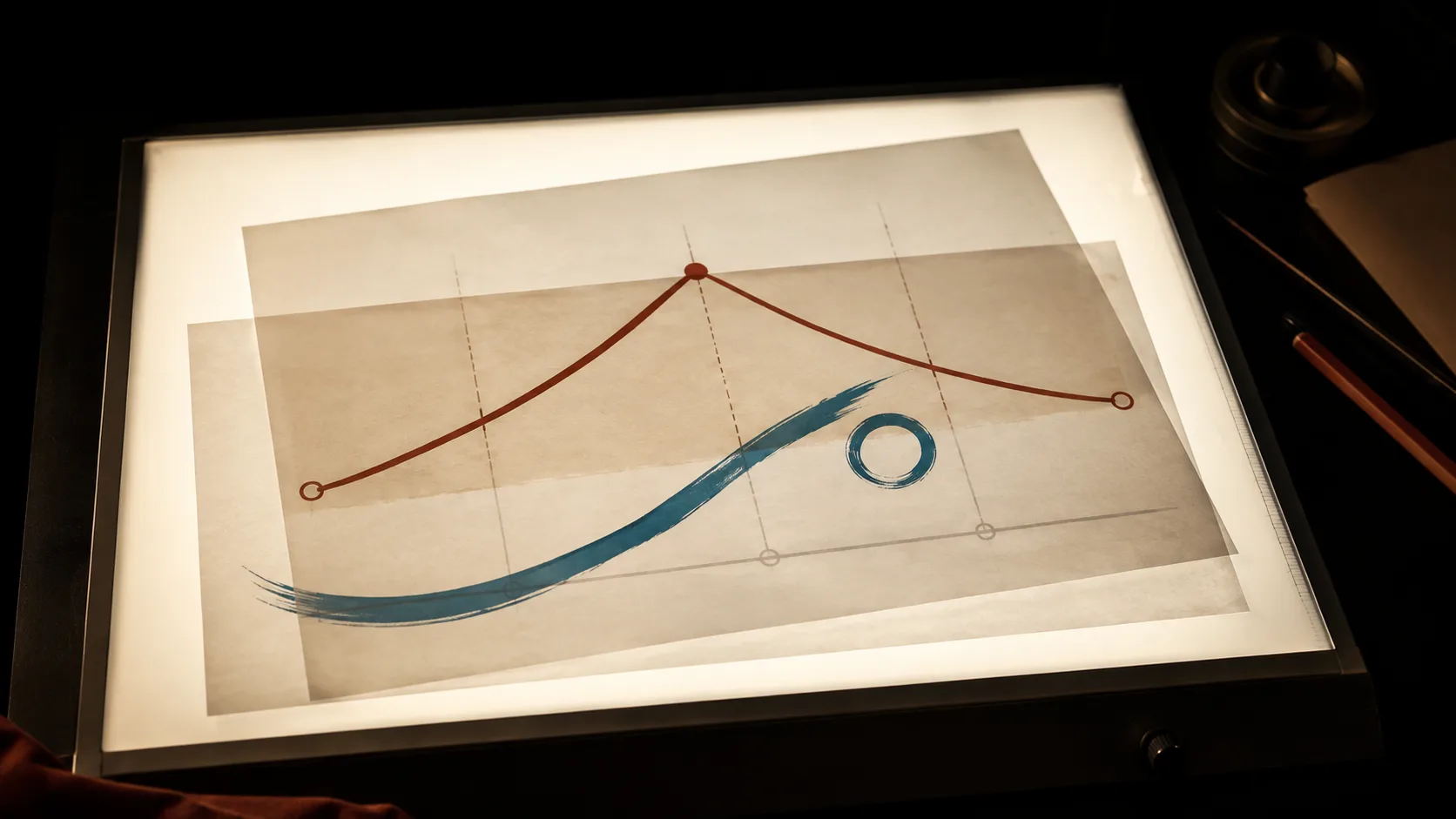
    Act One: Setup

    Act One establishes the main characters, their ordinary world, and the relationships that will be tested. It ends with an inciting incident that forces the protagonist into a new situation from which there is no return. The transition from Act One to Act Two, often called the first plot point, raises the central dramatic question the whole book must answer: Will she escape? Will he solve the murder? Will they win back what was lost? A strong opening also means opening with a character worth following, because scaffolding cannot carry a protagonist readers do not care about.

    Act Two: Confrontation

    Act Two is usually the longest act, roughly half of the total story. Here the protagonist attempts to solve the problem the inciting incident created, faces escalating obstacles, and slowly develops the skills, allies, and self-knowledge needed for the climax. This is where character arc basics get built brick by brick. Somewhere near the middle sits a false victory or false defeat, a moment that raises the stakes further and pushes the protagonist toward their lowest point, sometimes called the dark night of the soul.

    Act Three: Resolution

    Act Three opens as tension reaches its peak. The climax answers the dramatic question, and the resolution that follows shows readers who the protagonist has become. Subplots close, promises made in Act One are paid off, and the story earns its last page. The tiny final action that makes your novel memorable usually lives in this act, in the quiet beat after the climax.

    Takeaway: Setup poses the question. Confrontation earns the answer. Resolution shows what the answer cost.

    Key Plot Points Every First-Time Novelist Must Know

    A manuscript page with red pen marking two critical turning points in the text, showing how plot points redirect the narrative arc.

    Turning Points and Plot Pivots

    A turning point is a specific scene that redirects the narrative. The three-act model contains at least two major ones: the first plot point at the end of Act One and the second plot point entering Act Three. Aristotle insisted scenes form a chain of cause and effect, so every event should lead logically into the next rather than sitting like a stranded episode. Writers who plan turns well often understand how to write twists and unexpected turns that feel inevitable in hindsight.

    The Climax vs. the Resolution

    The climax is not the end of the story. It is the moment of highest tension where the dramatic question is answered. The resolution, sometimes called the denouement, shows the aftermath and the protagonist’s new normal. Subplots also need to reach resolution in Act Three, since loose ends undermine a reader’s sense of a complete story. Writing subplots that complement the main plot is often what separates a satisfying finale from a merely functional one.

    First-time novelists frequently compress Act Two, which should account for roughly half the total page count. Under-developing the middle is one of the most common structural errors in debut manuscripts, and it usually announces itself as a saggy, aimless second act followed by a rushed ending.

    Common Misconceptions About the Three-Act Structure

    Misconception: It Makes Stories Predictable

    Reality: Readers do not consciously notice structural beats. They feel pacing effects, tension, release, momentum, without ever identifying the architecture underneath. A well-executed structure feels invisible. What makes a story feel alive is character specificity, including the self-deception scene that turns readers into fans.

    Misconception: It Only Works for Screenplays

    Reality: The three-act model is used across novels, films, plays, and television. Syd Field popularized it for screenwriters, but the framework predates cinema by more than two millennia. Novels simply give you more room to breathe between the beats, which is where hero and villain tension can develop the depth prose allows.

    Misconception: You Must Outline Before Writing

    Reality: Some writers, often called pantsers, write without a formal outline and discover structure during revision. The three-act model is equally useful as a diagnostic tool applied after a first draft. Alternative structures like the Hero’s Journey, Save the Cat, and Freytag’s Pyramid are largely compatible with the three-act model, adding granularity to the same fundamental arc rather than replacing it. If drafting without a map is your style, writing by the seat of your pants is still compatible with sound structure in revision.

    Related Storytelling Concepts

    Two transparent overlays on a lightbox showing the external three-act structure and internal character arc working in parallel, illustrating how structure and character transformation interact.

    Character Arc

    A character arc tracks the internal change the protagonist undergoes across the story. The three-act structure creates the external pressure that forces that internal transformation. The tension between what the protagonist wants and what they need is the fuel, which is why the gap between want and need in character arcs sits at the heart of nearly every strong novel.

    The Dramatic Question

    The dramatic question is the story’s central spine: a yes/no question posed at the end of Act One whose answer arrives at the climax. Every scene in Act Two should push toward or pull away from that answer. It is the one field that holds your plot together more reliably than any beat sheet.

    Inciting Incident

    The inciting incident is the first major disruption to the protagonist’s ordinary world. It must occur early enough in Act One to launch Act Two without delay. Mentors and co-protagonists then play a structural role through Act Two, providing tools, knowledge, or emotional support, which is why other characters are the real engine of change in most novels.

    Climax and Denouement

    The denouement, or falling action after the climax, resolves remaining subplots, shows the protagonist’s transformed state, and gives readers emotional closure. A rushed denouement is the fastest way to sour a reader on an otherwise strong book. Even a small moment can do the work, especially a scene that makes readers cry after the tension breaks.

    How to Get Started With the Three-Act Structure

    Map Your Story’s Three Acts Before You Write

    Begin by identifying three anchor events: the inciting incident at the end of Act One, the protagonist’s lowest point at the end of Act Two, and the climax in the middle of Act Three. Everything else fills in around these pivots. Index cards, a spreadsheet, or dedicated story-planning software all work; the goal is to see the shape at a glance and spot gaps in pacing. If you are drafting without an outline, pantsers face particular obstacles that structural mapping can quietly solve.

    Use Structure as a Revision Diagnostic

    If you already have a draft, map each existing scene to one of the three acts. Scenes that do not clearly belong to an act, or do not advance the dramatic question, are candidates for cutting or reworking. A single concrete first action beats a week of theorising: write a one-sentence dramatic question for your novel (Will Anna clear her father’s name before the trial ends?) and test every scene against it. To keep momentum in the middle, study looping techniques that make readers want to read on, then apply the diagnostic scene by scene.

    Reading published novels with the three-act framework in mind accelerates structural intuition faster than any theoretical study alone. Pick two books you love, mark the inciting incident, midpoint, and climax on paper, and notice how the writer distributed weight between the acts.

    Frequently Asked Questions

    What is the three-act structure in simple terms?

    It is a story model that splits a narrative into a beginning that sets things up, a middle that raises trouble, and an end that resolves it. Setup, Confrontation, Resolution. Beginning, middle, end.

    How long should each act be in a novel?

    A common ratio is roughly 25% Act One, 50% Act Two, and 25% Act Three. Exact percentages vary by genre and pacing preference, but Act Two is almost always the longest, and first-time novelists usually shorten it too much.

    What is the difference between the inciting incident and the first plot point?

    The inciting incident is the disruption that unsettles the ordinary world. The first plot point is the decision or event that commits the protagonist to the new situation and raises the central dramatic question, closing Act One and launching Act Two.

    Can the three-act structure work for short stories?

    Yes, though the acts compress dramatically. A short story might spend two paragraphs on setup, most of its length on confrontation, and a single scene on resolution. The proportions shift, but the underlying beginning-middle-end logic still applies.

    What is the midpoint in the three-act structure?

    The midpoint sits in the middle of Act Two and typically delivers a false victory or false defeat. It raises the stakes, shifts the protagonist’s approach, and pushes the story toward the lowest point that closes the second act.

    Is the three-act structure the same as the Hero’s Journey?

    No, but they overlap. The Hero’s Journey adds more granular stages (Call to Adventure, Ordeal, Return) inside the same underlying arc. Most Hero’s Journey beats can be mapped cleanly onto the three-act structure without contradiction.

    Do I need to outline before writing if I use the three-act structure?

    No. Many writers discover their structure in revision. The three-act model works equally well as a planning tool before drafting or as a diagnostic during pantser-friendly revision, depending on your temperament and project.

    What is the most common mistake writers make with Act Two?

    Compressing it. First-time novelists often rush through the middle, skipping the escalating obstacles and character growth that make Act Three feel earned. A thin Act Two produces a saggy, unmotivated climax, no matter how strong the opening was.

    Closing Thoughts

    The three-act structure will not write your novel for you, and it will not tell you what your story is about. What it will do is give you a dependable map for the long walk from page one to the final scene, one you can trust when the middle gets murky and the ending feels far away. Use it to plan, use it to revise, and use it to read other writers with sharper eyes. When you are ready to sketch your acts on paper, ClearARC is built for writers who want structure without a machine writing the sentences for them.

  • Novel Story Structure Explained: Planning Your First Book

    Novel Story Structure Explained: Planning Your First Book

    Novel story structure gives your first book a backbone that keeps readers turning pages from the opening hook to the final resolution. Understanding the core frameworks used by published authors helps you make deliberate plotting decisions rather than guessing at what should happen next. ClearARC is built to help writers plan and track those structural decisions from the earliest outline notes through to a finished draft, without any AI writing your book for you.

    What Is Novel Story Structure

    Abstract visualization of narrative tension rising through a story, representing how structure creates emotional impact and inevitability.Story structure is the order in which plot events are told to the reader. It is the framework that determines how cause and effect unfold across a narrative, and it is the reason a book can feel taut and inevitable rather than aimless. Every scene, chapter, and act sits inside that framework, and the framework itself is older than the novel form.

    Aristotle identified plot as the most important component of drama as early as the fourth century BCE, establishing exposition, rising action, climax, falling action, and resolution as the core elements. That vocabulary still travels with us today. If you want a longer view of the recurring patterns underneath most published fiction, the seven major plots every fiction writer should know is a useful primer alongside classical theory.

    A Working Definition

    Structure is not decoration. It is the deliberate arrangement of events that creates emotional impact on a reader who does not yet know where the story is going. As the National Centre for Writing puts it, basic structure is climbing tension building toward a climax, and that principle applies equally to a short story, a chapter, and an individual scene. If you understand that recurring shape, you can plan your novel at any depth you like without losing the pulse of the story.

    Structure vs. Plot: Why the Distinction Matters

    Plot is the raw sequence of events. Structure is how you arrange those events for the reader. A murder can happen on page one or in a flashback three hundred pages in, and the choice changes the entire book. Genre also shapes expectation: plot-driven genre fiction tends to follow tighter frameworks, while character-driven literary fiction may run looser, though even the loosest literary novel still relies on strong character beliefs to give scenes structural weight.

    Takeaway: Structure is a set of decisions about arrangement, not a checklist to be filled in.

    The Major Novel Story Structures Every First-Time Author Should Know

    Multiple published novels arranged to show how different story structures can map the same core events in different ways.Most published novels can be mapped to one of a handful of frameworks. Learning them means you can steal deliberately rather than reinvent the wheel with each draft.

    Three-Act Structure

    Three-act structure divides a narrative into setup, confrontation, and resolution, each act subdivided into beats that mark key plot events. It is the foundational framework of Western storytelling, and it maps cleanly onto reader expectations across most commercial genres. Aristotle’s version places the inciting incident in Act 1, rising stakes and a false victory in Act 2, and the climax and denouement in Act 3, which is broadly how a protagonist gets built into something worth following.

    Freytag’s Pyramid

    Gustav Freytag’s nineteenth-century modification places the climax at the midpoint rather than near the end. The result gives equal narrative weight to the build-up and the untying of tensions, which suits stories where the emotional cost of victory matters as much as the victory itself. Freytag’s pyramid rewards writers who care about the gap between what a character wants and what they need, because the back half is spent living with the consequences of the peak.

    The Hero’s Journey

    Joseph Campbell’s Hero’s Journey, formalised in the 1960s, describes a cycle of departure, initiation, and return that underpins epics from Homer’s Odyssey to modern blockbusters. It is particularly suited to fantasy, sci-fi, and coming-of-age fiction. The cycle also puts real pressure on your antagonist, since a returning hero has to face someone credible, which is why hero and villain tension belongs at the centre of any journey-shaped book.

    Seven-Point Structure

    The Seven-Point Structure uses a hook, two plot turns, a pinch point, a midpoint, a second pinch point, and a resolution. It gives writers a granular beat map across the full manuscript, and it plays especially well with subplots that complement the main plot rather than competing with it. Many thriller and romance writers use it because the pinch points force regular escalations of pressure.

    Takeaway: Pick one framework to learn deeply before mixing them.

    How Story Structure Works in Practice: Key Structural Elements

    Character surrounded by other figures representing how secondary characters and turning points function as structural engines in a novel.Frameworks are made of parts. A few of those parts do more work than the others.

    The Inciting Incident and Door One

    The inciting incident disrupts the protagonist’s equilibrium and launches the quest. It must occur early enough to hook the reader but carry enough weight to sustain the entire narrative. Storm Writing School’s aggregate approach sequences it right after a brief stasis, followed by a first major door, then two to six complications before the midpoint. That first door often forces a character to confront the lie they tell themselves, which is where structure and character arc meet.

    The Midpoint and Major Complications

    The midpoint is not merely a halfway marker. It typically involves a false victory or a revelation that raises the stakes and reorients the protagonist’s goal. Between the midpoint and the climax, complications escalate, and secondary characters carry more weight, which is why the other characters are the real engine of change in most successful novels.

    Climax, Resolution, and Reversal

    The climax is the highest point of tension in the book. As Jane Friedman’s analysis of classic structures points out, every story worth telling is fundamentally about transformation through trials, and the climax is where that transformation costs the protagonist something real. A well-executed resolution usually includes a reversal or surprise that recontextualises earlier events, delivering earned closure. If you want your ending to linger, study the tiny final action that makes your novel memorable rather than piling on more explosions.

    Takeaway: Three moments matter most: inciting incident, midpoint, climax. Nail those and the rest becomes easier.

    Choosing the Right Structure for Your Novel

    Author comparing two different genre novels to select the structural framework that matches their story's needs and voice.Not every framework suits every book. The choice is genre-led first, temperament-led second.

    Matching Structure to Genre

    Genre conventions create reader expectations that structural choices must address. A mystery requires a body and a resolution to the puzzle. A romance requires a meeting, obstacles, and a union. A fantasy epic often blends three-act and Hero’s Journey to accommodate multiple viewpoints. Even literary fiction, which can run looser, benefits from a conscious structural foundation, because readers still want twists and unexpected turns placed with intent.

    Plotters vs. Pantsers: A Structural Middle Ground

    Stephen King famously avoids pre-plotting and discovers structure as he drafts, while many commercial fiction authors outline beats in detail before writing a single chapter. Neither approach is universally correct. Reedsy notes that breaking structural rules successfully requires first mastering them, which is why first-time authors aiming at traditional publishing usually stick to established frameworks. If pure discovery writing terrifies you, there is a hybrid path documented in the pantser’s approach to planning that maps only the major beats and leaves room for scene-level improvisation.

    Takeaway: Match the framework to the genre, then adjust for your temperament, not the other way around.

    Common Misconceptions About Story Structure

    Structure gets a bad reputation among writers who have not yet used it well. Three misconceptions do most of the damage.

    Misconception: Structure Makes Stories Feel Formulaic

    Reality: most critically acclaimed novels can be mapped to a classic structure without feeling predictable. Character, voice, and theme differentiate execution, which is why two books that share the same beat sheet can read as completely different experiences. A tight structure actually amplifies unforgettable characters readers cannot stop thinking about because the scaffolding gives them room to breathe.

    Misconception: Structure Must Be Decided Before You Write

    Reality: structure can be applied retroactively during revision. Many authors discover the shape of their story after drafting and restructure in editing rather than outlining upfront. If you are a discovery writer, the pain typically comes later, which is why pantsers face the most ferocious obstacle of all when their manuscript hits sixty thousand words with no midpoint in sight.

    Misconception: One Structure Fits Every Novel

    Reality: no single structure is universally correct. Reedsy documents at least seven distinct story structures in active use, and other guides list closer to sixteen. Longer novels, particularly epic fantasy or multi-POV literary fiction, often layer multiple frameworks simultaneously, and subplots often try to tell you something about which structural layer they actually belong to.

    Takeaway: Structure is scaffolding, not a straitjacket. Discard the myths early.

    How to Start Planning Your Novel’s Structure Today

    You do not need to solve everything before you start. You need to solve enough.

    Step 1: Identify Your Core Structural Framework

    Select one structural model that matches your genre and writing style. Three-act structure is the recommended starting point for first-time novelists because it maps cleanly to reader expectations across most commercial genres. Once you have chosen, read two or three books in your genre with the framework in mind, ideally ones with protagonists who feel anything but boring, and mark the beats in the margin.

    Step 2: Map Your Key Beats Before You Draft

    Map at minimum five anchor beats before drafting (note – beats are called ‘events’ in ClearARC – ‘beats’ is very much a screenplay writer’s term, ‘events’ is a better description of what they’re about – treat beats as single events): the opening hook, the inciting incident, the midpoint, the darkest moment, and the climax. Everything between can be discovered in the draft. Sketch each on an index card or a single page, and note the emotional shift each beat delivers, because a scene that makes readers cry tends to sit on one of those anchor beats rather than between them.

    Step 3: Use Planning Tools to Track Structure Across Chapters

    Tracking structure at the chapter and scene level helps you catch pacing problems early, such as a midpoint that arrives too late or a second act that stalls. The National Centre for Writing advises that each scene should mirror the macro structure of a full novel: a disruption, escalating tension, and a small resolution or reversal that propels the reader forward. Digital planning tools that visualise story arcs and chapter tension, along with resources on character arc basics, let you course-correct before you invest hundreds of hours in a structurally flawed draft.

    Takeaway: Pick a framework, map five anchor beats, and track structure as you draft.

    Frequently Asked Questions

    What is novel story structure and why does it matter?

    Novel story structure is the deliberate arrangement of plot events for the reader. It matters because it turns raw incidents into cause-and-effect narrative, controls pacing, and meets the genre expectations that keep readers turning pages.

    What is the best story structure for a first novel?

    Three-act structure is the safest starting point. It is genre-flexible, easy to learn, and it maps cleanly to reader expectations across commercial fiction. Master it first, then experiment with Freytag, Hero’s Journey, or seven-point structure on later projects.

    What are the main elements of three-act structure in a novel?

    Three-act structure contains setup, confrontation, and resolution. Inside those acts sit key beats: the hook, inciting incident, first plot point, midpoint, second plot point, climax, and denouement. Each beat marks a shift in stakes or the protagonist’s understanding.

    Can I write a novel without following a story structure?

    Technically yes, but readers still expect a promise of story movement. Discovery writers usually impose structure during revision rather than skipping it entirely. Books that ignore structure completely tend to feel aimless and rarely find a traditional publisher.

    What is the difference between story structure and plot?

    Plot is the raw sequence of events in your story. Structure is how you arrange those events on the page for the reader. Same plot, different structure, entirely different reading experience, especially in mystery and literary fiction.

    How long should each act be in a novel?

    A common split is 25 percent for Act 1, 50 percent for Act 2, and 25 percent for Act 3. Freytag’s model puts the climax at the midpoint, which shifts the ratio. Use these as guidance, not law.

    What is the inciting incident in a novel?

    The inciting incident is the event that disrupts the protagonist’s equilibrium and launches the quest. It typically arrives within the first fifty pages, carries enough weight to sustain the entire narrative, and forces the character to act rather than merely react.

    How do I choose the right story structure for my genre?

    Start with reader expectations. Mystery and thriller favour seven-point or tight three-act. Fantasy and coming-of-age suit Hero’s Journey. Literary fiction can use looser Freytag variations. Read three successful books in your genre and reverse-engineer their beats.

    Conclusion

    Novel story structure is not a formula you fill in. It is the quiet architecture that lets your characters, voice, and themes carry real weight for a reader who is trusting you with several hours of their attention. Learn one framework properly, map your anchor beats before you draft, and track how each chapter sits inside the whole. When you are ready to move from margin notes and index cards to a planning system that keeps every beat and arc in view, ClearARC is designed for writers who want to plan their own novel, by hand, with no AI writing over their shoulder.

  • Narrative Story Structure Explained For Fiction Writers

    Narrative Story Structure Explained For Fiction Writers

    Narrative story structure is the framework that organizes how a story’s events, characters, and conflicts are arranged and delivered to readers. For fiction writers, understanding this framework is the difference between a manuscript that holds the reader’s attention and one that loses it. ClearARC helps writers map, test, and refine their structure before drafting, so the foundation is solid from the first page.

    What Narrative Story Structure Actually Means

    Wikipedia's story structure entry showing narrative theory and definitions for fiction writers.Narrative structure is the recognizable, organized way a story’s different elements are unified, including the particular ordering of plot events. According to Wikipedia’s entry on story structure, this ordering has been shown to influence how the brain organizes and retains narrative information, which means structure is a cognitive concern as much as a craft one. Most Western structures share the same five beats: exposition, rising action, climax, falling action, and resolution. If you understand that skeleton, you can plan your novel with intention instead of hoping the shape will appear on its own. There’s a beautiful talk by Kurt Vonnegut on story shape on YouTube.

    The Difference Between Story and Plot

    Story is the full sequence of events as they happen inside the fictional world. Plot is the specific order in which you choose to present those events to the reader. A character’s childhood happens in the story; whether the reader learns about it in chapter one or chapter twelve is a plot decision. Confusing these two is one reason drafts feel muddled, and it is why writers benefit from thinking about the seven major plots every fiction writer should know before drafting the first scene.

    Why Structure Is Not a Formula

    Adopting a pre-existing structural blueprint does not guarantee a formulaic story. Nearly every novel can be analyzed through one or more classic structures without losing its individuality, because structure organizes sequence while voice, theme, and character remain entirely yours. Compelling characters live comfortably inside a three-act shape or a seven-point scaffold; the structure gives them room to move.

    The Core Elements Every Narrative Structure Contains

    An open book on a table with a bookmark, representing the core elements and turning points within narrative structure.Nearly every recognized structure rests on the same underlying elements. Learning them once means you can recognize them everywhere, from a genre thriller to a literary novel, and you can use them to write scenes that land emotionally rather than sitting inert on the page.

    Exposition and Inciting Incident

    The exposition establishes setting, main characters, their backgrounds, relationships, and the dynamics of the world before conflict begins. Then the inciting incident, sometimes called the catalyst, arrives as the dynamic event that disrupts the protagonist’s ordinary world and compels action. This is not the climax and not a subplot; it is the specific hinge that starts the story. Give your protagonist a real ordinary life first, because a character worth following in chapter one makes the disruption matter. Adding a note about the inciting incident in ClearARC is easy using the attachment feature, it will then show up in the timeline pinpointing not only where it occurs in your book and what happens, but also who or what is involved.

    Rising Action and Midpoint

    Rising action is the bulk of most stories. It is where the protagonist and antagonist conflict develops most fully, where character arcs deepen, and where subplots braid into the spine. The midpoint reorients everything: new information lands, stakes rise, or the goal shifts. This is also where the gap between what a character wants and what they need usually becomes visible to the reader, even if the character is still blind to it.

    Climax, Falling Action, and Resolution

    The climax answers the story’s central dramatic question, for example, “Will X defeat the antagonist?” or “Will Y and Z reconcile?” It marks the peak of tension. Falling action releases pressure, and the resolution closes the loop on remaining crises and loose ends. Both success and failure are valid outcomes, but the ending must be conclusive. Often, a tiny final action is what turns a competent ending into a memorable one.

    The Most Widely Used Narrative Story Structures

    A notebook with hand-sketched story arcs showing different narrative structure patterns that writers use.Several named structures dominate craft conversations. None is objectively best, but each solves a slightly different problem. If you already know that your subplot is trying to tell you something, the right structure will help you hear it more clearly.
    Three-Act Structure

    The three-act structure, setup, confrontation, and resolution, was first described in the fourth century A.D. by Aelius Donatus in his commentary on Terence, and later popularized for modern writers by Syd Field’s Screenplay. It is the default for commercial fiction and film, and it pairs naturally with strong hero-villain tension because the confrontation act gives that conflict room to breathe across a long middle.

    The Hero’s Journey

    Drawn from Joseph Campbell’s monomyth, the Hero’s Journey follows a protagonist who leaves an ordinary world, faces trials, meets mentors and allies, confronts a supreme ordeal, and returns transformed. You can trace it through The Odyssey, Star Wars, and countless fantasy novels. The transformation piece is the heart of it, which is why it works best when your protagonist has a lie they tell themselves at the start, ready to be dismantled by the journey.

    Five-Act Structure and the Freytag Pyramid

    Gustav Freytag developed his pyramid in 1863 while analyzing Greek and Shakespearean drama. It maps five acts: exposition, rising action, climax, falling action, and denouement. It is still useful for tragedies and long novels with sprawling casts, particularly when you need to give supporting characters enough space to matter before the story tightens toward its climax.

    Other Structures: Save the Cat and the Seven-Point Method

    Blake Snyder’s Save the Cat beat sheet breaks the narrative into 15 precise plot beats, originally for screenwriters but widely adopted by novelists. The Seven-Point Story Structure, hook, plot turn one, pinch point one, midpoint, pinch point two, plot turn two, and resolution, offers a symmetrical scaffold that genre fiction writers find easy to memorize. Both frameworks make it easier to write twists and unexpected turns because they mark the exact places where a turn belongs.

    Narrative Structure Across Different Fiction Genres

    Different genres carry different structural expectations, and readers absorb those expectations long before they open your book.

    Genre Conventions and Structural Expectations

    Commercial fiction genres, romance, thriller, fantasy, mystery, carry reader expectations for specific structural beats. Romance readers expect the meet, the deepening, the dark moment, and the reconciliation. Thriller readers expect escalating stakes and a climactic confrontation. Deviating from these beats without clear purpose risks losing audience satisfaction, so treat conventions as promises. The antagonist in a thriller, for instance, has structural work to do that a literary novel’s antagonist may not.

    Non-Linear and Experimental Structures

    Literary fiction more often employs non-linear, fragmented, or episodic structures. In medias res openings, reverse chronology, and parallel timelines reorder when events are revealed without changing the underlying story logic. Story structure also varies by cultural context; the named Western structures do not universally apply across global storytelling traditions. Editors generally advise newer writers to establish a track record with conventional structure first, particularly when pursuing traditional publishing, and to save experimentation for later work where the connective tissue between plot and character is already second nature.

    How to Choose the Right Structure for Your Story

    Reedsy's guide to story structure on screen, showing resources for matching narrative frameworks to your story type.The right structure follows the type of journey your story takes and the obstacles your characters face. According to Reedsy’s guide to the seven story types, Christopher Booker’s archetypes, Overcoming the Monster, Rags to Riches, The Quest, Voyage and Return, Comedy, Tragedy, and Rebirth, offer a useful lens for matching structure to premise before you commit.

    Matching Structure to Story Type

    If you can identify your inciting incident, first-act turn, midpoint, second-act turn, and climax before drafting, you already have a functional structural skeleton regardless of which named framework you use. A quest story fits the Hero’s Journey. A domestic drama may sit more comfortably in five acts. A high-concept thriller often snaps neatly into Save the Cat. What matters is that your protagonist has something specific and hard to do, and the structure gives them the runway to do it.

    Plotting vs. Pantsing Within a Structure

    Plotters map structure in detail before drafting. Pantsers can use the same frameworks retroactively during revision to diagnose pacing problems. Both approaches work, and neither is superior. If you are the second kind of writer, structure applied in revision can rescue a draft that feels shapeless without asking you to change how you generate scenes in the first place.

    Common Misconceptions About Narrative Story Structure

    A few durable myths keep writers from using structure well. Clearing them up is often enough to unblock a stalled draft, especially when paired with attention to the beliefs your major characters carry into every scene.

    Misconception: Structure Kills Creativity

    Reality: Structure organizes the sequence of events. It does not dictate voice, theme, character, or subject matter. The creative choices about what happens and how it is written stay entirely with you, which is why two novels built on the same three-act scaffold can feel nothing alike.

    Misconception: All Stories Must Follow a Three-Act Shape

    Reality: The three-act structure is not universal. Episodic fiction, linked short story collections, and many literary novels operate on entirely different organizing principles. Aristotle himself argued for a two-act structure, complication and dénouement, split by a peripeteia; the three-act attribution to him is a long-running mistake. Read widely, and you will find subplots and structures that break the mold on purpose.

    Misconception: Structure and Style Are the Same Thing

    Reality: Style refers to how prose is written, sentence rhythm, diction, point of view. Structure refers to the order and arrangement of narrative events. They operate independently. Breaking conventional structure intentionally and successfully requires understanding those conventions deeply first; effective rule-breaking is informed, not accidental, and it usually rests on a character arc strong enough to carry the risk.

    Frequently Asked Questions

    What is narrative story structure in simple terms?

    Narrative story structure is the order and shape in which you present the events of a story to the reader. It organizes exposition, conflict, climax, and resolution so the story feels intentional rather than accidental.

    What are the main types of narrative story structure?

    The most common are the three-act structure, the Hero’s Journey, Freytag’s five-act pyramid, Save the Cat’s fifteen-beat sheet, and the seven-point method. Each maps the same underlying story elements onto a slightly different scaffold.

    What is the difference between story structure and plot structure?

    Story is the full sequence of events in the fictional world. Plot is the order in which you reveal those events to the reader. Story structure and plot structure overlap heavily, but plot is where authorial choice lives.

    Does every fiction story need a formal structure?

    Every story has structure whether you plan it or not. The question is whether that structure is intentional. Formal frameworks are optional, but readers still expect setup, conflict, escalation, and resolution in some recognizable form.

    What is the three-act structure in storytelling?

    The three-act structure divides a story into setup, confrontation, and resolution. Act one introduces character and world, act two develops the central conflict through rising action and a midpoint, and act three delivers the climax and aftermath.

    How do I choose the right narrative structure for my novel?

    Match the structure to the journey. Quest and transformation stories suit the Hero’s Journey. Genre fiction often fits three acts or Save the Cat. Literary work may need a looser scaffold. Start with your dramatic question.

    Can I break traditional narrative structure rules and still write a good book?

    Yes, but successful rule-breakers know the rules deeply first. Editors generally advise establishing a track record with conventional structure before experimenting, particularly if you plan to pursue traditional publishing with a debut novel.

    What is the difference between story and plot?

    Story is what happens, in chronological order, inside the fictional world. Plot is how you arrange and present those events to the reader. A flashback, for example, is a plot choice imposed on an unchanged underlying story.

    Conclusion

    Narrative story structure is a tool, not a cage. Learn the classic frameworks, understand the elements they share, and choose the one that fits the specific journey your protagonist has to take. Then trust the shape and write the book. When you are ready to sketch beats, test act turns, and pressure-check your climax before you commit to a full draft, ClearARC’s structure-first approach is built for exactly that work.