
Christopher Booker’s 736-page study, published in 2004 after thirty-four years of research, argues that every story ever told falls into one of seven archetypal plot shapes. Whether you are drafting chapter one or revising a final act, understanding these patterns gives your manuscript a backbone that readers feel even when they cannot name it. Writers working with ClearARC can use this framework as a structural compass from the first blank page forward.
What the Book Actually Argues
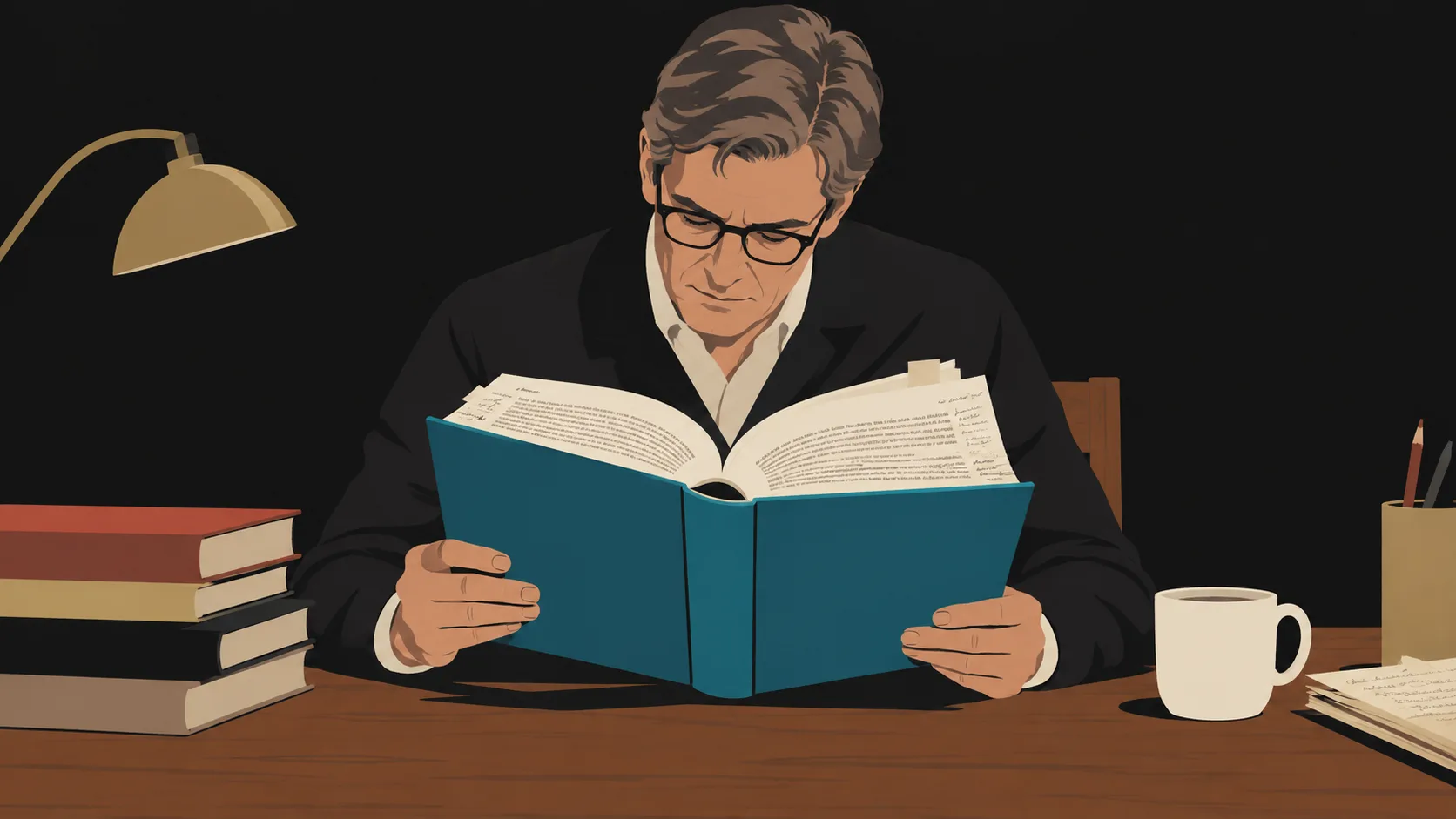
Booker was not writing a quick craft guide. He spent thirty-four years on the manuscript, and the finished volume, published in 2004, runs to 736 pages of Jungian literary analysis. The scale matters: he was trying to describe the deep grammar of storytelling itself, not hand novelists a set of scene beats. If you want a shorter orientation before diving into the book, this companion breakdown of Booker’s seven plots covers the essentials.
The Central Thesis: One Hero, Many Faces
At the heart of the book sits a single claim: every story is really about one figure, the hero, and the reader’s job is to track that figure’s slow movement toward self-realisation. Every other character, in Booker’s reading, represents an aspect of the hero’s inner life rather than a fully independent person. That is a strong claim, and it changes how you think about your cast; the shadow, the mentor, and the beloved all become mirrors. If your ensemble feels flat, look again at how supporting characters push the protagonist to change.
The Meta-Plot That Runs Through All Seven
Booker also identifies a universal meta-plot with five stages: anticipation, dream, frustration, nightmare, and resolution. The hero is called, tastes early success, hits a wall, faces apparent defeat, and finally triumphs. He then argues that storytelling has evolved over 5,000 years and that many modern stories have “lost the plot” by drifting from this archetypal purpose. Take this as a diagnostic frame first; it pairs neatly with any three-act story structure you may already be using.
Takeaway: treat the meta-plot as the spine and the seven plots as the muscle that hangs on it.
The Seven Plots, One by One

Booker’s plots are not genres. They are the shapes of change your protagonist undergoes. A ghost story and a war novel can share the same plot if the hero’s journey lines up. Reading them side by side is the quickest way to see the pattern, and it also helps you decide what structural template best fits your novel.
Plots 1–3: Monster, Riches, and the Quest
- Overcoming the Monster. A protagonist confronts and defeats a threatening antagonist. Beowulf, Dracula, Jaws, and Star Wars: A New Hope all fit. The tension only crackles if the antagonist has real weight, which is why hero and villain tension deserves its own craft attention.
- Rags to Riches. A poor hero gains power or love, loses it, then earns it back through inner growth. Cinderella, Jane Eyre, and Great Expectations are the canonical examples.
- The Quest. A hero and companions travel toward a vital goal, resisting temptations along the way. The Iliad and The Lord of the Rings are the textbook cases.
Notice how each of these depends on a protagonist whose interior life shifts. A character arc that actually moves is what turns any of these shapes into a real story.
Plots 4–5: Voyage, Comedy, and Tragedy
- Voyage and Return. The hero enters a strange world, survives its trials, and comes home changed. Alice’s Adventures in Wonderland, The Hobbit, and Gone with the Wind all sit here.
- Comedy. Confusion and misunderstanding tangle the cast, then resolve into recognition and union.
- Tragedy. A fatal flaw pulls a promising figure downward, past the point of no return.
Tragedy is worth pausing on, because it is where writers most often flinch. The turn hinges on self-deception, and the reader needs to feel the moment the hero refuses to see clearly. That is exactly the beat covered in the lie your character tells themselves.
Plots 6–7: Rebirth and Beyond
- Rebirth. A dark figure is redeemed before it is too late. A Christmas Carol and Beauty and the Beast are the clearest examples.
Booker adds that some works blend shapes, and later readers have argued that the book actually treats nine, not seven, if you count “Rebellion Against the One” and “Mystery.” Do not let the accounting distract you. The point of the taxonomy is to give you a name for what your draft is doing, so you can plan around it rather than discovering the shape only in revision.
Takeaway: name your plot early. It clarifies which beats you owe the reader.
The Jungian Psychology Behind the Framework

Booker draws directly on Carl Jung, and the book only makes sense once you accept that starting point. According to the publisher’s own summary on Goodreads, he argues that humans are “programmed” to imagine stories in these shapes because storytelling served an evolutionary function across millennia. The seven plots, in this view, are not conventions writers invented; they are patterns that surface from the collective unconscious.
Archetypes and the Human Psyche
The recurring characters, the shadow, the anima, the mentor, are projections of the hero’s inner landscape rather than realistic individuals. That framing is useful even if you find the psychology overstated. It gives you a reason to ask what each supporting character is doing for your protagonist’s transformation, and it can rescue a cast that has grown crowded. If minor players keep vanishing from your draft, the diagnosis in the disappearing side character problem is often closer to the truth than “I forgot about them.”
Why Stories Are ‘Hardwired’ Into Us
Booker traces his examples across 5,000 years, from myth and folk tale to twentieth-century film, arguing the patterns have stayed remarkably stable. Whether or not you buy the biological claim, the cultural consistency is hard to ignore. Readers do seem to expect these shapes, and giving them a recognisable frame is one way to open a book with a character worth following.
Takeaway: archetypes are a lens, not a leash. Use them to see what your reader is already expecting.
How Writers Can Actually Use This Framework

The framework earns its keep at the desk, not in the seminar room. Once you can name the plot shape you are working in, structural gaps become obvious: a Quest missing its temptation sequences, a Rebirth where the dark turn is under-written, a Tragedy without a real point of no return. This is where the theory turns into a working chapter-by-chapter outline.
Diagnosing a Stuck Manuscript
Lay the five meta-plot stages over your draft, one at a time. Can you point to a scene of anticipation? A dream phase where the hero is briefly triumphant? A frustration beat? A nightmare? A resolution that costs something? If any stage is thin or missing, you have found the reason the middle sags. This is a common problem for writers drafting by instinct rather than plan, and Booker’s checklist is a gentle way back onto the road.
Mapping Your Story to a Plot Shape
Name the plot at the planning stage, not in revision. If you are writing Rags to Riches, you owe the reader the loss between the rise and the final gain. If you are writing Voyage and Return, the strange world must genuinely test the hero, not just decorate the middle. Booker also warns that stories drift when ego-driven choices override the hero’s real transformation, which is a useful lens when you sit down for a serious pass of self-editing.
Takeaway: the seven plots make excellent structural checklists. They make lousy commandments.
Honest Criticisms Worth Knowing
No serious writer should adopt this framework without hearing the objections. Goodreads readers rate the book 3.77 out of 5 across 1,816 ratings, and the reviews are often sharp. The Wikipedia summary of the book also flags the ideological shading that many readers find hard to swallow.
Academic and Ideological Objections
Booker’s lens is conservative and Jungian, and it colours his judgements. He condemns much of modernist and experimental storytelling as “lost plot,” a verdict many writers reasonably reject. The book contains no footnotes or bibliography despite running past 700 pages, which limits its standing as an academic reference. Take his readings of specific novels with a pinch of salt, and lean instead on his structural observations, which travel better than his taste. When you want a second opinion on structure, sit the book beside a straightforward three-act structure guide.
What the Framework Does Not Cover
Some analysts note Booker effectively treats nine plot types, not seven, once “Rebellion Against the One” and “Mystery” are counted. He also says little about voice, sentence craft, or the small decisions that make one novel feel unlike any other. Treat the seven plots as one lens among many. Pair them with your own hard thinking about theme, subplot, and the twists that keep a reader turning pages.
Takeaway: use the book for its architecture, not for its verdicts.
Conclusion: A Map, Not a Cage
The seven plots are most useful as diagnostic tools. They help a writer see what a story is trying to become, rather than prescribing what it must be. Lay the meta-plot stages over any draft in any genre and you will find the weak joints quickly enough. What the framework cannot supply is the specific, original, hand-cut detail that makes your novel yours; that still comes from your notebook, your coffee, and your willingness to sit down again tomorrow. If you want a quiet workspace to keep planning and drafting in one place, ClearARC was built for exactly that kind of patient work.
FAQ: Frequently Asked Questions
What are the seven basic plots identified by Christopher Booker?
Booker names Overcoming the Monster, Rags to Riches, The Quest, Voyage and Return, Comedy, Tragedy, and Rebirth. He argues every story, from ancient myth to modern film, fits one of these seven archetypal shapes.
How long did Christopher Booker take to write The Seven Basic Plots?
Booker worked on the book for thirty-four years before publishing it in 2004. The finished volume runs to 736 pages and covers examples from myth, folk tale, classical literature, and twentieth-century film.
What is the meta-plot in Booker’s theory?
The meta-plot is a five-stage pattern Booker sees running through all seven plots: anticipation, dream, frustration, nightmare, and resolution. The hero is called, tastes success, hits a wall, faces apparent defeat, and finally triumphs.
Is The Seven Basic Plots based on Jungian psychology?
Yes. Booker draws explicitly on Carl Jung’s theory of archetypes, arguing the seven plots emerge from the collective unconscious. Supporting characters, in his reading, represent aspects of the hero’s inner life rather than fully independent people.
What are the main criticisms of The Seven Basic Plots?
Critics fault Booker’s conservative ideological lens, his dismissal of modernist fiction as “lost plot,” and the absence of footnotes or bibliography in a 700-page work. Some also argue the book actually describes nine plots, not seven.
Can a story fit more than one of Booker’s seven basic plots?
Yes. Booker himself notes that many works blend shapes, especially longer novels and film series. The Lord of the Rings, for instance, reads as both a Quest and an Overcoming the Monster story depending on which thread you follow.
How is Booker’s framework different from other story structure theories like the Hero’s Journey?
Campbell’s Hero’s Journey describes one universal pattern; Booker names seven distinct plot shapes plus a shared meta-plot. Booker is also more literary and Jungian, where Campbell is comparative-mythological. The two frameworks complement each other rather than compete.
Is The Seven Basic Plots useful for fiction writers today?
Yes, as a diagnostic tool. Naming your plot shape early clarifies which beats you owe the reader and exposes structural gaps in a draft. Treat it as a checklist, not a rulebook, and it repays the reading.