
To finish a first novel, pick a story you are excited by, define what a first draft means to you, plan the plot and characters before you write, set a realistic schedule, and keep writing every day without polishing as you go. The tips below turn each part into something you can pick up with a pen this week.
How we ranked these first novel tips
Plenty of writing advice sounds wise and gets nobody to the last page. Each tip here was judged against five plain criteria:
- Finishability. Does it move a draft towards “The End”, or just make the start feel nicer?
- Effort to start. Can you act on it today, at the kitchen table, with a coffee?
- Fit for first-timers. Does it assume skills or contacts a new novelist does not have yet?
- Practicality. Does it produce a page, a plan or a schedule you can hold?
- No reliance on inspiration. Does it still work on a grey Tuesday when the muse has left the building?
Takeaway: if a tip fails the grey Tuesday test, it ranks low here, however inspiring it sounds.
Quick summary: 8 first novel tips
- Plan with ClearARC, one no AI app from plan to publish.
- Pick a story that excites you, one you would love to read. Best for Motivation
- Define your first draft, a skeleton rather than a manuscript. Best for Perfectionists
- Set a realistic schedule, built on your real writing pace. Best for Busy Lives
- Write every day, consistency over waiting for inspiration. Best for Momentum
- Skip marketing until the book exists, drafting before selling. Best for Focus
At a glance: tips compared
| Rank | Tip or tool | Cost | Best for | Standout |
|---|---|---|---|---|
| 7 | ClearARC | £8 a month | Planning and writing in one place | Single version with everything; character arc tracker |
| 3 | Define your first draft | Free | Perfectionists | Lowers the bar to a skeleton |
| 4 | Realistic schedule | Free | Busy lives | Matches goals to your real pace |
How the free kit and ClearARC map to the tips
The tools are not separate from the advice. They are the advice, made physical:
| Tool | What it is | Tip it solves |
|---|---|---|
| One-page plan (kit) | Your story on one sheet | Picking and pinning down the idea |
| Chapter-planning grid (kit) | A grid of chapters to fill | Mini-deadlines, chapter by chapter |
| Seven-plots cheat sheet (kit) | The classic plot shapes in brief | Choosing a structure before drafting |
| Email series (kit) | A series of emails alongside the kit | – |
| Character view (ClearARC) | Separate internal starting position and external goal | Planning characters before you write |
| Arc tracker (ClearARC) | Internal shift plotted alongside external plot points | Knowing where the middle is heading |
Takeaway: the kit needs only pen and paper, so cost is never the reason not to plan.
7. Plan with ClearARC, a no AI writing tool
 ClearARC in a sentence: a single app where you plan, plot, write and publish your book from scratch, with no AI writing it for you.
The features that matter most for a first book are your characters:
- Character planning view. Each character gets a separate internal starting position and external goal, so you know who they are and what they want before chapter one.
- Arc tracker. The timeline plots the character’s internal shift alongside the external plot points, which is the map all novels need.
- Plan to publish in one place. It is a single app for planning, plotting, writing, and exporting for publishing.
On pricing: it includes everything you need, and you can cancel directly with PayPal. If you want the deeper background on structure first, our guide to novel story structure for your first book will help.
Caveat: it is a tool, not a writing teacher (use the ClearARC blog for all your writer learning needs). It will hold your plan; you still have to write the sentences.
Takeaway: set up your protagonist’s internal start and external goal before drafting a single scene.
6. Grab the free First-Novel Finisher’s Kit
Not ready for software? Start on paper. The free First-Novel Finisher’s Kit contains:
- A one-page plan
- A chapter-planning grid
- A seven-plots cheat sheet
- A series of emails
It is free and needs only pen and paper. That makes it ideal for the first evening: clear the table, fill the one-page plan, then rough out chapters on the grid. If the grid sparks questions, see how to build a chapter planning template for your first novel, and for the cheat sheet, the seven basic plots explained.
Caveat: it is a plan, not the writing itself. A beautiful grid with no chapters behind it is still an empty book.
Takeaway: fill in the one-page plan in a single sitting, then stop and start chapter one tomorrow.
2. Pick a story that excites you and define your first draft
 These two belong together, because both are about stamina.
Choose the idea you would love to read
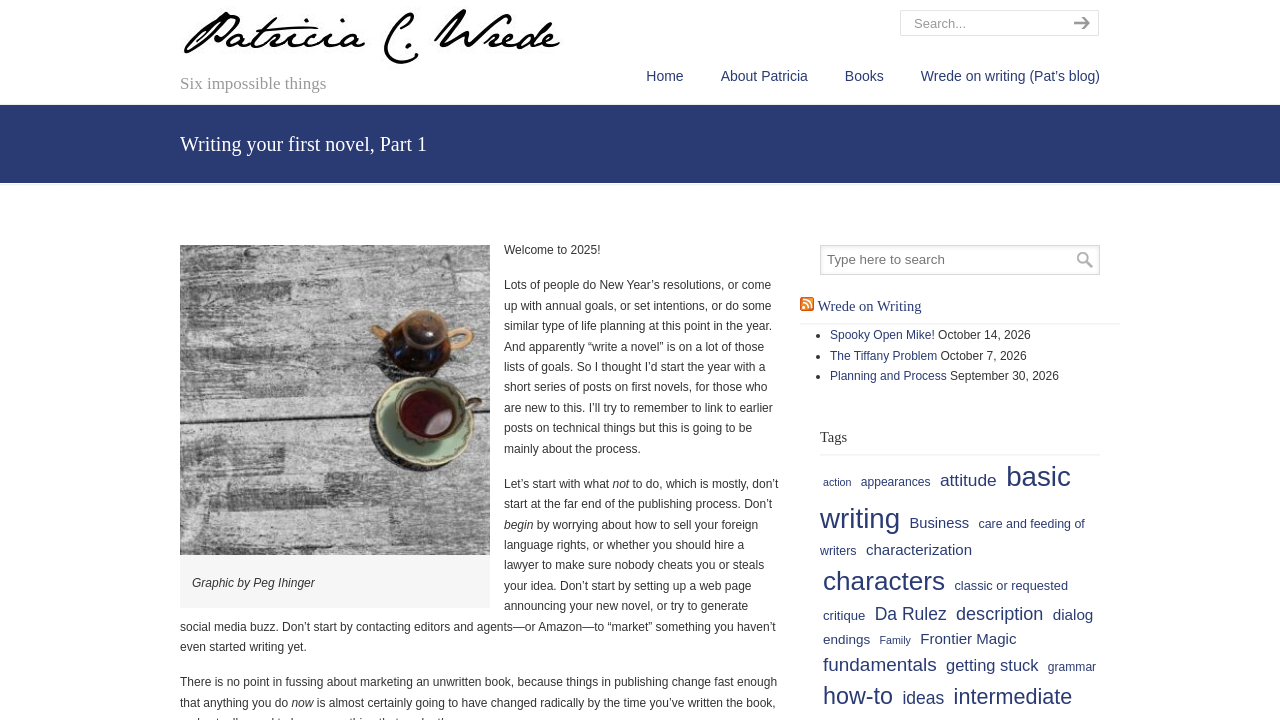
Novelist Patricia C. Wrede advises picking a story that gets you excited, one you would love to read if someone else had written it, because that helps carry you to the end. Faber Academy makes a similar point: write what you really want to write, and do not worry too much about publishing trends, which may have passed by the time your book is finished.
Treat the first draft as a skeleton
Curtis Brown Creative suggests defining what “first draft” means to you, since expecting a polished manuscript can block you before you start. Think of it as bones: some missing, some in the wrong place, but something to build on.
Unsure whether to outline heavily? Read plotter or pantser to find your style, then see how to create a novel outline from scratch.
Caveat: excitement fades in the middle of every book. That is why the plan in tips one and two matters.
Takeaway: write one sentence defining your first draft (“rough, complete, unedited”) and pin it above your desk.
4. Set a realistic schedule and write daily
Get a sense of how fast you actually write, then make a schedule around that rather than around hope. That is the advice in a widely shared r/writers thread on writing a first novel: plan realistically and manage your expectations.
The rest follows a simple pattern:
- Make the time. NY Book Editors argues there will never be a perfect time; you must make it.
- Choose consistency over inspiration. The same guide says successful novelists write every day rather than waiting to feel inspired.
- Set mini-deadlines. The Wordling recommends treating a book as small sections or scenes, done a little each day, with mini-deadlines to keep you accountable.
When a day goes nowhere, read our guide to help you beat writer’s block on your first novel. For a well-known example of routine, see Stephen King’s writing routine.
Caveat: your pace is yours. Do not borrow someone else’s word targets; measure your own for a fortnight.
Takeaway: give each chapter on your grid a date, and treat that date like an appointment.
5. Skip marketing until the book exists
 Wrede is blunt here: do not start at the far end of the publishing process. Selling foreign rights, building a web page, chasing social media buzz or contacting agents for a book you have not written is wasted effort, because publishing changes fast enough that your plans will likely be out of date by the time the book is done. She also notes that most writing advice is contradictory, which is one more reason to stay at your desk.
When the draft is finished, then turn to publishing your finished book or self-publishing a novel.
Takeaway: keep a “later” notebook for every publishing thought, and close it until you type the last line.
How to choose your first novel tips
Start with the plan, because it scores highest on finishability and the free kit makes the effort to start almost zero. Next, set your schedule from your real pace, since consistency is what carries a draft past the middle. Then draft every day without polishing, treating each chapter as a mini-deadline. Leave marketing for last; it fails every criterion while the book is unwritten.
FAQ: Frequently Asked Questions
How do you go about writing your first novel?
Pick a story you are excited by, plan the plot and characters, set a realistic schedule and write daily without polishing. A one-page plan and chapter grid make the first step concrete and quick.
How long is a first novel usually?
It depends heavily on genre, so check typical lengths for books like yours. For the first draft, length matters less than completeness; a rough skeleton you can expand later is the real goal.
How much money can a writer make?
Earnings vary enormously with genre, publishing route, number of books and marketing. For a first novel, focus on finishing; income questions only become answerable once a completed, edited book exists.
What are the best websites to write a book for free?
A good free starting point needs no website at all: the First-Novel Finisher’s Kit is free and needs only pen and paper, giving you a one-page plan and chapter grid.
Do I need to plan before writing?
Some planning helps almost everyone finish. Knowing your characters, what they want and what stands in their way gives the middle direction, even if you discover details as you write.
What should a first draft look like?
Rough. Think of it as a skeleton: the bones of the story are there, some missing or misplaced. Expecting a polished manuscript at this stage often stops writers before they begin.
Should I worry about publishing trends?
Not while drafting. Trends often pass before a book is written, revised and published. Write the story you genuinely want to write; that interest is what carries you to the end.
Conclusion
Finishing a first novel is less about talent than about a plan, a pace and a daily page. Choose the story you love, define a rough draft, set your schedule and leave marketing for later. If you want planning, plotting and writing in one quiet, no AI place, see how ClearARC works. Then pick up the pen and finish the book.