Tag: writing routine

  • How To Write A Book: A Step-By-Step Guide For First-Time Novelists

    How To Write A Book: A Step-By-Step Guide For First-Time Novelists

    Writing your first novel is one of the most rewarding creative projects a person can undertake, and also one of the most misunderstood. Most first-timers stall not from lack of talent but from lack of a clear process. ClearARC exists to help writers move from idea to finished manuscript with structure, not shortcuts. This guide walks through every stage, from the first spark to a polished draft ready for the world. Expect roughly six months to two years of consistent work, at a beginner-to-intermediate level.

    What You’ll Need Before You Start

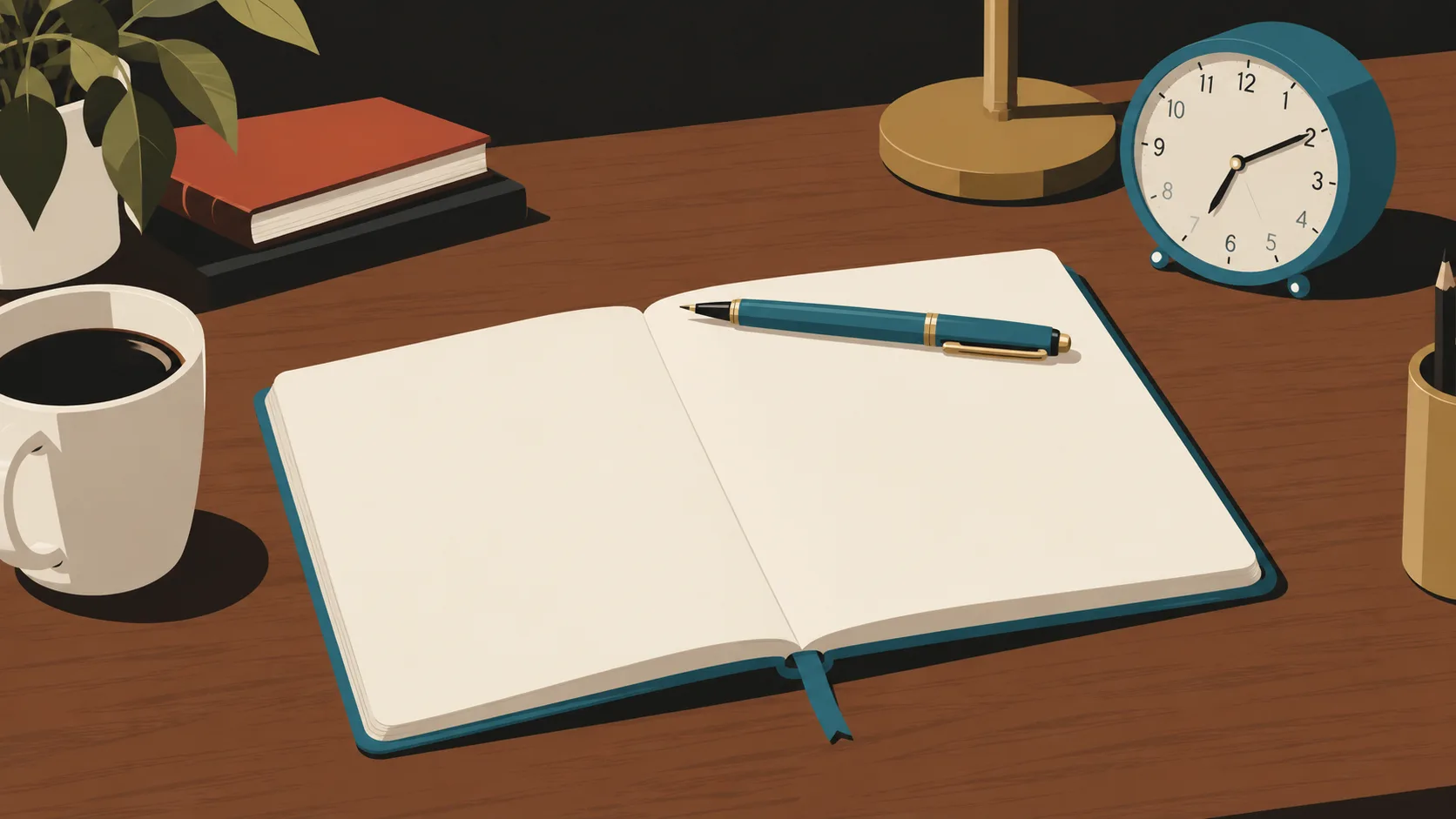
    A dedicated writing workspace showing a notebook, pen, and pocket journal for capturing ideas before writing begins.

    Before you type a word, set the table. The writers who finish tend to be the ones who removed friction before they needed to.

    The right tools and environment

    A dedicated writing space, even a corner of a kitchen table, trains your brain to associate the location with focused output. Keep it analog where you can: a notebook, a pen, a mug that stays full. You will also want a capture system, something you carry in a pocket, so ideas that surface on a commute or a walk never evaporate. Alastair Humphreys writes in his essay on his own book-writing process about keeping a small diary on hand so he can jot without stopping; that habit matters more than any software.

    You will also need a working idea strong enough to carry 70,000 to 100,000 words, not just a mood or a single scene. If the premise burns out in one chapter, it is a short story in disguise.

    Time, commitment, and a realistic schedule

    Most debut novelists underestimate the timeline. Six months is fast. Two years is common. Decide, before you start, on a daily or weekly word-count target: 500 words a day, 2,000 words a week, something concrete. An open-ended project becomes an abandoned one.

    Takeaway: Lock in your space, your capture system, your target word count, and your idea before writing chapter one.

    Before You Start: Decisions That Are Hard to Undo
    Novelist pausing to make structural choices before starting the first draft

    Some choices become expensive to reverse once you are fifty pages in. Make them deliberately.

    Clarifying your why and your audience

    Your reason for writing, whether legacy, craft, commercial ambition, or catharsis, shapes everything downstream, from genre to how you eventually sell the book. Bridgett McGowen, writing on LinkedIn, puts “why do you want to write a book?” as question one for good reason: without a clear why, the midpoint slump wins. Pair it with a clear who. Knowing your intended reader influences voice, pacing, and how much you need to explain.

    Choosing your point of view and tense

    First person present reads nothing like third person past. Switching POV or tense after fifty pages means rewriting every scene. Pick early, write a test chapter in your choice, then commit. First-time novelists do best with third person past or first person past, both forgiving to a learning writer.

    Pantser vs. plotter: picking your approach

    The spectrum is real. Pure discovery writing produces vivid prose and frequent structural rewrites. Heavy outlining reduces revision but can feel mechanical in early drafts. Most working novelists land in between: a rough map of the big beats, with freedom inside each. If you want a framework to anchor that map, the three-act structure explained for first-time novelists is the most forgiving place to start, and the seven-point story structure gives you a tighter beat sheet when you want more guidance.

    Identify your genre too. Reader expectations, appropriate length, and submission guidelines all follow from it.

    Takeaway: Pick your why, your audience, your POV, your tense, and your planning style before drafting. These are the expensive ones to reverse.

    Step-by-Step: Writing Your Novel From First Idea to Final Draft
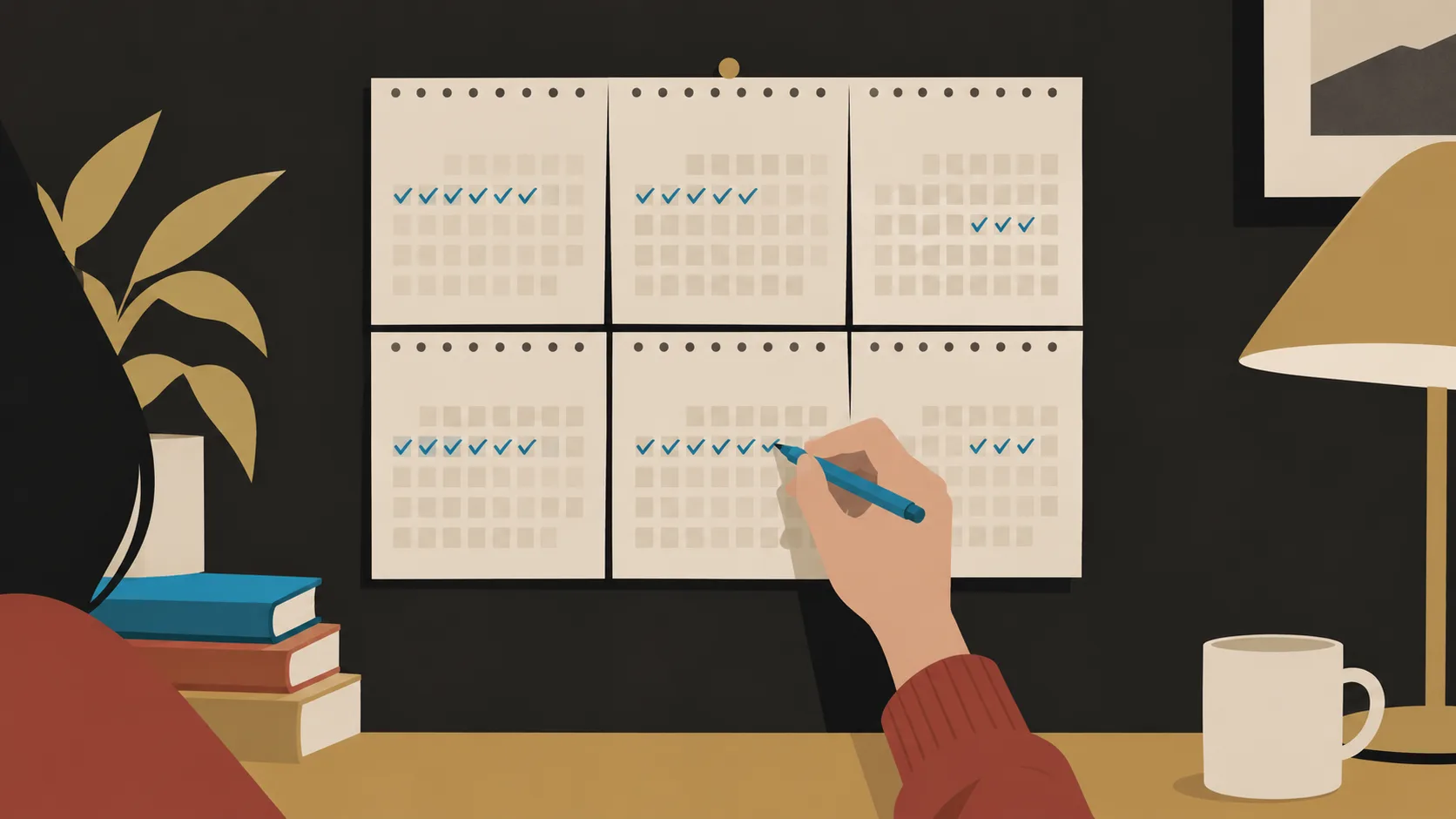
    A calendar tracking the step-by-step progress of writing a novel over months, showing consistent writing sessions marked off.

    Here is the full arc, broken into five steps. Each one has a specific job. Do not conflate them.

    Step 1: Lock in your central idea and premise

    Action: Write your premise in one or two sentences. Outcome: A single, testable sentence that names the protagonist, their goal, and the central obstacle. Verification: Ask whether the core tension sustains conflict across three acts. If the central question resolves in a single scene, the idea is a scene, not a novel. Expand the stakes or the timeframe until it holds.

    Brainstorm on paper, on walks, in transit. The working novelists who finish books tend to think about them away from the desk and arrive at the desk ready to type.

    Step 2: Build your structure and outline

    Action: Draft a chapter-by-chapter outline, however rough. Outcome: A spine you can write against. Verification: You can describe the ending, the midpoint reversal, and the inciting incident in one sentence each. A chapter planning template for your first novel will save you weeks later. If you are writing to a known framework, a story structure template gives you named beats to aim at.

    For a step-by-step plotting pass, this plotting guide for first-timers covers the mechanics in detail.

    Step 3: Write the shitty first draft

    Action: Write forward, every session, without rereading what you wrote the day before. Outcome: A complete first draft. Verification: You have an ending, however clumsy, and the manuscript opens, middles, and closes.

    The first draft’s only job is to exist. Perfecting sentences before the story is complete is the single most common reason writers stall at chapter three. Humphreys calls it, bluntly, the “shitty first draft,” celebrates with a beer, prints it, and then starts the real work. Follow his lead.

    Step 4: Revise and reshape

    Action: Revise structurally first, then line by line. Outcome: A second draft where the story works. Verification: You can read the manuscript end to end and the plot logic holds. Fix story logic, pacing, and character arcs before you touch prose rhythm or word choice. Reversing this order means polishing sentences you will later delete.

    Print the draft. Read it somewhere other than your desk, a cafe, a park bench, a kitchen table. Problems that hide on screen become obvious on paper in a new room.

    Step 5: Polish and prepare for readers

    Action: Run a consistency pass across names, timelines, and recurring details. Outcome: A manuscript ready for beta readers or submission. Verification: The opening and closing pages, which readers scrutinize most, hold up to a cold read. Then hand it to two or three trusted readers.

    Takeaway: Treat idea, outline, draft, revision, and polish as five separate jobs. Finish one before starting the next.

    Staying Consistent: Building a Writing Routine That Holds

    Novelist maintaining a consistent daily writing routine at a dedicated time and place

    A novel is finished in sessions, not sprints. The routine matters more than the inspiration.

    Scheduling your writing time

    Treat a writing block as a fixed appointment, the same as a work meeting. The negotiation that kills daily output (“I’ll start after lunch, or maybe tomorrow”) ends when the block is non-negotiable. Kate White, who wrote a mystery series while editing Cosmopolitan, has written about protecting writing time around a demanding job and finishing books anyway. Writers with full-time jobs and families have finished novels by protecting a single consistent hour per day, early morning or late evening, whichever your energy allows.

    Tracking progress and hitting milestones

    Track your daily word count, even on a paper tally pinned to the wall. Visible momentum makes it harder to abandon the project quietly. Celebrate chapter completions and draft milestones, however small the gesture; a walk, a good coffee, a note to a writing friend. This is the habit loop that keeps a multi-month project alive.

    When motivation flags, switch locations. The brain responds to novel environments with mild alertness. A different cafe, a library, a park bench; small changes buy real attention.

    Takeaway: A protected hour, a visible tally, and small celebrations will outlast motivation.

    Troubleshooting: Common Places First Novelists Get Stuck

    Every first novel has at least three bad weeks. Here are the usual suspects and the fixes.

    The middle-of-the-book slump

    Symptom: Progress stops around the midpoint. Cause: The setup is done but the path to the climax is unclear. Fix: Return to your outline, add a midpoint reversal, or raise the stakes for the protagonist. A sharper look at subplots that complement the main plot often restores forward pressure when the A-plot sags.

    Perfectionism and the frozen cursor

    Symptom: Rewriting the same chapter again and again. Cause: Using revision as a substitute for forward movement. Fix: Mark the chapter “revisit,” write past it, and keep moving. Momentum is more valuable than perfection at the draft stage. If the cursor still will not move, practical ways to overcome writer’s block on your first novel will help.

    Losing confidence in the idea

    Symptom: The idea feels unoriginal or thin. Cause: You are comparing a raw draft to published, edited novels. Fix: Read craft books on theme and subtext rather than abandoning the project. Every published novel was once a thin draft.

    Long gaps between sessions

    Symptom: Days become weeks become abandonment. Cause: No accountability structure. Fix: A writing partner, a weekly check-in, or a word-count commitment posted somewhere visible restores external pressure.

    A flat ending

    Symptom: The last chapter lands with a thud. Cause: The climax does not pay off the promises made in the opening. Reread your first chapter and identify the implicit contract you made with the reader. Then make sure the ending honors it. If you want a model for setting that contract up front, see how to open a book with a character worth following.

    Takeaway: Most stuck points have a named cause and a specific fix. Diagnose before you despair.

    Conclusion: Your Manuscript Is Closer Than You Think

    Most unfinished novels die from inconsistency, not lack of talent. The writers who finish are the ones who kept showing up: a protected hour, a visible tally, a willingness to write badly on purpose. A completed first draft, however rough, is a real object that can be improved. An idea that never reaches the page cannot.

    The revision stage, often feared, is where the book becomes itself. The first draft is raw material. Trust the process, keep your sessions non-negotiable, and give yourself permission to be a beginner for as long as the work demands. When you want a quiet, no-AI place to plan structure and track your draft, ClearARC’s writing tools are built for exactly this: finishing your first novel, one chapter at a time.

    FAQ: Frequently Asked Questions

    How long does it take to write a first novel?

    Most first novels take between six months and two years from first word to polished draft. Writers with full schedules often land closer to the two-year end, while those with daily writing hours finish faster.

    How many words should a first novel be?

    Most adult novels run between 70,000 and 100,000 words, with genre expectations varying. Thrillers often sit around 80,000, literary fiction skews longer, and young adult tends to come in between 55,000 and 80,000 words.

    Do I need to outline my novel before I start writing?

    No, but some planning helps. Pure discovery writing often means heavy structural rewrites later. A rough outline of major beats, especially the ending, prevents the mid-book stall that derails most first-time novelists.

    How do I find time to write a book when I have a full-time job?

    Protect one consistent hour per day, early morning or late evening, and treat it as a fixed appointment. Writers with demanding jobs have finished novels this way; consistency beats long, infrequent weekend sessions.

    What should I do when I get stuck in the middle of my novel?

    Return to your outline and add a midpoint reversal or raise the stakes for your protagonist. If the chapter itself resists you, mark it “revisit,” write past it, and come back during revision.

    How many drafts does it take to finish a book?

    Most novels go through three to five full drafts: a messy first draft, a structural revision, a line-level polish, and a final consistency pass. Some writers do many more; very few do fewer than three.

    Should I share my draft with people while I’m still writing it?

    Generally no. Showing half-finished work invites feedback you cannot act on and often erodes confidence. Wait until you have a complete first or second draft, then share with two or three trusted readers.

    How do I know when my manuscript is ready to submit or publish?

    When beta readers return feedback you have already heard, when a cold read of the opening and closing pages holds up, and when further tinkering is swapping commas rather than fixing problems, the manuscript is ready.

  • Stephen King’s Writing Routine: What Novelists Can Learn From It

    Stephen King’s Writing Routine: What Novelists Can Learn From It

    Stephen King has published more than 60 novels and 200 short stories over five decades, and his output traces back to one thing: a disciplined daily routine. ClearARC exists for writers who want that same kind of structure without the chaos. This article breaks down King’s actual habits, the reasoning behind them, and what any novelist can borrow to finish more work, more consistently.

    Definition: What Is Stephen King’s Writing Routine?

    Stephen King’s writing routine is a fixed morning session, held seven days a week, built around a target word count and a short set of pre-writing rituals. It is less a schedule than a vow. The point is not to produce brilliance on command; the point is to show up so often that the story has nowhere to go but forward.

    In plain language: write at the same time, hit the same number, every single day, until the book is finished.

    The Core Daily Framework

    For most of his career, King started between 8 and 8:30 a.m. and aimed for roughly 2,000 words, or about ten manuscript pages, before stopping. Afternoons were for naps and letters; evenings for family, reading, and Red Sox games. The morning block was ring-fenced. Birthdays and holidays were not exceptions. That consistency is the whole trick, and it is the same discipline our guide to building a writing habit around story structure recommends for first-time novelists.

    How It Has Evolved Over the Years

    King now describes writing for about four hours a day and landing around 1,000 words, citing age as a natural brake. The ritual, though, has not changed. In his 2014 Rolling Stone interview, he explained the sequence: breakfast, a three-and-a-half-mile walk, then back to the office where the last page he was happy with sits on top of the manuscript. He re-reads it to climb back into the world, then writes fresh copy. He has called the practice self-hypnosis: “I have a routine because I think that writing is self-hypnosis and you fall into kind of a trance if you do the same passes over and over.”

    Takeaway: the specific numbers matter less than the fact that they never move.

    How It Works: The Mechanics Behind the Routine

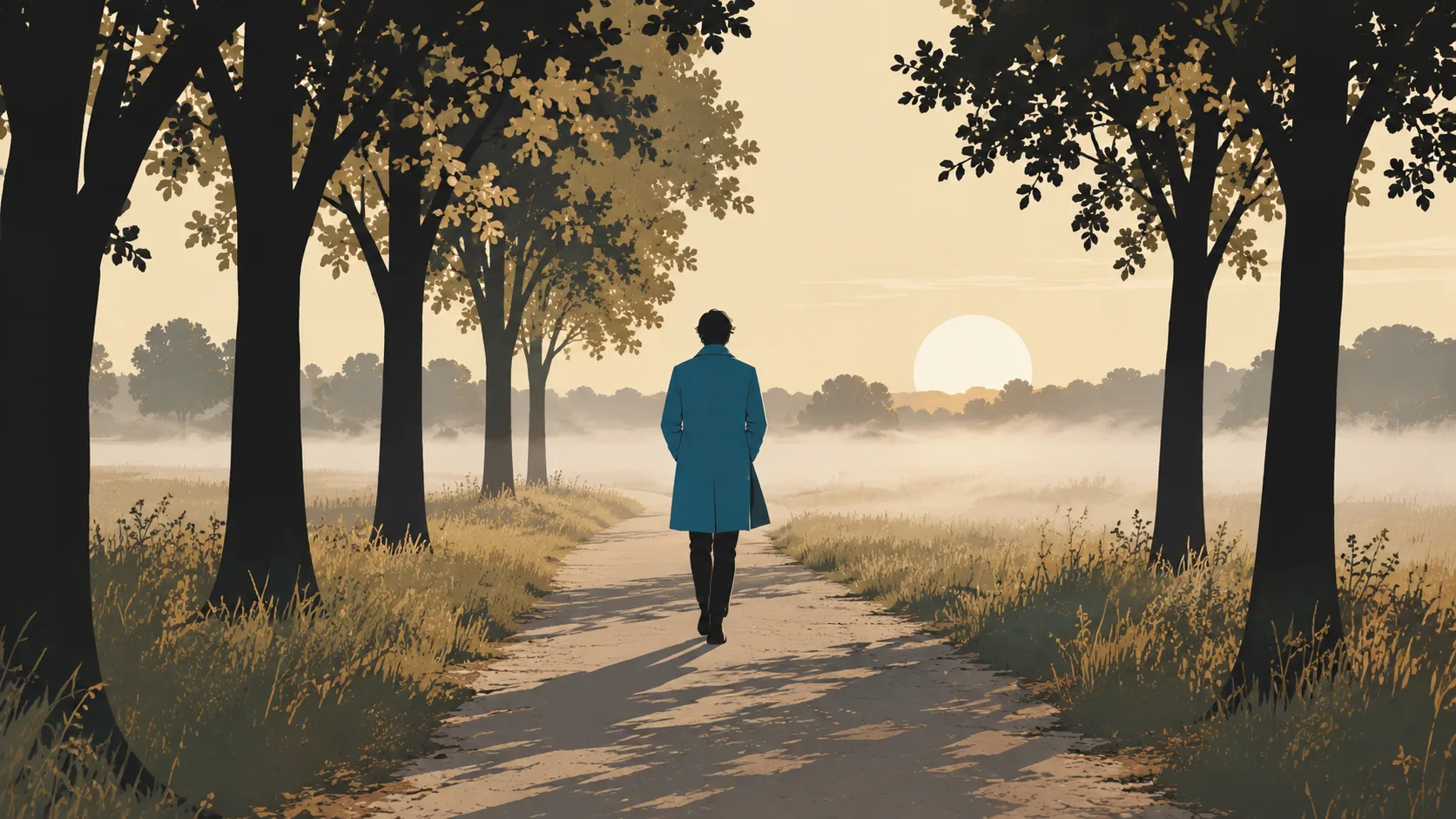
    Writer on morning walk through nature before writing session

    The routine has three moving parts: a body warm-up, a distraction-free station, and a reading habit that feeds the writing. Each one looks small on its own. Stacked together, they produce the trance state King writes inside.

    Walk First, Write Second

    Before King sits down, he walks. The walk is roughly three and a half miles and it is non-negotiable. He has described it as keeping “the engine running.” A 2014 Stanford study found that walking can boost creative thinking by up to 60 percent, which gives the ritual a measurable backbone. Dickens walked up to 20 miles a day through London for the same reason. If you are stuck on a scene, the fix is often not another coffee; it is the door.

    The Distraction-Free Workstation

    King’s desk faces a corner, not a window. No phone. No television. For long stretches he has written with the same metal track on loop, using repetition to flatten the room into background. The point is a space the brain only associates with one activity. The novelists we see finish their first drafts tend to set up a similar signal, which overlaps with our notes on finishing the novel that’s been living in your head.

    Reading as Preparation

    King reads up to 80 books a year and credits that wide intake with teaching him style, dialogue, pacing, and what to cut. He is blunt about it: if you do not have time to read, you do not have time to write. The reading is not research. It is ear training.

    Takeaway: build a trigger (walk), a station (corner desk), and a feed (reading). The routine stands on all three.

    Why It Matters: The Case for Routine Over Inspiration

    Calendar showing consistent daily writing commitments

    Most writers wait to feel like writing. King’s position is the opposite, and he has been consistent about it for forty years. The daily session is not a result of inspiration; it is what produces inspiration.

    Freshness and Momentum

    King’s own line is the clearest argument for daily work: “If I don’t write every day, the characters begin to stale off in my mind, they begin to seem like characters instead of real people.” Gaps erode the narrative edge. Plot gets fuzzy. Pace drifts. The excitement of discovering what happens next fades, and the work starts to feel like work. That is the moment most abandoned novels die, which is why we spend so much time on strategies for overcoming writer’s block on a first novel.

    The Three-Month Draft Goal

    King argues the first draft of a book, even a long one, should take no longer than a season, roughly three months. Any slower and the story starts to feel, in his words, like a dispatch from the Romanian Department of Public Affairs. Once the draft is done he stops writing entirely for 10 to 12 days, puts the manuscript in a drawer, and only then begins the rewrite. He treats the first draft and the revision as two separate mental modes: the first tells yourself the story; the second removes everything that is not the story. A chapter planning template can turn that three-month window into something you can actually measure.

    Takeaway: short deadlines protect momentum; the drawer protects judgment.

    Common Misconceptions About King’s Approach

    A pile of handwritten and edited manuscript pages showing the volume of raw writing produced by daily discipline.

    Misconception: Speed Means Sloppiness / Reality: Consistency Enables Quality

    Two thousand words a day adds up to roughly one million words in 18 months. That volume does not come from writing fast; it comes from writing often. King’s craft rules, cut the adverbs, use active voice, kill what does not move the story, exist precisely because so much raw material is being produced that ruthless editing becomes possible. Pace and quality are not opposites. They need each other.

    Misconception: You Need Perfect Conditions / Reality: Constraints Sharpen Focus

    King wrote Carrie and Salem’s Lot in the laundry room of a rented trailer, balancing a child’s desk on his knees. His early career ran alongside serious addiction. The routine was a stabilizing force, not a reward for having a nice office. Perfect conditions are a procrastination disguise.

    Misconception: Inspiration Should Come First / Reality: Showing Up Creates Inspiration

    King’s most quoted line on this: “Amateurs sit and wait for inspiration; the rest of us just get up and go to work.” Inspiration is what happens on page three of a session you did not feel like starting. If you need a push on the planning side first, our step-by-step approach to plotting a novel is a decent place to begin.

    Takeaway: the myth of the perfect writing day is the biggest obstacle to writing days.

    Related Concepts Every Novelist Should Know

    Flow State

    The absorbed concentration King calls self-hypnosis is what psychologists label flow. The same cues, same time, same walk, same desk, train the brain to drop into it faster each day.

    Pantsing vs. Planning

    King is a famous pantser; he writes without a detailed outline and lets characters surface the plot. That approach only works because of daily continuity. Skip two weeks and a pantser loses the thread. If you lean that way, the pantser’s approach to drafting is worth reading before you commit.

    Word Count as a Tool

    Treat the daily number as a floor, not a ceiling. King’s 2,000 words is a minimum threshold. Hitting it keeps the streak alive; exceeding it is a bonus, never a requirement for tomorrow.

    The Ideal Writing Space

    A dedicated writing space, however modest, tells the brain it is time to work. A corner-facing desk, a specific chair, even a particular mug can serve as the signal.

    Reading as Craft Development

    Reading 70 to 80 books a year keeps the ear tuned to rhythm and dialogue in a way no craft manual can replicate. Writers who stop reading quietly stop improving.

    How to Get Started: Applying King’s Routine to Your Own Writing

    Beginner's writing desk with blank page and clock

    Start Small, Then Hold the Line

    Pick a fixed start time and a minimum word count you can hit on a bad day. Five hundred words is a sustainable entry point. The habit matters more than the number; raise the target only once the schedule is unbreakable. Pair that daily minimum with a draft deadline of one season, roughly three months, and count pages rather than days. A structural plan for your first book makes those pages add up to something, not just accumulate.

    Build the Trigger Ritual

    Design a short pre-writing sequence that signals the shift into writing mode: a brisk walk, brewing tea, re-reading yesterday’s last paragraph. Remove distractions before you sit down. Silence the phone, close unrelated tabs, face a wall. Schedule reading as seriously as writing, even 30 minutes of fiction a day. For the novel itself, a reusable story structure template gives the daily word count a destination to drive toward.

    Takeaway: small start time, protected station, honest page count, one-season deadline.

    FAQ: Frequently Asked Questions

    What time does Stephen King start writing every day?

    King has long started his writing session between 8 and 8:30 a.m., immediately after breakfast and his morning walk. The exact clock time matters less than the fact that it is the same time, every day, including weekends and holidays.

    How many words does Stephen King write per day?

    For most of his career King aimed for 2,000 words, or about ten manuscript pages, before stopping. In recent years he has described writing for roughly four hours a day and producing closer to 1,000 words, attributing the slower pace to age.

    Does Stephen King write every single day including holidays?

    Yes. King has been explicit that the daily session includes weekends, holidays, and his own birthday. He frames the daily writing as non-negotiable because gaps let the characters stale off and the plot lose its edge, which is harder to recover than to maintain.

    How long does Stephen King take to write a first draft?

    King argues a first draft, even for a long novel, should be finished within three months, roughly one season. Beyond that window he believes the story loses freshness. After finishing, he sets the draft aside untouched for 10 to 12 days.

    What does Stephen King listen to while writing?

    King has often written to music, frequently loud rock or metal, and has described putting the same track on repeat so the sound flattens into background rather than demanding attention. The music acts as a focus aid, not entertainment, during his morning session.

    What does Stephen King mean when he says writing is self-hypnosis?

    He means the ritual itself induces a trance-like concentration. Doing the same passes, walk, re-read, write, at the same time each day conditions the brain to drop into deep focus on cue, the way sleep hygiene conditions the brain for sleep.

    How much does Stephen King read each year?

    King reads up to 80 books a year across genres and credits that reading with teaching him style, dialogue rhythm, and pacing. His standing line is blunt: if you do not have time to read, you do not have the time or the tools to write.

    Can Stephen King’s writing routine work for someone who writes part-time?

    Yes, in principle, if the ratios scale. A part-time writer can set a smaller fixed start time, a 500-word minimum, and a one-season draft deadline. The non-negotiable element is daily consistency, not the two-hour block or the 2,000-word target.

    Conclusion

    Stephen King’s routine is unglamorous on purpose. A walk, a corner desk, a page you liked yesterday, a word count you hit today, and a draft you finish inside a season. The lesson for novelists is not to copy his hours but to copy his insistence that the session happens whether or not it feels like a good day to write. If you want a quieter, no-AI place to run that routine, ClearARC is built for exactly that kind of patient, daily work.