
A beat sheet is a form of outline in which each major plot point or dramatic moment gets its own short entry, so you can see a story’s structure before you write it in full. Most advice on the subject comes from screenwriting, which leaves novelists guessing how scene beats differ from plot beats.
What Is a Beat Sheet?
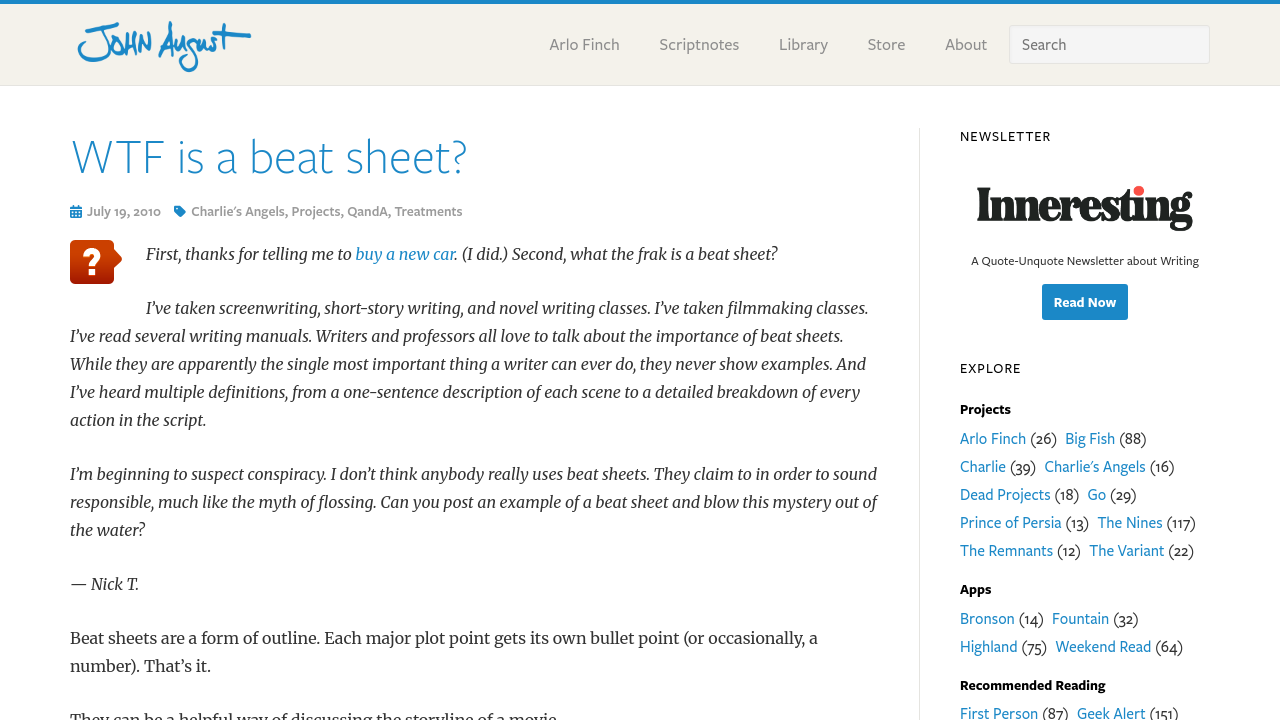 Screenwriter John August puts it bluntly: beat sheets are a form of outline, and each major plot point gets its own bullet point, or occasionally a number. What changes is the size of the thing you are outlining: a whole story, a structural template, or a single scene.
In plain language
A beat sheet is a list of the moments that matter, one line each, written before the prose.
Three kinds of beat sheet compared
| Type of beat sheet | What a beat is | Best used for | Source |
|---|---|---|---|
| Plot-level outline | One major plot point per bullet | Seeing and rearranging the whole storyline | John August; johnaugust.com |
| Blake Snyder’s Save the Cat structure | A named section of the three-act structure, each with a specific goal | Plotting a full story against a template; writers use its 15 beats for genre novels such as fantasy | Tim Stout; YouTube tutorials |
| Scene-level beat sheet | An individual dramatic moment inside one scene | Planning or rescuing a single scene | BBC Writers (Danny Stack) |
All three come from screenwriting, and all three transfer to the novel without fuss. A chapter has turning points just as a film does. If you want template-specific detail, our guide to Save the Cat beat sheet examples for fiction writers goes deeper.
Takeaway: pick one level first. Plot your whole book or fix one scene, but do not try both on the same page.
How a Beat Sheet Works
 The mechanism is simple: break a story or scene into its turning points, then test whether each one causes the next.
A worked scene example
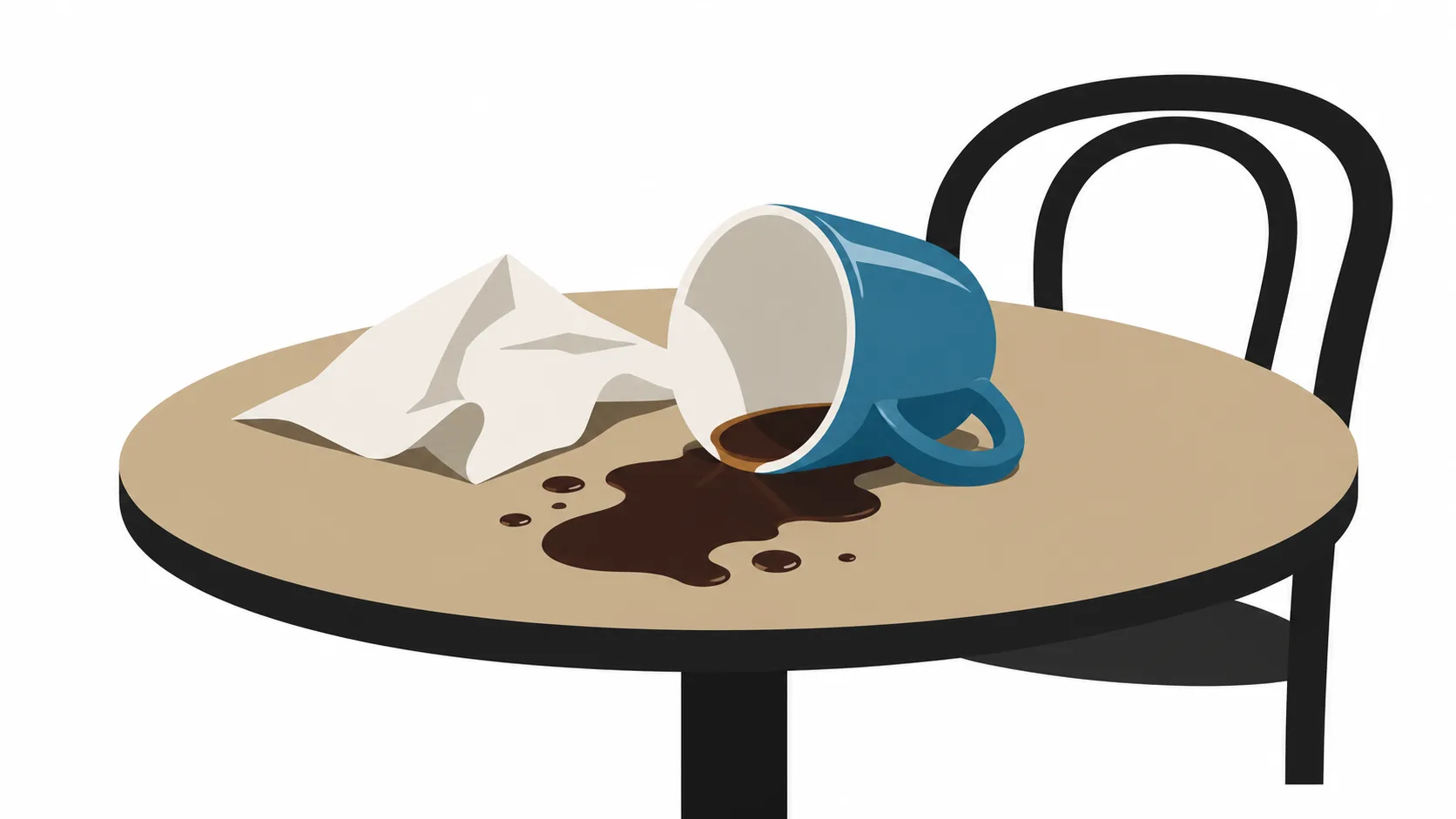
BBC Writers offers a café scene that shows the difference beats make. The flat version has one beat: John bumps into Jane, she spills coffee on him, it is love at first sight. The beat sheet version splits it into three:
- In a busy café, John spills his takeaway coffee over a frail old woman, not a beautiful stranger.
- She is furious, hits him with her umbrella and lectures him. John stays calm.
- He helps her on her way, catches Jane smiling at his patience, heads for the exit smitten, and slips on the spilled coffee.
For a novel, expand it. For example, you might add a fourth beat: that evening, John finds Jane’s number written on his coffee-stained receipt, and has to decide whether he is brave enough to ring. Now the scene does not just end; it hands the next chapter a question. In prose fiction you can also add an interior beat, such as John’s embarrassment curdling into hope, because a novel can sit inside his head in a way a camera cannot.
Steps to build your own
- List the turning points. Write every moment where something changes.
- Keep each to one line. If it needs a paragraph, it is two beats.
- Put them in order. Shuffle them freely; paper is cheap.
- Check cause and effect. Each beat should happen because of the one before, not merely after it.
August also notes that beat sheets are commonly written after a draft exists, as a roadmap for rewriting. That is a sound habit for novelists revising a sagging middle. For more on choosing a planning method, see our roundup of novel outline formats for first-time fiction writers.
Takeaway: if two beats sit side by side with no causal link, you have found a weak spot.
Why Beat Sheets Matter for Novelists

Spotting a flat scene
The BBC Writers piece describes a scene that technically works but reads like “functional furniture”. A scene beat sheet is the diagnostic: count the beats. One beat usually means one note, and readers feel it. Pair this with our piece on writing a scene that makes readers cry when the missing ingredient is emotion.
Seeing the shape of the whole story
Blake Snyder’s beat sheet, from the Save the Cat books, breaks the three-act structure into manageable sections such as Catalyst, Midpoint and All Is Lost, each with a job to do. August shows the same idea in a looser form, and even uses a producer’s quip about Inception to illustrate how beats get debated and moved.
Keeping character change visible
Plot beats track what happens; your protagonist also changes inside. Write a second column beside each beat noting where the character stands emotionally. ClearARC‘s arc tracker plots that internal shift alongside external plot points, and its character view separates the internal starting position from the external goal. Our guide to developing compelling characters in fiction covers the craft behind it.
Takeaway: use scene beats to fix pages, plot beats to fix books, and an arc column to keep both honest. In ClearARC we call beats ‘events’, because that is what they are. It makes it easier to understand when you think in terms of events. If any event does not serve the story’s purpose, cut it (or your readers will get bored or confused).
Common Misconceptions About Beat Sheets
Misconception: Beat sheets are only for screenplays
Reality: novelists borrow them constantly. Snyder’s template is applied to graphic novels and prose, and genre writers use its beats to plot fantasy.
Misconception: A beat sheet is a full script breakdown
Reality: August’s definition is one bullet per major plot point. A detailed action-by-action breakdown is something else.
Misconception: Everyone uses Save the Cat
Reality: it is one template among several. Plain bullet lists, scene beats and other structures all count. Part of the confusion is that, as screenwriters on Reddit point out, real examples are hard to find.
Misconception: Beat sheets kill creativity
Reality: they are editable plans. August describes beats being cut and reordered in discussion. Nothing is carved in stone. If a blank page is the bigger fear, see our help on overcoming writer’s block on a first novel.
Takeaway: treat a beat sheet as a pencil sketch, not a contract.
Related Concepts
Outline
Any written plan of a story before drafting. A beat sheet is one lean kind of outline; others add synopsis, setting and character notes.
Treatment
A prose summary of a story, told in paragraphs. A beat sheet lists moments; a treatment narrates them.
Three-act structure
Setup, confrontation, resolution. Snyder’s beats subdivide it. Read our explainer on Syd Field’s three-act structure.
Seven-point structure
A framework built around seven key turning points from hook to resolution. See seven-point story structure explained.
Seven basic plots
Christopher Booker’s argument that stories fall into a handful of recurring shapes. For more detail, see Christopher Booker’s seven basic plots.
Takeaway: a structure tells you what beats to expect; the beat sheet is where you write yours.
How to Get Started With Your First Beat Sheet
 1. Take a pen and a sheet of paper. List ten to fifteen moments your story cannot do without. Do not polish. Coffee helps.
- Try a template. Lay your list against Save the Cat’s sections and see what is missing. Writing a love story? Our guide on how to use a romance beat sheet adapts the idea.
- Grab the free First-Novel Finisher’s Kit. It needs only pen and paper and includes a one-page plan, a chapter-planning grid, a seven-plots cheat sheet and a series of emails.
- Track the arc. Next to each beat, note your protagonist’s inner state. Watch it move.
Takeaway: a rough list today beats a perfect plan next month.
FAQ: Frequently Asked Questions
What should you include in a beat sheet?
Include each major plot point or dramatic moment, one line apiece, in story order. Some writers add which characters appear or how the protagonist feels, but the core is simply the turning points.
Is a beat sheet the same as a treatment?
No. A beat sheet is a list of moments, usually bullets. A treatment tells the story in prose paragraphs. Many writers draft beats first, then expand them into a treatment or synopsis later.
What is the difference between a beat sheet and an outline?
A beat sheet is a type of outline. Outlines can include anything from setting notes to chapter summaries; a beat sheet strips that back to one entry per major plot point or dramatic moment.
How long should a beat sheet be?
It depends on the story and the method. A scene might need three or four beats, while Save the Cat uses fifteen for a whole story. Keep each entry short enough to scan at a glance.
Can novelists use a beat sheet?
Yes. Although the format grew out of screenwriting, beats map neatly onto chapters and scenes. Novelists can also add interior beats, capturing a character’s thoughts in ways a screenplay cannot easily show.
What is a beat in a scene?
A scene beat is an individual dramatic moment that, together with others, makes up the scene. Each beat shifts something: a reaction, a decision, a reveal. More beats usually give a scene more life.
Conclusion
A beat sheet is the simplest plan a novelist can make: one line per moment that matters. Choose your level, whole book or single scene, test each beat for cause and effect, and keep the character’s inner journey in view. When you are ready to move from paper to manuscript, ClearARC is a no AI writing tool built for first-time and independent novelists, covering plan, plot, write and publish in one app, with a single version that includes everything. Pick up your pen and start listing.