Quote of the Week
“The good writer, the great writer, has what I have come to think of as the three S’s: the power to see, to sense, and to say.” , Brenda Ueland
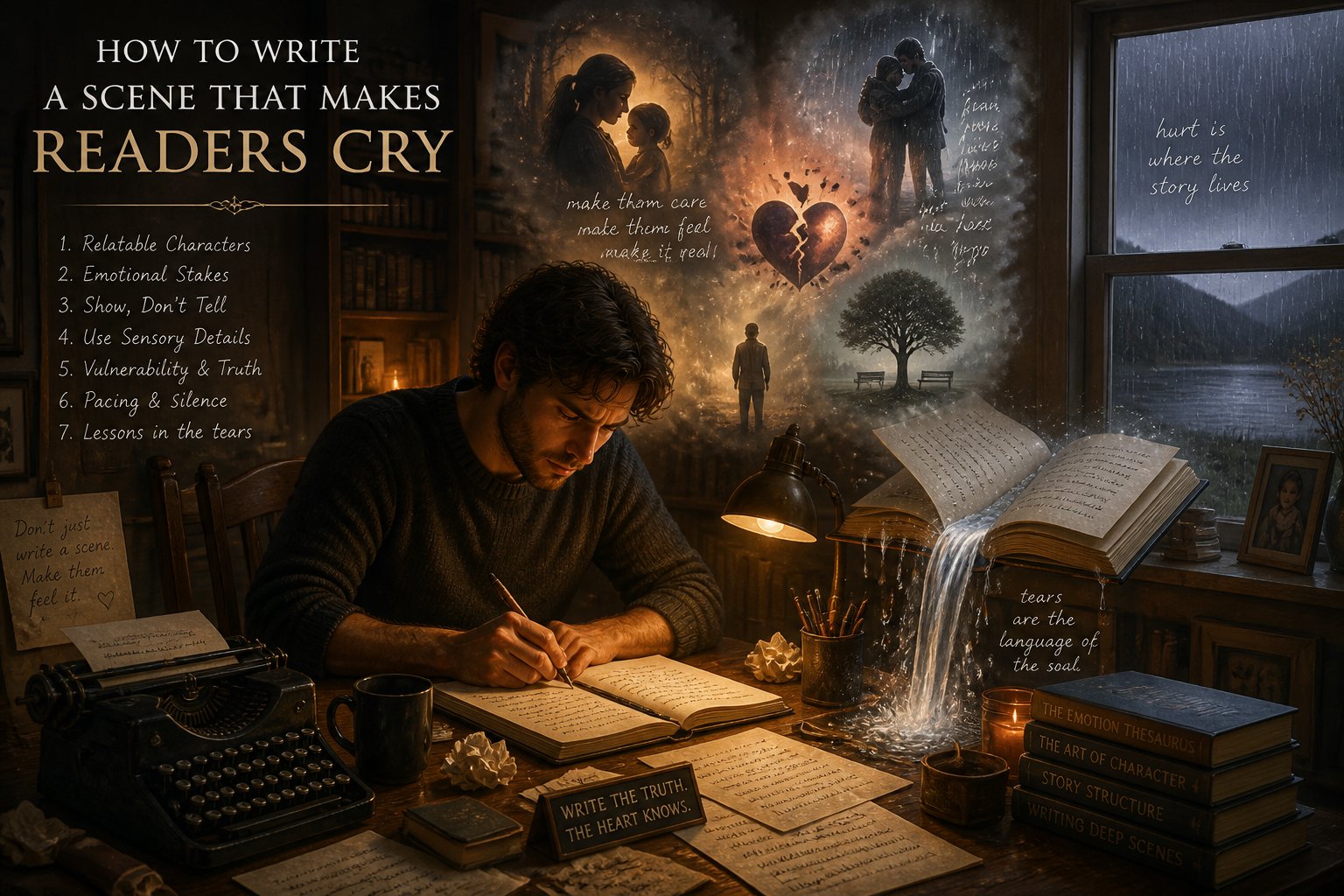
Sad scenes fail when we skip straight to say. We tell the reader the character is devastated, and we expect them to feel it with us.
But tears don’t come from the saying. They come from the seeing and the sensing first. The small details we noticed. The weight in the room before anyone spoke. The thing the character couldn’t bring themselves to look at.
If you want the reader to cry, you have to let them feel it the same way grief reveals itself in real life: slowly, and through specifics.
Deep Dive
Here’s the truth most writing advice dances around: readers don’t cry because a sad thing happened. They cry because they recognised something.
A character can lose everything on page one and the reader will feel nothing, because nothing has been built yet. The same loss on page two hundred can wreck them. What changed isn’t the event. It’s the accumulation.
So before the sad passage itself, ask yourself what the reader has been allowed to love. You cannot break a heart that hasn’t been opened. If your character loses a sister, the reader needs to have spent real time with that sister. Not a flashback montage. Actual presence on the page. A habit. A way of laughing. An argument that never got finished.
Then, when you write the passage itself, resist the urge to describe the emotion. Describe what the emotion is doing to the body, the room, the small tasks. A character who has just received terrible news doesn’t sob and collapse. They notice the dishwasher is still running. They put the kettle on because that’s what you do. They can’t remember if they’ve already put the kettle on.
Specificity is the whole game. Generic grief feels like a stock photo. The specific detail (the unopened birthday card, the voicemail they never deleted, the way the dog keeps waiting by the door) is what makes a reader stop reading and stare at the wall for a minute.
And finally: trust silence. The most devastating passages often have the fewest words. White space on the page gives the reader room to bring their own grief to yours. That’s where the tears actually come from. Not your words, theirs.
Story Breakdown (In Action)
Imagine a scene where a father is clearing out his adult daughter’s childhood bedroom after her funeral. You could write three pages of him weeping. The reader will feel sympathy, but they won’t cry.
Now imagine this instead: he finds a shoebox under the bed. Inside, a stack of letters she wrote to him as a child but never gave him. He sits on the edge of the bed. He doesn’t open them. He just holds the box. Outside, a car alarm goes off and stops. He still doesn’t open them.
The reader will cry at the second version because they’re doing the imagining. They’re the ones picturing what those letters might say. You gave them the shoebox. They brought the rest.
Common Beginner Mistake
The most common mistake is naming the feeling instead of building it. Sentences like “she felt a wave of overwhelming sadness wash over her” or “his heart was breaking into a thousand pieces” do the opposite of what you want. They tell the reader what to feel, which means the reader doesn’t have to feel anything themselves.
The reader’s tears are a gift they give your book. You can’t demand them. You can only create the conditions.
Practical Writing Exercise
Take a sad scene you’ve already written, or write a new one this week, and try this:
- Cut every sentence that names an emotion directly (sad, heartbroken, devastated, grief, sorrow).
- Replace each one with a physical detail, a small action, or an observation the character makes about their surroundings.
- Find the moment of highest emotion and cut it in half. Then cut it in half again. Leave space.
- Read it aloud. If you feel something in your chest when you read it, the reader will too.
Apply This in Clear ARC
The reason emotional payoffs land or don’t usually traces back to structure, not prose. Clear ARC lets you map your character’s relationships and emotional beats across the whole novel, so you can see exactly how much page time the reader has spent with a character before you ask them to grieve that character.
If the answer is “not much,” you know what to fix before you ever rewrite the sad scene itself. The scene isn’t broken. The setup is.
Clear ARC Feature Spotlight
Clear ARC’s timeline lets you trace a single character’s presence through your entire manuscript at a glance. You can see where they appear, where they’re absent, and where the emotional weight is being built or skipped. For writing scenes that need to land hard, this is where the work actually gets done.
Start your first month free.
This Week’s Writing Challenge
Write a 300-word passage in which something deeply sad happens, without ever naming an emotion. No “sad,” no “grief,” no “heartbroken.” Only what the character sees, does, and notices. Read it back the next day and see if it still moves you.