
Second person point of view is a narrative mode that uses the pronoun ‘you’ to address the reader directly, or to cast the reader or an unnamed character as the protagonist. That is why it feels intimate, and why it turns up far more in nonfiction, adverts and games than in novels. At ClearARC, a no AI book planning app, we care about choices that get drafts finished, so this guide shows one scene in three viewpoints and ties the choice to your character’s arc.
What second person point of view means
Second person point of view is narration in which the narrator speaks to ‘you’. That ‘you’ is either the reader, addressed directly, or a character the story treats as the reader, making them the protagonist. MasterClass describes it as breaking the fourth wall, because the narration turns outward and speaks to the person holding the book.
In plain language: the story tells you what you are doing, seeing and feeling.
Yes, ‘you’ is the second person pronoun in English, alongside ‘your’, ‘yours’ and ‘yourself’. Editor Louise Harnby puts it simply: in second person narration, the pronoun is ‘you’.
Takeaway: if the narration, not just the dialogue, is built on ‘you’, you are writing in second person.
How second person works on the page
Definitions only go so far. Watch the same moment change.
The same scene in three points of view
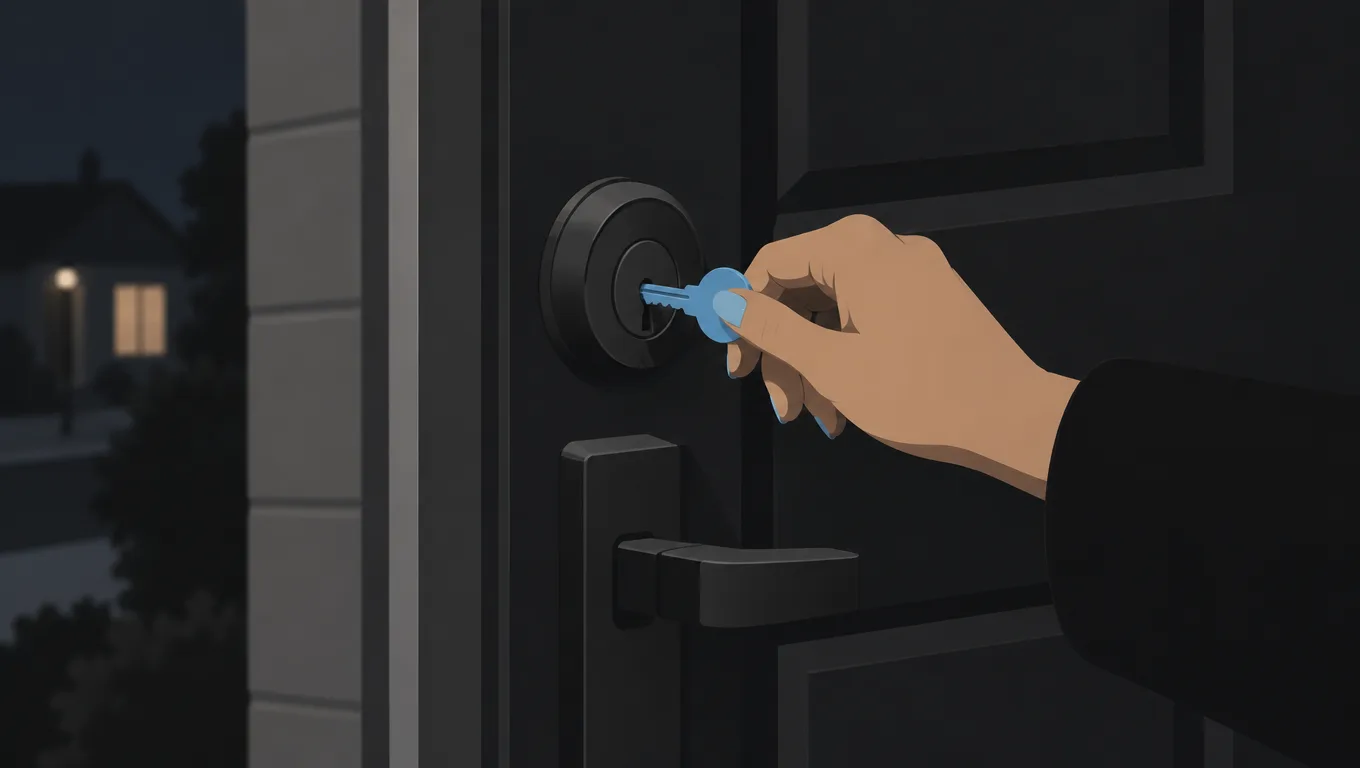
Example: a character comes home late and opens her front door. Assume a short scene in present tense, with one detail she does not yet understand, and use descriptive writing to bring it to life.
- First person. The door gives too easily. Someone has been here.
- Second person: You turn the key and push. The door gives too easily. You tell yourself it is nothing.
- Third person: She turns the key and pushes. The door gives too easily. She tells herself it is nothing.
What changes:
- The pronoun.
- Who ‘you’ is. In the second version, you are standing at the door. You did not choose to be. The narrator put you there.
- What the narrator knows. Harnby notes that in second person, the ‘you’ knows less than the narrator. You discover what you think and do as you are told it. That gap creates immediacy, and a slight sense of dislocation.
Notice the present tense too. Second person can be written in present tense, which may heighten that feeling of things happening now. Past tense works too.
Charactered ‘you’ versus addressed reader
Writers on narrative theory separate two kinds of second person:
- The addressed reader. The text speaks to you, the actual person reading. Self-help books and blog posts do this.
- The charactered ‘you’. ‘You’ is a figure inside the story, with a past, a job and choices that are not yours. The reader steps into the role but is not literally the character.
Harnby points out that readers know they are not really the you-character, which lets an author reveal who ‘you’ is later as a twist. If that appeals, read our guide to writing twists and unexpected turns in fiction.
Takeaway: decide which ‘you’ you mean before you write a single line.
Why writers choose second person
Intimacy and immediacy
Scribophile founder Alex Cabal describes second person as a technique that creates intimacy by addressing the reader as ‘you’, making them feel they are living in the story. There is no gap between reader and character. That closeness is the reason to use it.
Where you meet it every day
Kindlepreneur notes that second person is most often used in nonfiction, ad copy, certain video games, blog posts, song lyrics and self-help books. It is less common in fiction. You read it daily without noticing, because instructions and adverts talk to you.
Where it tires readers
Harnby calls second person intimate yet intrusive, and says that intrusion is both its strength and its weakness. If readers feel implicated rather than attached, they get pulled out of the story. She also notes it is rare for contemporary commercial novels to be written entirely in second person; shorter uses such as single chapters, diary entries or letters are more likely.
| Strength | Risk |
|---|---|
| Puts the reader at the centre | Can feel bossy or accusing |
| Strong immediacy | Hard to sustain over a long book |
| Useful for reveals | Readers may resist the role |
Takeaway: use second person where you want closeness and control, and keep it short unless you have a strong reason not to.
Common misconceptions about second person
Misconception: it only appears in fiction / Reality: nonfiction and ads use it most
Kindlepreneur lists nonfiction, adverts, games and lyrics as its main homes. Fiction is the minority use. Knowing that helps you see why it stands out in a novel.
Misconception: any ‘you’ makes a story second person / Reality: dialogue ‘you’ does not change the narrator’s POV
A character saying “You’re late” in a third person story is still third person. Point of view belongs to the narration. Check the sentences outside quotation marks.
Misconception: it is the same as breaking the fourth wall / Reality: related but not identical
Addressing the reader breaks the fourth wall, as MasterClass and Cabal both note. A charactered ‘you’ inside a sealed story world is a different move. Narrators in first or third person can also break the fourth wall.
Misconception: it is always gimmicky / Reality: it suits short or tightly focused pieces
Harnby points to dedicated chapters and letters as natural fits. Kindlepreneur cites novels written entirely in second person, such as Bright Lights, Big City by Jay McInerney. Scale and purpose decide whether it works.
Takeaway: judge second person by the narration and the length, not by stray pronouns.
Related concepts
Here they are with their neighbours.
First person
The narrator is a character telling the story from their own perspective. Readers get one mind, from the inside.
Third person limited
The narrator uses ‘he’, ‘she’ or ‘they’ and stays close to one character’s thoughts at a time.
Third person omniscient
The narrator uses third person pronouns and can move into any character’s head, knowing more than any one of them.
Fourth wall
The imagined barrier between story and audience. Speaking straight to the reader breaks it.
Narrative voice
The personality of the telling: word choice, rhythm and attitude. Point of view decides who is speaking; voice decides how it sounds. Choosing a viewpoint character is easier once you know their role, so see our explainer on character archetypes.
Takeaway: name your viewpoint and your voice separately in your notes.
How to get started with second person
- Draft one page in ‘you’. Pick a small moment, like the door, and write it in second person present tense.
- Rewrite it in third person. Put the two pages side by side. Mark where ‘you’ adds pressure and where it pushes the reader away.
- Decide who ‘you’ is. Reader or character? Write one sentence that answers it and keep it above your draft as you write a book.
- Plan the arc behind the ‘you’. A second person character still needs an inner change and an outer goal. Pin the outer events to a frame such as the seven-point story structure or Syd Field’s three-act structure.
- Map the beats. If you prefer beats, work through these Save the Cat beat sheet examples and note where the ‘you’ learns something.
Takeaway: one page today tells you more than an hour of theory.
FAQ: Frequently Asked Questions
What is the literary definition of second person point of view?
It is narration built on ‘you’, where the narrator addresses the reader directly or casts an unnamed character as ‘you’. It places the reader inside the action and creates a close, sometimes uncomfortable, intimacy.
What does a 2nd person view look like?
It reads as instructions about your own life: “You turn the key and push. The door gives too easily.” The narration, not just the dialogue, tells you what you do, see and feel.
Is ‘you’ a second person pronoun?
Yes. ‘You’ is the second person pronoun in English, along with ‘your’, ‘yours’ and ‘yourself’. Narration built on ‘you’ is what defines second person point of view.
Is second person hard to sustain in a novel?
Often, yes. Its intrusive quality can tire readers over many chapters, which is why it appears more in short stories, single chapters and letters. Some full novels do manage it, but they are the exception.
Which tense suits second person?
Present tense can suit second person because it adds immediacy, as though events unfold while you read. Past tense works too. Draft a page in each and keep the one that reads most naturally.
Can I mix second person with other points of view?
Yes. Many writers use second person for set chapters, letters or diary entries inside a first or third person book. Signal each switch clearly, for example with chapter breaks, so readers stay oriented.
Conclusion
Choose second person when you want readers close and slightly controlled, and test it on a short scene before committing a book to it. Decide who ‘you’ is, then plan the arc that sits under the pronoun. ClearARC is a planning and writing tool, not a writing teacher, so use it to hold your character’s internal shift and external goal while you get your own words down. Write the door scene today.