
Save the Cat story structure is a 15-beat plotting framework created by Hollywood screenwriter Blake Snyder, originally designed for screenplays and now widely used by novelists who want a clear, repeatable blueprint for pacing and character change. ClearARC helps novel writers apply proven structures like this one to plan, draft, and refine their stories from first idea to final chapter, without pushing you into templated prose.
What Is Save the Cat Story Structure

Save the Cat is a story manual and beat sheet that describes the 15 moments most working stories share, from the very first image on the page to the very last. It gives writers a shared vocabulary for pacing, character, and theme. In plain English: it is a checklist of what usually happens in a good story, and roughly where.
Origins: From Screenplay to Novel
Blake Snyder, a working Hollywood screenwriter who sold 12 scripts and consulted on major films, published Save the Cat! in 2005. The book was written for screenwriters, but the beat sheet migrated quickly into fiction rooms, writing groups, and workshops. The name comes from the old screenwriting trick of showing your protagonist do something small and generous early on, like saving a stray cat, so readers root for them before the real trouble starts.
The Core Idea Behind the Beat Sheet
Where most frameworks describe story in broad phases, Snyder assigned each of his 15 beats a rough percentage position in the manuscript, giving writers a concrete map. It sits neatly inside the familiar three-act shape, but breaks the long middle into smaller, named segments to solve the notorious “saggy middle” of Act 2. Think of it as a deeper plan for your novel, one that tells you not only what to write but roughly when.
Takeaway: Save the Cat is less a theory than a mile-marker map, useful whether you outline before drafting or diagnose after.
The 15 Beats of the Save the Cat Framework
The 15 beats move in order from Opening Image to Final Image. Percentages are approximate and assume you know your target word count, which for most commercial novels sits between 70,000 and 100,000 words. According to Reedsy’s guide to the beat sheet, the percentages are best treated as a calibration guide, not a prescription.
Act One: Opening Image Through Break Into Two
Act One covers six beats and roughly the first quarter of the book. It is where your reader decides whether to keep going, so a strong protagonist worth following matters more here than anywhere else.
- Opening Image (0-1%), a single scene that shows the hero’s world before change.
- Theme Stated (5%), a line of dialogue hints at what the hero must learn.
- Set Up (1-10%), introduce the cast, the flaw, and what needs fixing.
- Catalyst (10%), the event that breaks the ordinary world open.
- Debate (10-25%), the hero resists the new path.
- Break Into Two (25%), commitment; the hero steps into the new world.
Act Two: B Story Through Dark Night of the Soul
Act Two is roughly half the manuscript and where most drafts collapse. Snyder addressed this by naming every mile: the B Story (a relationship or subplot carrying the theme), Fun and Games (the promise of the premise), Midpoint, Bad Guys Close In, All Is Lost, and Dark Night of the Soul. The Midpoint (50%) is the pivot, either a false victory or a stakes-raising blow that keeps the middle honest. Handled well, a smart subplot here is what makes the middle feel purposeful rather than padded.
Act Three: Break Into Three Through Final Image
Act Three compresses three beats into the final quarter: Break Into Three (75%), Finale (75-99%), and Final Image (99-100%). The hero synthesises what the A Story taught them about the world with what the B Story taught them about themselves, then acts on that insight. The Final Image mirrors the Opening Image, showing how far the character has travelled through the tiny final action that lands the book.
Takeaway: Write down the 15 beats before you draft, even if half are placeholders. Half-formed beats beat none.
How Save the Cat Differs From Other Story Structures
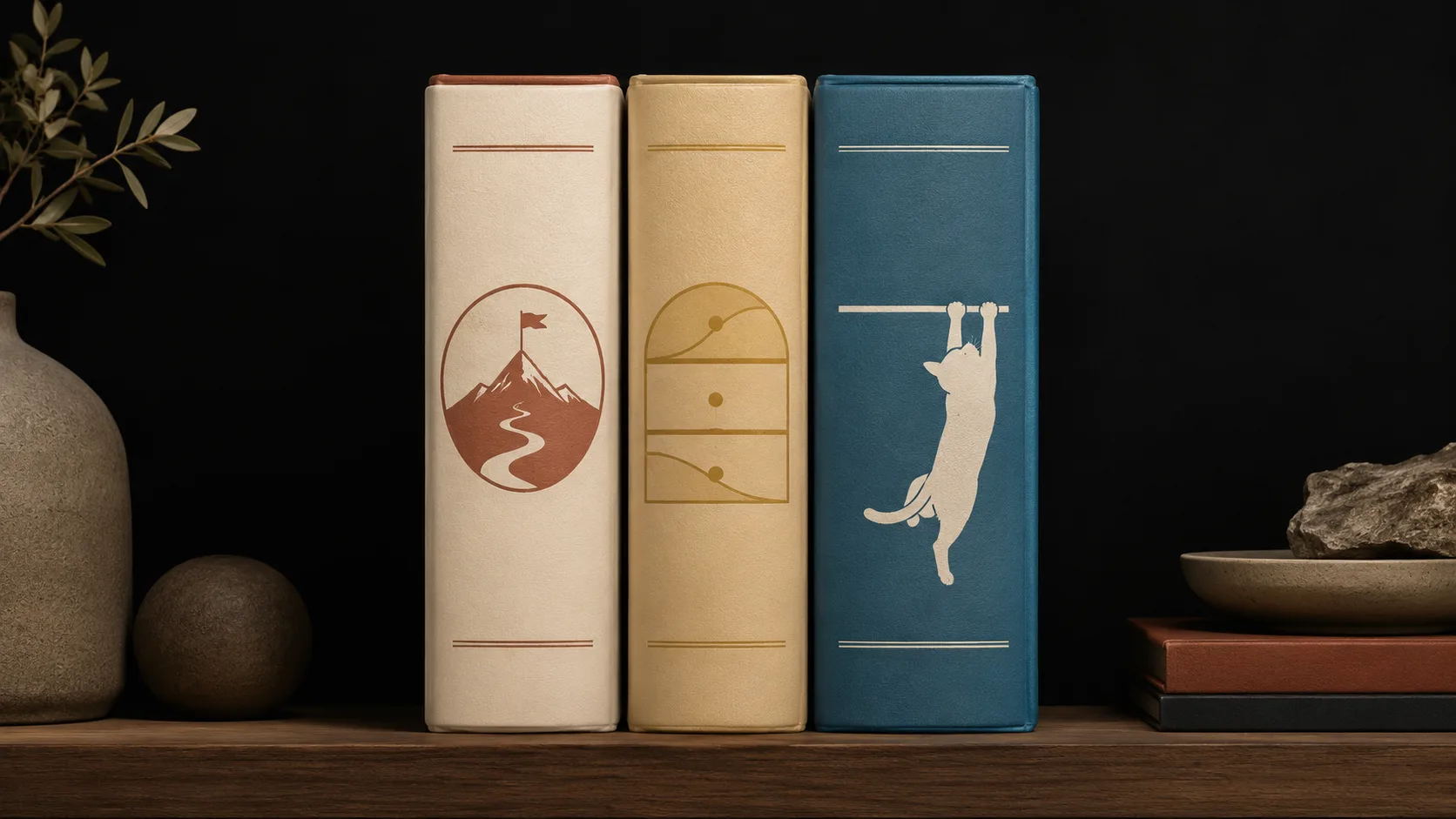
Save the Cat overlaps heavily with older frameworks, but its vocabulary and its willingness to name specific page targets set it apart. It borrows the emotional shape of the Hero’s Journey and the dramatic bones of the three-act structure, then adds the calendar.
Save the Cat vs the Hero’s Journey
Joseph Campbell’s monomyth and Save the Cat describe similar territory using different maps. Snyder’s Set Up corresponds to the Ordinary World, the Catalyst maps to the Call to Adventure, and the Dark Night of the Soul echoes the Ordeal. Where Campbell speaks about myth and psychology, Snyder speaks about pages and scenes, which is why the beat sheet feels more actionable when you are trying to work out which of the seven major plots you are actually writing.
Save the Cat vs the Three Act Structure
The three-act structure describes broad dramatic phases; Save the Cat subdivides those phases into 15 named checkpoints. It also carves out a dedicated B Story beat, which forces the writer to think about a secondary relationship or thematic mirror early. That is often the difference between a plot that turns and a plot that only advances, and it is why a strong secondary character line is baked into the framework.
Takeaway: Use Save the Cat when you want mile markers, and use the Hero’s Journey when you want a mythic emotional shape. They coexist happily.
Applying Save the Cat to Your Novel
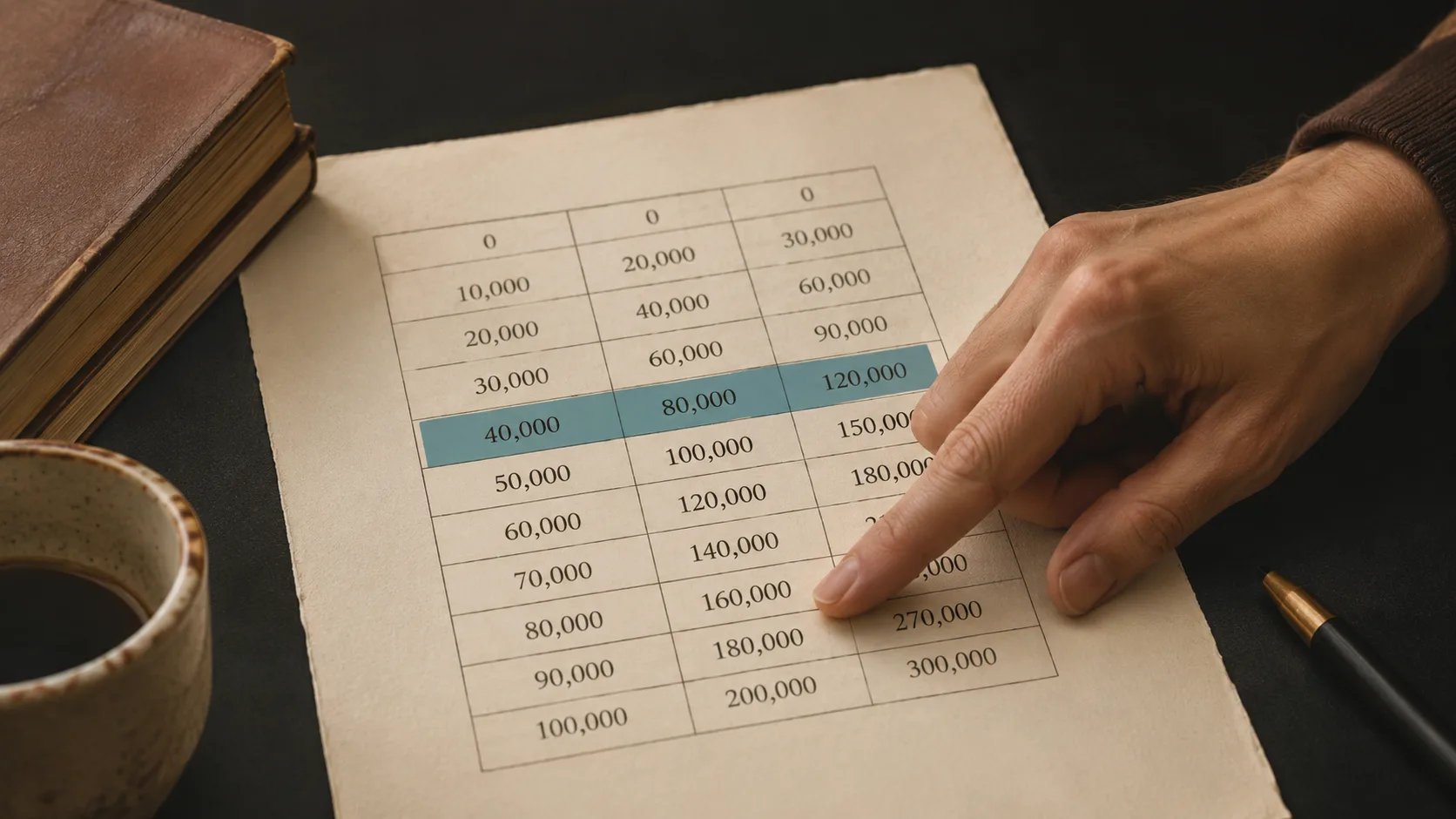
The moment the framework becomes useful is when you attach it to your word count. For an 80,000-word novel, the beats land at predictable places, which turns “I’m stuck in the middle” into “my Midpoint is missing.”
| Beat | Percentage | Word count (80k novel) |
|---|---|---|
| Catalyst | 10% | ~8,000 |
| Break Into Two | 25% | ~20,000 |
| Midpoint | 50% | ~40,000 |
| All Is Lost | 75% | ~60,000 |
| Break Into Three | 80% | ~64,000 |
| Final Image | 100% | ~80,000 |
Mapping Beats to Word Count
Print the table, tape it near your desk, and use it both as an outline and as a diagnostic. If your Catalyst is on page 3 or page 100, you know where to cut or expand. The Fun and Games section (25-50%) should deliver on the core premise your book promised before complications deepen.
Using the Beat Sheet During Revision
For revision, the beat sheet is often more useful than during drafting. Read your draft with the 15 beats in hand and mark where each one lives. Missing beats show up quickly. The All Is Lost beat works best when it combines an external setback with an internal collapse, forcing the hero to confront the lie they have been telling themselves before they can act. Jessica Brody’s Save the Cat Writes a Novel (2018) adapted Snyder’s original framework specifically for prose fiction, with novel-length examples for each beat.
Takeaway: Map beats to word count first, then use the map as a revision checklist, not a leash.
Common Misconceptions About Save the Cat
The beat sheet attracts strong opinions, most of them based on misreadings.
Misconception: It Makes Stories Feel Generic
Reality: The beat sheet describes what happens structurally, not how it happens creatively. Voice, setting, character choices, and thematic texture remain entirely yours. Two novels can hit the same 15 beats and read nothing alike, because the interesting work sits in how deeply your characters are drawn, not in whether the Midpoint arrives on cue.
Misconception: It Is Only for Beginners
Reality: Save the Cat is used widely in commercial fiction across thriller, romance, and young adult publishing, by first-time authors and long-standing professionals alike. As Save the Cat!’s own catalogue of beat sheet analyses shows, critically respected films including Spider-Man: Into the Spider-Verse map cleanly to the framework.
Misconception: The Percentages Are Strict Rules
Reality: The percentages come from analysing produced screenplays. They are calibration marks, not deadlines, and novelists have more flexibility than screenwriters. A literary novel with a slow burn can push the Catalyst later; a thriller can front-load. The framework flexes, so long as the tension holds.
Takeaway: Treat the beat sheet as a compass, not a metronome.
Save the Cat Story Structure Tools and Next Steps
Once the framework clicks, the next question is how to use it without letting it use you.
Beat Sheet Templates and Software
The official Save the Cat! site publishes a Beat Mapper tool and weekly beat sheet analyses of released films and TV pilots, which double as worked examples. Third-party templates adapted for novels are widely available and let you fill in each of the 15 beats before drafting, which cuts down on structural rewrites later. If you like paper, a printed grid with one row per beat and a column for each character’s arc works just as well.
Combining Save the Cat With Other Methods
Save the Cat pairs well with genre-specific plotting advice. Snyder himself identified 10 story genres based on the shape of the hero’s transformation, which helps calibrate tone to audience expectation. Many writers layer the Snowflake Method for character depth or the Story Grid methodology for scene-level analysis on top of the macro beats, especially when their subplot is trying to tell them something they have not yet articulated. Digital outlining apps increasingly ship with the 15 beats as a native mode.
Takeaway: Start with a printed beat sheet, add one companion method only when a real problem calls for it. For a plotting workspace that keeps structure and character work in one place, ClearARC’s outlining tools are built for exactly this kind of layered planning, without AI-generated prose getting between you and the page.
Frequently Asked Questions
What are the 15 beats of the Save the Cat beat sheet?
The 15 beats are Opening Image, Theme Stated, Set Up, Catalyst, Debate, Break Into Two, B Story, Fun and Games, Midpoint, Bad Guys Close In, All Is Lost, Dark Night of the Soul, Break Into Three, Finale, and Final Image.
Can Save the Cat be used for novels or is it only for screenplays?
It can absolutely be used for novels. Jessica Brody’s Save the Cat Writes a Novel (2018) adapts every beat for prose fiction, and the framework is now standard in commercial fiction workshops across genres from romance to thriller.
Where does the Midpoint beat fall in a novel using Save the Cat?
The Midpoint sits at roughly 50 percent of the manuscript. In an 80,000-word novel that lands near word 40,000. It should either raise the stakes sharply or hand the hero a false victory that will unravel.
What is the difference between the A Story and B Story in Save the Cat?
The A Story is the external plot the hero is chasing. The B Story is usually a relationship or secondary thread that carries the theme, delivering the emotional insight the hero needs to win the A Story in Act Three.
Does using Save the Cat make your story feel formulaic?
Only if you let the beats do the writing. The framework describes structural events, not their content. Distinctive voice, specific detail, and honest character choices are what keep a Save the Cat draft from feeling assembled from a kit.
How is Save the Cat different from the Hero’s Journey?
Both describe similar journeys with different vocabulary. The Hero’s Journey leans mythic and psychological; Save the Cat leans practical, assigning percentage-based page targets to each beat so writers can measure progress against a concrete word count.
What is the ‘All Is Lost’ beat and why does it matter?
All Is Lost, near 75 percent, is the story’s lowest point. It matters because it forces the hero to confront both an external defeat and an internal failure, setting up the change in worldview that makes the Finale earned rather than convenient.
What is the best way to start using Save the Cat as a novelist?
Read Save the Cat Writes a Novel, print a blank 15-beat template, and fill it in for a book you already love before applying it to your own draft. Pattern recognition first, then application.