
The three-act structure is one of the most widely used frameworks in narrative fiction, dividing a story into three sequential parts: Setup, Confrontation, and Resolution. First-time novelists often struggle to move from a promising idea to a finished manuscript, and a clear structural model gives that long process a reliable backbone. ClearARC helps writers plan and execute story structure from the opening scene to the final page, without pushing AI drafts into your prose.
What Is the Three-Act Structure

A Precise Definition
The three-act structure is a narrative model that divides a story into Act One (Setup), Act Two (Confrontation), and Act Three (Resolution). Screenwriter Syd Field codified the modern version in his 1979 book Screenplay: The Foundations of Screenwriting, giving the acts the labels most writers still use today. Its roots reach back much further, to Aristotle’s Poetics in the 4th century B.C., where he argued that every story must have a beginning, middle, and end connected by cause-and-effect beats (our word, not his, haha). Each act carries its own dramatic weight and must stand on its own while serving the larger story arc, a principle every writer of the seven major plots will recognize.
In Plain English
Think of the three-act structure as scaffolding. It tells you where the load-bearing beams go, then trusts you to design the rooms. Writers use it to plan, to diagnose, and sometimes to break the rules deliberately, but knowing where the beams sit matters even if you plan to move them. It is a guideline for deep planning your novel (guidelines are like rules, they don’t need to be followed all the time, but they help).
How the Three Acts Work
 Each act does a specific job, and understanding those jobs is the first real step toward controlling pace.
Act One: Setup
Act One establishes the main characters, their ordinary world, and the relationships that will be tested. It ends with an inciting incident that forces the protagonist into a new situation from which there is no return. The transition from Act One to Act Two, often called the first plot point, raises the central dramatic question the whole book must answer: Will she escape? Will he solve the murder? Will they win back what was lost? A strong opening also means opening with a character worth following, because scaffolding cannot carry a protagonist readers do not care about.
Act Two: Confrontation
Act Two is usually the longest act, roughly half of the total story. Here the protagonist attempts to solve the problem the inciting incident created, faces escalating obstacles, and slowly develops the skills, allies, and self-knowledge needed for the climax. This is where character arc basics get built brick by brick. Somewhere near the middle sits a false victory or false defeat, a moment that raises the stakes further and pushes the protagonist toward their lowest point, sometimes called the dark night of the soul.
Act Three: Resolution
Act Three opens as tension reaches its peak. The climax answers the dramatic question, and the resolution that follows shows readers who the protagonist has become. Subplots close, promises made in Act One are paid off, and the story earns its last page. The tiny final action that makes your novel memorable usually lives in this act, in the quiet beat after the climax.
Takeaway: Setup poses the question. Confrontation earns the answer. Resolution shows what the answer cost.
Key Plot Points Every First-Time Novelist Must Know
Turning Points and Plot Pivots
A turning point is a specific scene that redirects the narrative. The three-act model contains at least two major ones: the first plot point at the end of Act One and the second plot point entering Act Three. Aristotle insisted scenes form a chain of cause and effect, so every event should lead logically into the next rather than sitting like a stranded episode. Writers who plan turns well often understand how to write twists and unexpected turns that feel inevitable in hindsight.
The Climax vs. the Resolution
The climax is not the end of the story. It is the moment of highest tension where the dramatic question is answered. The resolution, sometimes called the denouement, shows the aftermath and the protagonist’s new normal. Subplots also need to reach resolution in Act Three, since loose ends undermine a reader’s sense of a complete story. Writing subplots that complement the main plot is often what separates a satisfying finale from a merely functional one.
First-time novelists frequently compress Act Two, which should account for roughly half the total page count. Under-developing the middle is one of the most common structural errors in debut manuscripts, and it usually announces itself as a saggy, aimless second act followed by a rushed ending.
Common Misconceptions About the Three-Act Structure
Misconception: It Makes Stories Predictable
Reality: Readers do not consciously notice structural beats. They feel pacing effects, tension, release, momentum, without ever identifying the architecture underneath. A well-executed structure feels invisible. What makes a story feel alive is character specificity, including the self-deception scene that turns readers into fans.
Misconception: It Only Works for Screenplays
Reality: The three-act model is used across novels, films, plays, and television. Syd Field popularized it for screenwriters, but the framework predates cinema by more than two millennia. Novels simply give you more room to breathe between the beats, which is where hero and villain tension can develop the depth prose allows.
Misconception: You Must Outline Before Writing
Reality: Some writers, often called pantsers, write without a formal outline and discover structure during revision. The three-act model is equally useful as a diagnostic tool applied after a first draft. Alternative structures like the Hero’s Journey, Save the Cat, and Freytag’s Pyramid are largely compatible with the three-act model, adding granularity to the same fundamental arc rather than replacing it. If drafting without a map is your style, writing by the seat of your pants is still compatible with sound structure in revision.
Related Storytelling Concepts
Character Arc
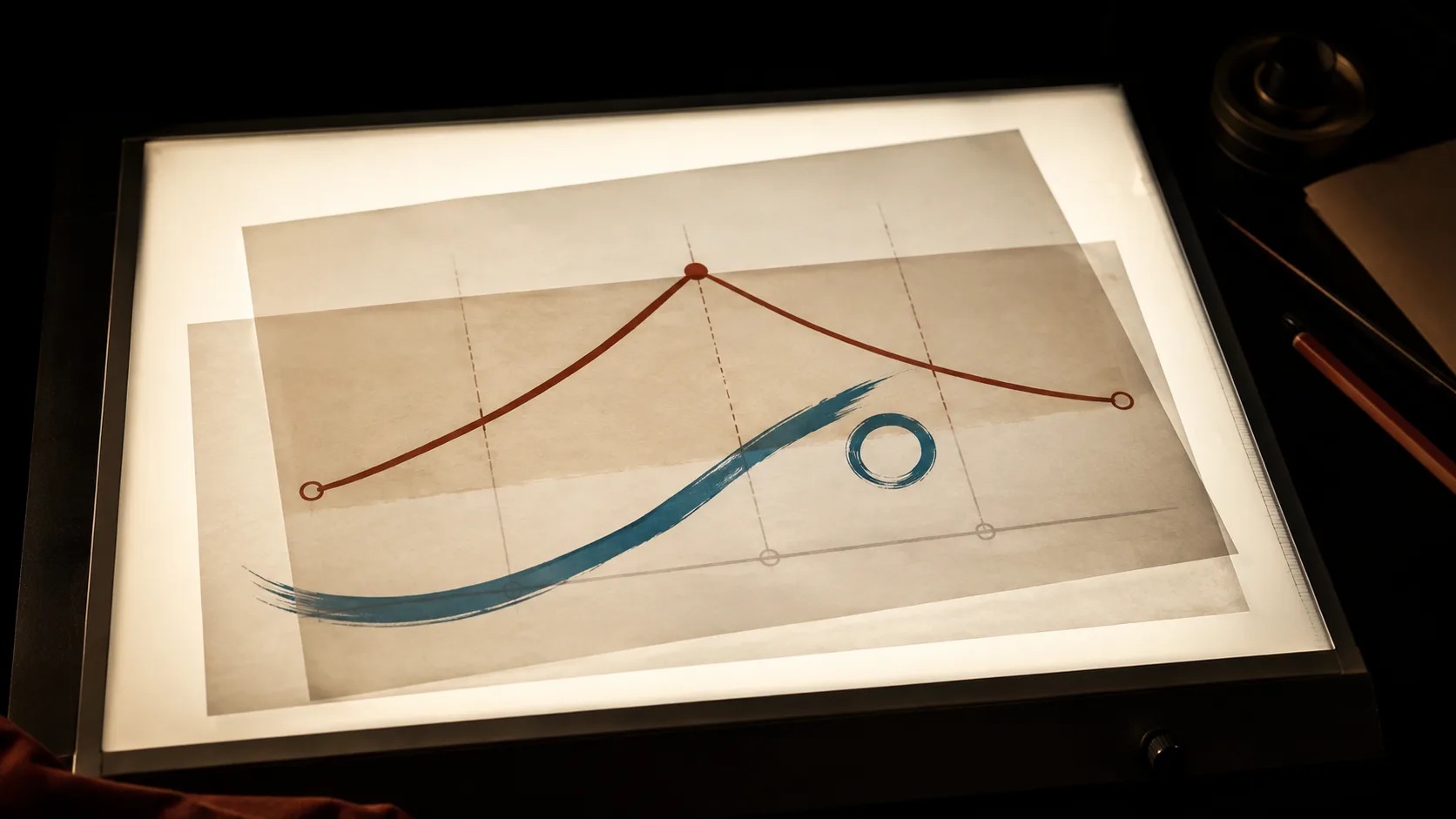
A character arc tracks the internal change the protagonist undergoes across the story. The three-act structure creates the external pressure that forces that internal transformation. The tension between what the protagonist wants and what they need is the fuel, which is why the gap between want and need in character arcs sits at the heart of nearly every strong novel.
The Dramatic Question
The dramatic question is the story’s central spine: a yes/no question posed at the end of Act One whose answer arrives at the climax. Every scene in Act Two should push toward or pull away from that answer. It is the one field that holds your plot together more reliably than any beat sheet.
Inciting Incident
The inciting incident is the first major disruption to the protagonist’s ordinary world. It must occur early enough in Act One to launch Act Two without delay. Mentors and co-protagonists then play a structural role through Act Two, providing tools, knowledge, or emotional support, which is why other characters are the real engine of change in most novels.
Climax and Denouement
The denouement, or falling action after the climax, resolves remaining subplots, shows the protagonist’s transformed state, and gives readers emotional closure. A rushed denouement is the fastest way to sour a reader on an otherwise strong book. Even a small moment can do the work, especially a scene that makes readers cry after the tension breaks.
How to Get Started With the Three-Act Structure
Map Your Story’s Three Acts Before You Write
Begin by identifying three anchor events: the inciting incident at the end of Act One, the protagonist’s lowest point at the end of Act Two, and the climax in the middle of Act Three. Everything else fills in around these pivots. Index cards, a spreadsheet, or dedicated story-planning software all work; the goal is to see the shape at a glance and spot gaps in pacing. If you are drafting without an outline, pantsers face particular obstacles that structural mapping can quietly solve.
Use Structure as a Revision Diagnostic
If you already have a draft, map each existing scene to one of the three acts. Scenes that do not clearly belong to an act, or do not advance the dramatic question, are candidates for cutting or reworking. A single concrete first action beats a week of theorising: write a one-sentence dramatic question for your novel (Will Anna clear her father’s name before the trial ends?) and test every scene against it. To keep momentum in the middle, study looping techniques that make readers want to read on, then apply the diagnostic scene by scene.
Reading published novels with the three-act framework in mind accelerates structural intuition faster than any theoretical study alone. Pick two books you love, mark the inciting incident, midpoint, and climax on paper, and notice how the writer distributed weight between the acts.
Frequently Asked Questions
What is the three-act structure in simple terms?
It is a story model that splits a narrative into a beginning that sets things up, a middle that raises trouble, and an end that resolves it. Setup, Confrontation, Resolution. Beginning, middle, end.
How long should each act be in a novel?
A common ratio is roughly 25% Act One, 50% Act Two, and 25% Act Three. Exact percentages vary by genre and pacing preference, but Act Two is almost always the longest, and first-time novelists usually shorten it too much.
What is the difference between the inciting incident and the first plot point?
The inciting incident is the disruption that unsettles the ordinary world. The first plot point is the decision or event that commits the protagonist to the new situation and raises the central dramatic question, closing Act One and launching Act Two.
Can the three-act structure work for short stories?
Yes, though the acts compress dramatically. A short story might spend two paragraphs on setup, most of its length on confrontation, and a single scene on resolution. The proportions shift, but the underlying beginning-middle-end logic still applies.
What is the midpoint in the three-act structure?
The midpoint sits in the middle of Act Two and typically delivers a false victory or false defeat. It raises the stakes, shifts the protagonist’s approach, and pushes the story toward the lowest point that closes the second act.
Is the three-act structure the same as the Hero’s Journey?
No, but they overlap. The Hero’s Journey adds more granular stages (Call to Adventure, Ordeal, Return) inside the same underlying arc. Most Hero’s Journey beats can be mapped cleanly onto the three-act structure without contradiction.
Do I need to outline before writing if I use the three-act structure?
No. Many writers discover their structure in revision. The three-act model works equally well as a planning tool before drafting or as a diagnostic during pantser-friendly revision, depending on your temperament and project.
What is the most common mistake writers make with Act Two?
Compressing it. First-time novelists often rush through the middle, skipping the escalating obstacles and character growth that make Act Three feel earned. A thin Act Two produces a saggy, unmotivated climax, no matter how strong the opening was.
Closing Thoughts
The three-act structure will not write your novel for you, and it will not tell you what your story is about. What it will do is give you a dependable map for the long walk from page one to the final scene, one you can trust when the middle gets murky and the ending feels far away. Use it to plan, use it to revise, and use it to read other writers with sharper eyes. When you are ready to sketch your acts on paper, ClearARC is built for writers who want structure without a machine writing the sentences for them.