
The seven-point story structure gives fiction writers a clear, repeatable framework for plotting any genre of novel. Popularized by sci-fi author Dan Wells at the 2013 Life, the Universe, and Everything conference, it breaks a story into seven sequential plot points that carry a protagonist from an opening hook to a satisfying resolution. Writers who use ClearARC to develop their manuscripts often pair it with frameworks like this one to keep their narrative arc on track from the first draft onward.
What Is the Seven-Point Story Structure
A Precise Definition
The seven-point story structure divides a narrative into seven sequential, functional plot points: Hook, Plot Turn 1, Pinch 1, Midpoint, Pinch 2, Plot Turn 2, and Resolution. Each point serves a specific job in moving the protagonist from an initial state of imbalance to a final, transformed state. Dan Wells adapted it from the Star Trek Roleplaying Game Narrator’s Guide and first presented it publicly in 2013, as documented on the Writing Excuses podcast. The same framework is common in screenwriting, and predates Wells’s popularization of it for novel writing. If you are new to plotting, this scaffolding pairs well with a broader story structure template that you can adapt to your own manuscript.
In Plain English
Think of the seven points as the load-bearing beams of your novel, not the whole house. They mark the places where the story pivots, where pressure spikes, and where your protagonist changes direction. Everything else, including subplots, quiet character beats, and the gap between want and need, lives in the rooms between those beams.
How the Seven Points Work: A Step-by-Step Breakdown
Hook and Plot Turn 1
The Hook establishes the world, the characters, and their starting state. It should be the mirror opposite of the Resolution, so that by the last page the reader can see clearly how far your protagonist has traveled. A fearful, isolated character in chapter one earns a brave, connected ending; that contrast is the point. Grounding the Hook in a character worth reading about matters more than a flashy opening image, which is why so many editors recommend you open on a character worth following rather than a set piece.
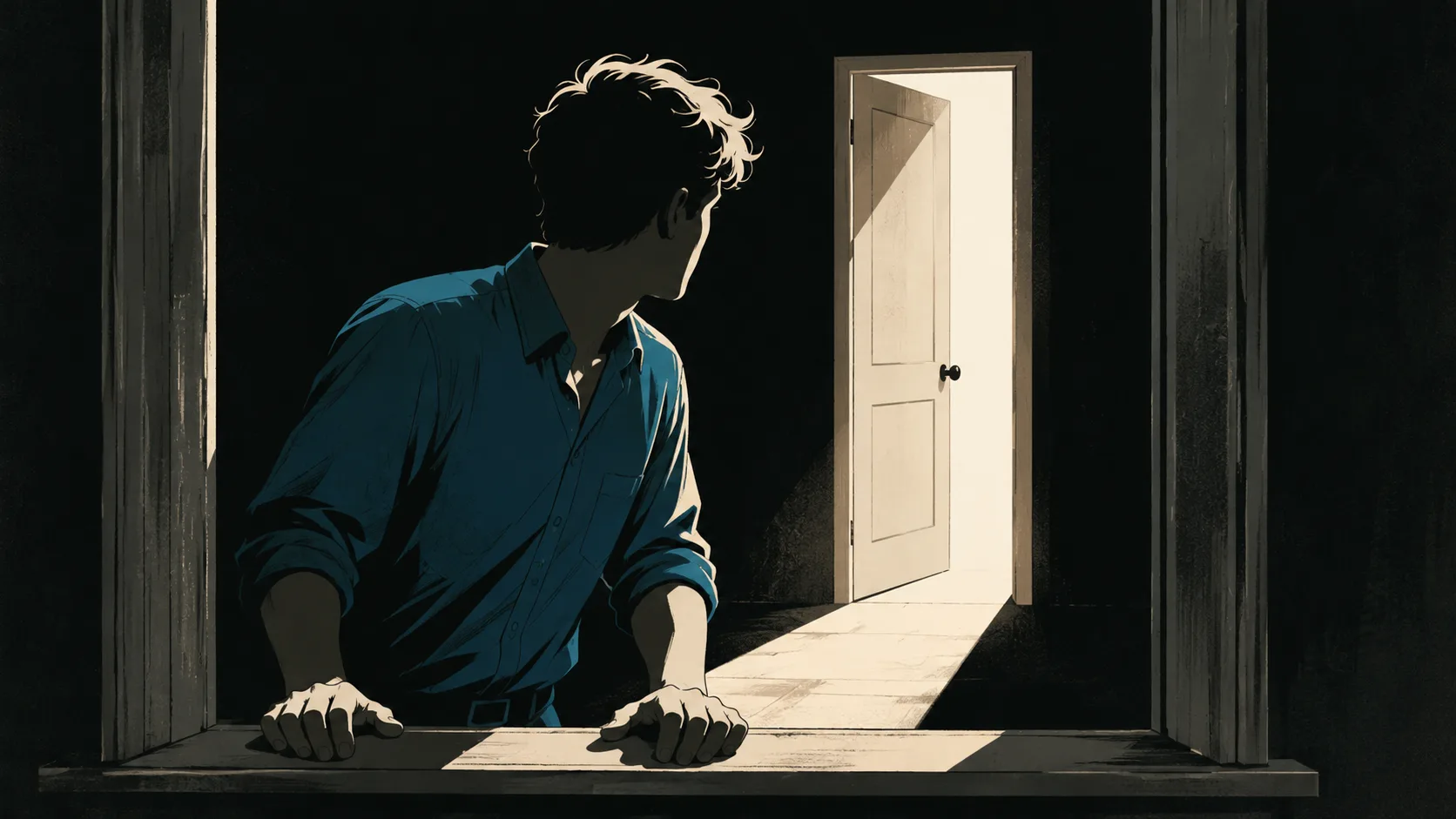
Plot Turn 1 is the call to adventure or inciting incident. It kicks your protagonist out of the ordinary world and into the central conflict of the book. This is not a small nudge; it is the door slamming shut behind them. Their old life is no longer available on the same terms, and the story now has a direction that would not exist without this event.
Pinch 1 and the Midpoint
Pinch 1 introduces the antagonist or the major conflict in a way that raises the stakes and pressures the protagonist into action rather than passivity. A pinch is exactly what it sounds like: a squeeze applied from outside that forces a decision. It is also the ideal moment to make sure your antagonist reads as a living person, with pressures of their own, which is why many craft writers argue your antagonist needs a Tuesday morning rather than a lengthy backstory dump.
The Midpoint is the structural pivot of the entire novel. Here the protagonist shifts from reactive mode to proactive mode and takes control of their situation for the first time. Before the Midpoint, the story happens to them; after the Midpoint, they happen to the story. This is often where the character finally sees, and starts to reject, the lie they have been telling themselves.
Pinch 2, Plot Turn 2, and Resolution
Pinch 2 raises the pressure to its peak. This is the “all is lost” moment, often involving the death or removal of a mentor, a betrayal by an ally, or the collapse of a plan the protagonist believed in. Plot Turn 2 delivers the final piece of information or insight the protagonist needs to act. It is not a rescue from outside; it is the moment they know what to do. The Resolution enacts the outcome, resolves the conflict, and shows the character’s changed state. For that final beat to land, spend real thought on the tiny final action that makes your novel memorable rather than a generic victory scene.
How It Works in Practice: The Hunger Games Example
Mapping the Seven Points to Katniss’s Arc
Suzanne Collins’s The Hunger Games is the demonstration most craft teachers reach for, and Reedsy’s seven-point walkthrough maps it in detail. The Hook is Katniss’s constrained life in District 12: hunting, hunger, and the shadow of the reaping. Plot Turn 1 is Prim’s name being drawn and Katniss volunteering in her place, an act that hurls her out of District 12 and into the machinery of the Capitol. Pinch 1 is her arrival in the Capitol and the dawning weight of the lethal stakes she now lives under. Reading published novels this way, before you outline your own, is one of the fastest ways to internalize how deep plotting actually feels on the page.
The Midpoint is Katniss’s decision to stop hiding in the arena and take active steps to survive and win, allying with Rue and going on the offensive. Pinch 2 is the rule reversal that threatens Peeta’s life. Plot Turn 2 is the berries gambit, where Katniss finds the specific move that resolves the impossible situation. The Resolution is survival, the couple’s return home, and a Katniss transformed from passive survivor to deliberate agent. Mapping a finished novel like this trains your eye for the underlying architecture, which is a useful discipline whether you are a plotter or one of those pantsers facing the planning obstacle head-on for the first time.
Why This Structure Works and How It Compares to Other Frameworks
Strengths for Plotters and Pantsers
Wells recommends building the structure in reverse: start with the Resolution, then write the Hook as its opposite, then fill in the Plot Turns and Pinches. That order prevents directionless plotting, because every intermediate beat is now pulling toward a known destination. The structure is genre-agnostic and has been applied to fantasy, literary fiction, thriller, and romance by many published authors. It even accommodates writers who prefer to discover their material as they go, which is why some people who thought they were pure pantsers end up writing by the seat of their pants with a light scaffold underneath.
Seven-Point vs. Three-Act Structure vs. Save the Cat
| Framework | Beats | Granularity at Midpoint | Best For |
|---|---|---|---|
| Three-Act | 3 acts | Implicit | Broad shape checks |
| Seven-Point | 7 points | Explicit pivot + two pinches | Novelists who want scaffolding without rigidity |
| Save the Cat | 15 beats | Prescriptive | Writers who like page-count targets |
Compared to the three-act structure, the seven-point system is more granular at the midpoint and gives you explicit pressure points, the Pinches, that the three-act model leaves implicit. Compared to Save the Cat’s 15-beat sheet, it is deliberately minimal, which makes it accessible for writers who want structure without rigid word-count targets. If you also want a broader map of archetypal shapes to compare against, Christopher Booker’s seven basic plots sits alongside these frameworks as a story-type lens rather than a beat sheet.
Common Misconceptions About the Seven-Point Structure
Misconception: It Produces Formulaic Stories / Reality: Points Are Flexible Containers
Each point is a functional milestone, not a rigid scene prescription. Writers can use one scene or a whole cluster of chapters to arrive at any given point, and two novels that share the same seven-point skeleton can feel wildly different on the page. What matters is that the beat lands, not that it lands on a specific page. Layered subplots, of the kind you get when your subplot is trying to tell you something, can weave through the same seven points without flattening the book.
Misconception: It Only Works for Action-Driven Plots / Reality: It Applies to Character and Internal Arcs Too
The structure applies equally to internal arcs. The Hook can be a character’s emotional starting state rather than an external situation, and the Resolution the transformed emotional state. Pinches can be internal pressures like grief or shame, not just external threats. Grounding those internal beats in something specific, like the self-deception scene that turns readers into fans, keeps the arc from feeling abstract.
Misconception: Every Scene Must Map to a Point / Reality: Points Are Milestones, Not Scene Counts
The seven points do not dictate page count or pacing. A Pinch can occupy one chapter in a taut thriller or a full act in an epic fantasy. Wells himself frames the seven points as key steps rather than exhaustive plot maps, which leaves plenty of room for secondary character arcs, quiet interludes, and the sort of texture you get from paying attention to character arc basics at the scene level.
How to Get Started With the Seven-Point Structure Today

Step 1: Write Your Resolution First
Write a single sentence that states the external outcome of your novel and the internal change in your protagonist. That sentence is the anchor for every other decision. Without it, later beats drift. If you already know your protagonist but the ending feels vague, spend some time on why your protagonist may feel boring before you commit the Resolution to the page.
Step 2: Define Your Hook as Its Opposite
Write the Hook as the logical inversion of the Resolution. If the character ends brave and connected, they begin fearful and isolated. If they end honest, they begin self-deceived. This opposition is what makes the arc legible to a reader. Anchoring the Hook in a network of relationships helps too, since other characters are the real engine of change in most novels.
Step 3: Fill In the Remaining Five Points
Draft one sentence for each of the five remaining points, checking that each creates a believable causal bridge toward the Resolution. Then expand each point into a scene list or chapter outline before you draft prose. You can also apply the structure recursively to subplots and act-level arcs within a longer novel, which is one of the cleanest ways to write twists and unexpected turns that still feel earned.
Frequently Asked Questions
What are the seven points in Dan Wells’s story structure?
The seven points, in order, are Hook, Plot Turn 1, Pinch 1, Midpoint, Pinch 2, Plot Turn 2, and Resolution. Each is a functional milestone that moves the protagonist from their starting state to a transformed final state.
What is the difference between the seven-point structure and the three-act structure?
The three-act structure identifies broad phases: setup, confrontation, and resolution. The seven-point structure sits inside that shape and marks specific pivots, including two explicit pinch points and a midpoint that flips the protagonist from reactive to proactive behavior.
How do you start building a seven-point story outline?
Write your Resolution first as a single sentence covering external outcome and internal change. Then write the Hook as its opposite. Fill in Plot Turn 1, Pinch 1, Midpoint, Pinch 2, and Plot Turn 2 as causal bridges between the two endpoints.
Can the seven-point structure be used for short stories or screenplays?
Yes. Dan Wells adapted it from a role-playing manual, and it is widely used in screenwriting. For short stories, compress each point into a beat rather than a chapter; the seven functions still hold, even if each occupies only a paragraph.
What is the Midpoint in the seven-point story structure and why does it matter?
The Midpoint is the pivot where the protagonist stops reacting and starts acting. It matters because a novel with no midpoint shift feels aimless; the character never takes ownership of the conflict, and readers lose confidence that the story is going anywhere.
What is the difference between Plot Turn 1 and the Hook?
The Hook establishes the ordinary world and the character’s starting state. Plot Turn 1 is the event that breaks that world and forces the character into the central conflict. The Hook is the baseline; Plot Turn 1 is the disturbance that ends it.
Is the seven-point story structure good for character-driven fiction?
Yes. The seven points map cleanly onto internal arcs, with the Hook and Resolution capturing emotional states rather than external situations. Pinches can be internal pressures like grief, doubt, or shame, and the Midpoint marks the moment of internal ownership.
Where did the seven-point story structure originally come from?
Dan Wells adapted it from the Star Trek Roleplaying Game Narrator’s Guide and presented it publicly at the 2013 Life, the Universe, and Everything conference. The same beat pattern predates his version and is widely used in screenwriting circles.
Conclusion
The seven-point structure works because it is small enough to hold in your head and specific enough to keep a draft moving. Write the Resolution first, invert it for the Hook, and let the Pinches and Plot Turns do the pressure work between them. When you are ready to move from outline to manuscript, ClearARC is designed to keep your seven points, your subplots, and your character arcs visible in one place while you draft, without any AI writing your book for you.