
Choosing the right story structure template before you write a single chapter can be the difference between a focused, satisfying novel and one that loses momentum halfway through. ClearARC gives writers an interactive space to map their story beats, track character arcs, and move plot points around until the shape of the book feels right. This guide walks through exactly how to pick and apply a template so a single planning session produces a workable outline you can draft from. Outcome: a complete first-pass outline. Time: 2 to 4 hours. Skill level: beginner to intermediate.
What You Will Need Before You Start

A story structure template works best when you already have a few raw ingredients on the page, not just in your head. If you are missing a protagonist or an ending, spend an evening on those first, then come back. You will save yourself hours of guessing at beats that have no story to hold.
Tools and materials
- A core premise in one or two sentences.
- A protagonist with a rough sense of what they want and what they lack. Our guide to the gap between what your character wants and needs is a useful check here.
- A rough sense of your ending, even if only tonal.
- A place to capture beats: a dedicated planning app, a Google Doc, or a printed worksheet.
- Any existing notes, character sketches, or half-outlines you have already drafted.
Time and skill level
Budget two to four hours for a first-pass template fill and treat the result as a living document. Writers at any experience level can use a template. Beginners tend to get the most mileage from the Three-Act Structure, while writers who have finished a book or two often prefer the Hero’s Journey or Save the Cat. Whichever you pick, remember that you are sketching the skeleton of a deeper plan, not the final draft.
Before You Start: What to Back Up and What Can Break
Story structure templates impose a shape on your narrative. That shape is helpful, but it is not neutral. Forcing every idea into a rigid template before you understand your characters produces a mechanical plot that hits the beats and moves nobody. The template is a scaffold, not a cage, and treating it as a contract is the most common planning mistake we see writers make.
Save a copy of any existing notes or partial outline before mapping them into a new template. Reorganising can make earlier connections hard to recover, and you may want to compare an old thread against the new structure later. If you are a pantser who has already written pages, do not throw them out. You can reverse-engineer a template from your existing draft to find gaps, which is often less painful than starting over. Our thoughts on writing by the seat of your pants apply directly here.
Finally, be honest about what the template cannot fix. Structure will not rescue a protagonist nobody cares about. If yours feels thin, work through why your protagonist might feel boring before you spend a Saturday on beats.
Step-by-Step: Applying a Story Structure Template to Your Novel
The five steps below take you from a blank page to a scene-by-scene outline. Work in order. It is tempting to leap ahead to scene-level detail, but the anchor points come first for a reason.
Step 1: Choose the right template for your genre and story
Pick one of four common frameworks and commit to it for this planning pass. You can always try another next time.
- Three-Act Structure: Setup, Confrontation, Resolution. Inciting incident closes Act One; a dark night of the soul sits just before the Act Three climax. Suits most commercial fiction.
- Hero’s Journey: 12 named stages from the Ordinary World through the Ordeal to the Return, popularised by Joseph Campbell. Especially effective for fantasy, science fiction, and adventure. If you want a full walkthrough of common shapes, the seven major plots every fiction writer should know is a useful companion piece.
- Save the Cat: 15 precise beats with suggested page and chapter ranges, developed by Blake Snyder for screenwriting and later adapted for novels. Concrete pacing targets built in.
- Five-Milestone: Opening Image, Midpoint Shift, Dark Night, Climax, Resolution. A leaner alternative when 15 beats feel like too much.
For a broader overview of how these frameworks compare, Self-Publishing School’s story structure guide is a straightforward reference.
Step 2: Fill in the anchor points first
Write your inciting incident, midpoint, and climax before anything else. These three beats carry the weight of the book. Filling them first prevents the classic trap of front-loading setup and then rushing the ending because you ran out of runway. When the anchors are locked, the supporting beats have somewhere to lean.
Give yourself permission to write anchors that are half-formed. “Protagonist discovers the letter” is fine at this stage. You are naming rooms, not decorating them. If your midpoint has no emotional charge yet, revisit the lie your character tells themselves and see whether the midpoint is where that lie cracks.
Step 3: Map your character arc alongside the plot beats
Beside each plot beat, note one line about where the protagonist is internally. Are they in denial? Doubting their mentor? Willing, for the first time, to risk something they care about? Plot without arc feels like errands; arc without plot feels like a diary. You need both moving in step. Our character arc basics piece has a simple two-column format that works well here.
Step 4: Test pacing by checking beat spacing
Once every beat has a plot note and an arc note, check the rough word-count each act or segment will absorb. In the Three-Act model, Act Two should be roughly twice the length of Act One or Act Three. Look for beats stacked too close together, especially in Act Two, where rising action can quietly collapse into repetition. If Act Two feels thin, you may need a subplot that complements the main plot rather than another external obstacle.
Step 5: Convert your filled template into a scene-by-scene outline
Turn each beat into two to five scenes. A scene is a unit where something changes: information, relationship, stakes, location. Give each scene a one-line summary and note which character is driving it. By the end of this step you have a working outline you can draft from, chapter by chapter. Consider how you will open the book with a character worth following, because that first scene sets every promise the rest of the outline has to keep.
Troubleshooting Common Template Problems
Every template runs into the same handful of failures. Diagnose the symptom, then work backwards to the cause before applying the fix. F(r)iction’s overview on outlining a story is useful background if you want to double-check your instincts.
- Symptom: Your story has no clear midpoint. Cause: The midpoint beat was skipped or treated as a soft transition. Fix: Identify the moment your protagonist shifts from reactive to proactive, then anchor every earlier beat to that pivot.
- Symptom: Act Two feels padded or repetitive. Cause: Rising action lacks escalating stakes at each beat. Fix: Check that every scene in Act Two raises the cost of failure before the next beat begins. A useful sharpener here is how to write twists and unexpected turns.
- Symptom: The climax feels unearned. Cause: The internal arc was not mapped alongside the external plot. Fix: Return to Step 3 and pair each plot beat with a corresponding character growth moment.
- Symptom: The template does not fit your genre’s conventions. Cause: A genre-agnostic template was applied to a genre with specific structural requirements. Fix: Layer genre-specific beats, such as the romance black moment, on top of the base structure rather than replacing it.
Choosing the Right Template for Your Genre
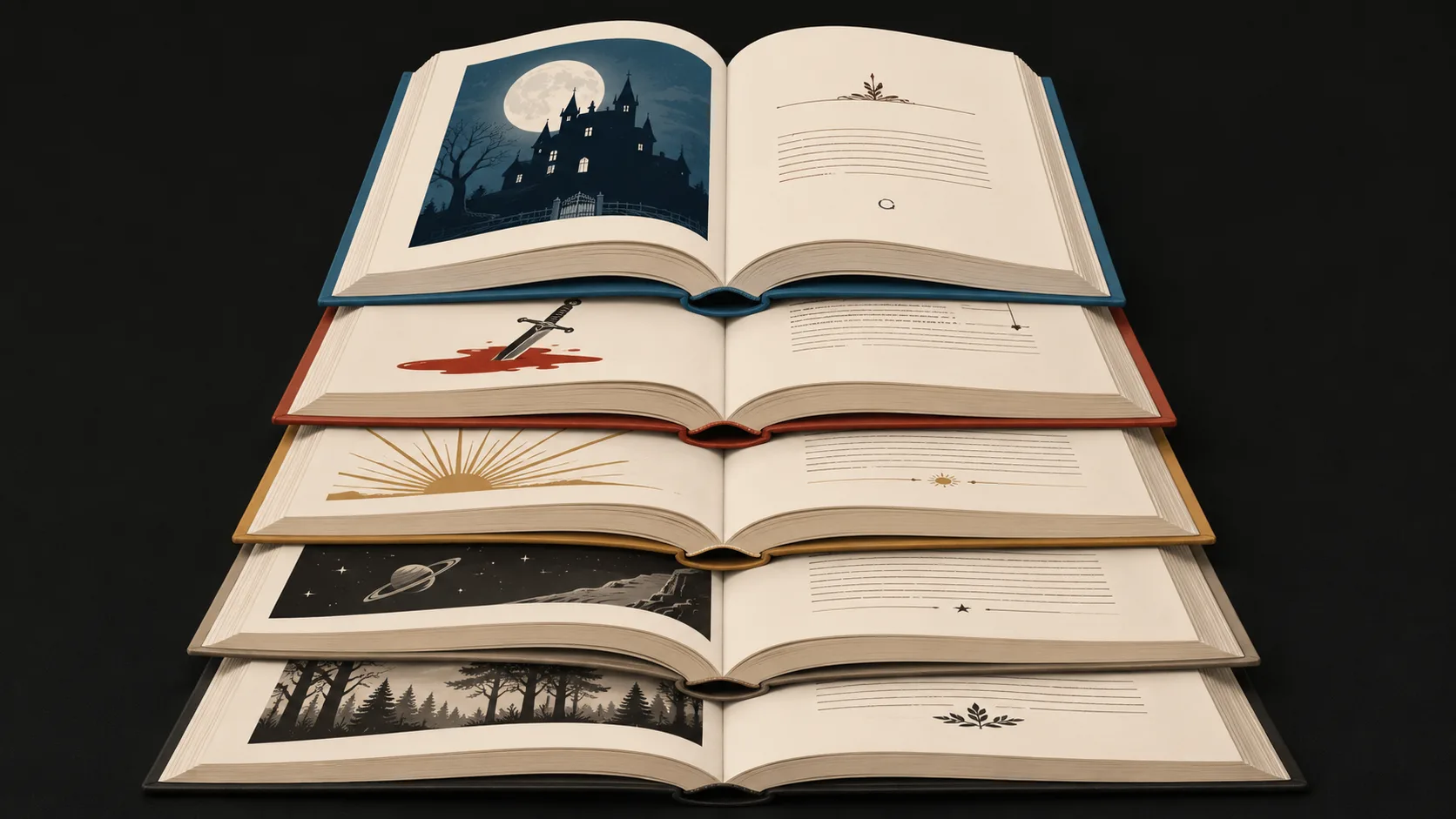
Genre readers arrive with structural expectations already installed. Meeting or subverting those expectations is a craft decision, but you cannot do either without knowing which template your genre leans on.
Templates for literary and commercial fiction
Commercial fiction, including thrillers, romance, and YA, aligns closely with the Three-Act Structure and Save the Cat because readers have internalised those beat rhythms. Literary fiction writers sometimes reverse or subvert standard templates deliberately, which works when the writer knows the underlying rules well enough to break them precisely. If your literary novel hinges on interior change, the emotional beats matter more than the plot beats, and pieces like how to write a scene that makes readers cry become planning tools in their own right.
Templates for genre fiction (fantasy, mystery, romance)
Fantasy and science fiction benefit from the Hero’s Journey because it accommodates world-building stages and mentor relationships without straining. Mystery and crime fiction often use a modified Three-Act Structure that front-loads the crime as an early inciting incident and reserves the reveal for a late Act Three climax. Romance typically layers a Black Moment onto whichever base structure the writer prefers. Whatever the genre, your antagonist still needs texture; give your antagonist a Tuesday morning rather than a monologue of backstory.
Frequently Asked Questions
What is a story structure template?
A story structure template is a reusable framework of named beats or stages that maps the shape of a novel from opening to resolution. Writers use it to plan pacing, arc, and turning points before drafting begins.
Which story structure template is best for beginners?
The Three-Act Structure is the most forgiving starting point because it uses only three broad phases and one required turning point per act. Once you have finished a novel with it, experimenting with 12- or 15-beat frameworks feels far less intimidating.
Can I use a story structure template if I am a pantser?
Yes. Pantsers often work best by drafting first and reverse-engineering a template from existing pages to spot structural gaps. Reading what pantsers actually face when planning a novel can reframe the process without forcing a full outline upfront.
How detailed should my story structure template be before I start drafting?
Detailed enough to name every anchor beat and sketch one line of character arc beside each, but not so detailed that every scene is written in miniature. Two to four hours of planning is usually the right investment for a first pass.
What is the difference between the Three-Act Structure and the Hero’s Journey?
The Three-Act Structure organises a story into Setup, Confrontation, and Resolution using two major turning points. The Hero’s Journey is a 12-stage cycle rooted in myth, tracking a protagonist from an Ordinary World through an Ordeal and back changed.
Do I need a different template for each genre?
Not a different template, but usually a layered one. Pick a base structure that fits your instincts, then add genre-specific beats such as a mystery’s False Solution or a romance’s Black Moment on top of the underlying framework.
How do I adjust my template once I have started writing?
Treat the template as a living document. When a new scene surprises you, update the beat sheet rather than forcing the draft back into the old plan. Structural revision during drafting is normal and usually improves the book.
Where can I find free story structure templates for novels?
Reputable writing sites, university writing centres, and dedicated planning apps publish free templates for the Three-Act Structure, Hero’s Journey, Save the Cat, and Five-Milestone models. Print one, or copy it into your planning tool, and start filling in anchors.
Bringing It All Together
A story structure template is only as useful as the honesty you bring to it. Fill anchors first, map the internal arc alongside the plot, check pacing before drafting, and let the shape flex as characters push back. The finished outline is not a promise you have to keep line by line; it is a map you can revise as the terrain reveals itself. If you want a quiet, no-AI space to lay out beats, drag them around, and watch the shape of your novel emerge, ClearARC’s planning canvas is built for exactly that kind of patient, craft-first work. Pour a coffee, open your notes, and start with the anchor points.

 Story structure is the order in which plot events are told to the reader. It is the framework that determines how cause and effect unfold across a narrative, and it is the reason a book can feel taut and inevitable rather than aimless. Every scene, chapter, and act sits inside that framework, and the framework itself is older than the novel form.
 Most published novels can be mapped to one of a handful of frameworks. Learning them means you can steal deliberately rather than reinvent the wheel with each draft.
 Frameworks are made of parts. A few of those parts do more work than the others.
 Not every framework suits every book. The choice is genre-led first, temperament-led second.