
Linear story structure is the oldest and most widely used narrative framework: events unfold in chronological order, from beginning to middle to end, each moment causing the next. It sounds simple, and in the best hands it is. Understanding when to use it, and when to reach for something else, is one of the quietest skills a writer can develop. ClearARC exists to help writers build that judgment chapter by chapter.
Definition: What Linear Story Structure Actually Means
A linear narrative is a story that presents its events in the order they occur in story time. A happens, then B, then C, and the reader travels forward with the characters rather than being shuttled around in time. Brief recollections are allowed, but the spine of the book moves in one direction. That single-direction motion is what the word “linear” is actually pointing at.
The idea is old. Aristotle described it in the fourth century BCE in his Poetics, arguing that effective narrative has a clear beginning, middle, and end connected by cause and effect. According to EBSCO’s research entry on linear plot development, this classical model is sometimes called “Aristotle’s incline,” a name that captures the rising tension climbing toward a climax. If you have ever sketched a story structure template on a napkin, you were probably drawing something close to it.
The Core Idea in Plain English
In plain English: a linear story is one you can retell with the word “then.” First this, then that, then the next thing. The line runs one way, and the reader trusts it. That trust is the whole reason the shape works, and it is why so many writers building their first believable characters reach for a linear frame before anything else.
Where the Term Comes From
Linear structure is distinct from nonlinear structure, where scenes are deliberately reordered, and from circular structure, where the story ends where it began. All three are legitimate. The word “linear” simply refers to the line-like, unidirectional movement of the story from opening scene to final resolution, and it stays useful because most readers, most of the time, still think in that shape. A close cousin worth reading about is Christopher Booker’s seven basic plots, which almost all assume a chronological spine.
How Linear Structure Works: The Five-Stage Arc

The modern linear arc maps neatly onto five stages: exposition, rising action, climax, falling action, and resolution. Exposition introduces the world and plants the conflict. Rising action escalates pressure. The climax is the peak. Falling action shows the consequences of that peak. Resolution closes the loop. If you are trying to plan the shape of your novel in advance, those five beats are the cleanest checklist you will find.
Exposition and Rising Action
Cause and effect is the engine of the whole thing. Each scene should create the conditions that make the next scene necessary. If you can lift a scene out and nothing downstream changes, that scene is decorative rather than structural. The best rising action is a chain of decisions, not a chain of incidents, and it usually depends on a protagonist worth following making choices under pressure.
Climax, Falling Action, and Resolution
Flashbacks can live inside a linear structure without breaking it, as long as the majority of the narrative motion still moves forward in time. John Updike’s short story “A&P” is frequently cited as a clean linear plot that unfolds step by step without structural interruption. Character development in a linear book follows the same chronological line as the plot; growth becomes visible because the reader has watched it happen, and the gap between what a character wants and what they need closes in a sequence the reader can feel.
Why Writers Default to Linear Storytelling

Human cognition maps naturally onto forward-moving time. Readers can follow a linear story with less effort and spend that saved effort on character and theme rather than on untangling sequence. That is not a small advantage. It is often the difference between a reader finishing your book and a reader quietly setting it down after chapter three, which is where most readers decide to keep reading or stop.
Reader Comfort and Clarity
Linear structure also delivers theme efficiently. Because events proceed in order, the cause-and-effect logic makes meaning legible without the author having to step in and explain. You can trust the sequence to do the arguing for you, particularly when the lie your character tells themselves is exposed by consequences the reader has watched accumulate.
Strengths for First-Time and Genre Novelists
Genre fiction leans heavily on linear structure. Mysteries, romances, thrillers, and fantasy quests tend to deliver satisfaction only when the payoff arrives in the right sequence. First-time novelists benefit too, because a linear scaffold means the writer always knows what comes next, which reduces the risk of structural drift halfway through the draft. Wikipedia’s entry on story structure describes linear progression as “the overwhelmingly most typical story structure,” and that near-universality is a reason, not an accident. It is also the shape that suits writers who prefer to plan rather than pants their way through a book.
When Linear Structure Is the Right Choice
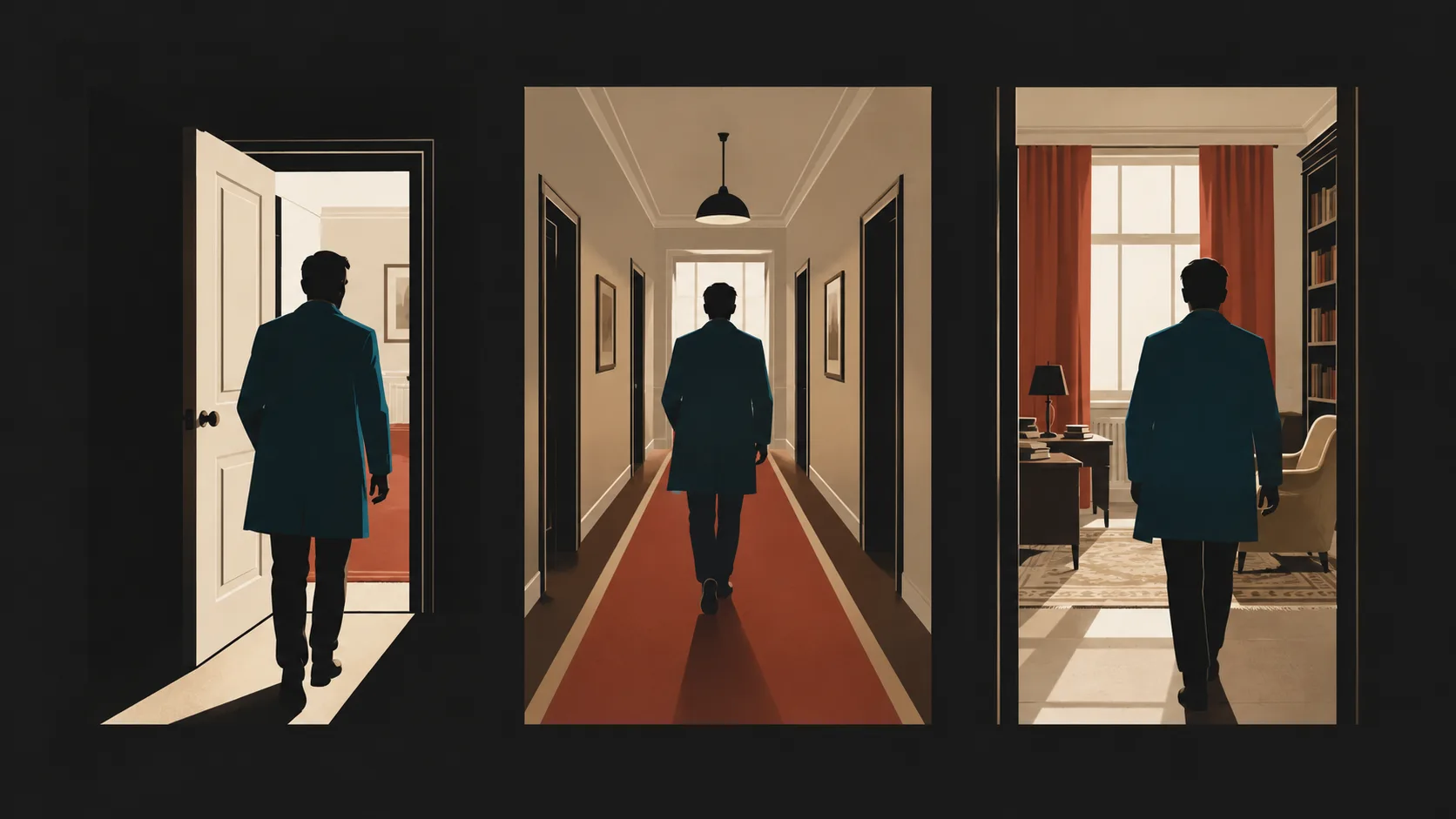
Some stories almost demand chronological order. If dramatic irony would gut your tension, linear structure protects it: the reader discovers information at the same pace as the protagonist, and suspense is maximised. Coming-of-age narratives, which depend on visible sequential transformation, need the reader to walk beside the character through each stage of growth rather than see it retrospectively, and that walking pace is easier to hold when the character arc itself is built in sequence.
Story Types That Suit Chronological Order
Quest and journey plots are structurally linear by nature. Road trips, odysseys, hero’s-journey frameworks: the physical forward motion mirrors the narrative forward motion, and departing from that mirror usually costs more than it earns. If your emotional payoff depends on the reader not knowing a key fact until late, chronological order is the safest guardian of that reveal. This is often where a well-placed twist lands hardest.
Signs Your Story Wants to Be Linear
A practical diagnostic: if you can summarise your plot as “first X, then Y, then Z, and finally W” without distorting anything, your story is already linear. Stay there. Restructuring a book that wants to be linear into something clever usually costs momentum you cannot afford, particularly if you are still working out why your protagonist feels flat on the page.
Linear vs. Nonlinear: Knowing When to Break the Line
Nonlinear narration lets writers group scenes by emotional resonance rather than clock time. That is genuinely useful for building irony, sustaining unreliable narration, or setting past and present in thematic contrast. Converging-timeline and parallel-story structures work precisely because the reader knows more than any single character, which can generate a specific kind of tension you cannot get from a straight line, especially when the tension between hero and villain is the emotional core.
What Nonlinear Adds (and Costs)
The cost is cognitive load. The reader now has to track temporal position on top of character, plot, and theme. That overhead must earn its keep in emotional or thematic payoff, or the reader will simply feel tired. A useful gut check: if reordering the scenes chronologically would not weaken the book, they should probably be chronological. If reordering would flatten a subplot that is quietly doing important work, the nonlinear order is earning its place.
Common Misconceptions About Flashbacks
A common misconception is that any flashback makes a book nonlinear. It does not. A single well-placed flashback inside a forward-moving narrative is still linear. Writers who switch from linear to nonlinear mid-draft are often, honestly, avoiding a difficult scene rather than serving the story. Diagnose the motive before restructuring, and look hard at whether the self-deception scene you keep dodging is the one your book actually needs.
Putting Linear Structure Into Practice
The plot diagram, showing exposition, rising action, climax, falling action, and resolution, remains the most reliable visual tool for planning or auditing a linear narrative. Pen, paper, five points on a rising line. That is enough to start, and it is often enough to finish, especially when paired with a longer planning method you can trust to hold the shape of a whole book.
Mapping Your Story Before You Write
Sequence your events on paper or index cards before drafting. This lets you verify that cause-and-effect logic holds at every link in the chain, and it exposes scenes that are decorative rather than structural before you have spent three weeks writing them. Linear structure also pairs naturally with milestone-based drafting: each beat is a checkpoint, which makes progress measurable and helps you spot scenes doing no structural work, including ones featuring side characters who keep disappearing from the page.
Keeping Momentum Through the Middle
The middle is where linear stories most often stall. Keep forward drive by ensuring each scene ends with a new complication or a raised question. Even within a strict chronological frame, vary scene texture: dialogue, action, reflection, silence. That variation is what stops a well-planned book from reading as mechanical, and it is often what makes readers remember the small final action that closes your story.
Frequently Asked Questions
What is linear story structure?
Linear story structure is a narrative that presents events in chronological order from beginning to end, connected by cause and effect. Brief recollections are allowed, but the main forward motion of the story is never interrupted for long.
What is the difference between linear and nonlinear narrative?
A linear narrative moves forward in time; a nonlinear one reorders events, using flashbacks, parallel timelines, or converging plots. Linear favours clarity and momentum. Nonlinear favours thematic layering and irony, at a cost of higher reader effort.
Can a story be linear if it includes flashbacks?
Yes. A single flashback, or even a few, does not make a book nonlinear. As long as the majority of the narrative motion still moves forward in time, the structure remains linear and readers experience it as chronological.
What are examples of linear story structure in literature and film?
John Updike’s “A&P” is a frequently cited literary example. Classic fairy tales like “The Three Little Pigs,” most coming-of-age novels, and quest films such as The Lord of the Rings also follow clean linear arcs from setup to resolution.
Why do most writers use linear story structure?
Because readers process forward-moving time with the least effort, which frees attention for character and theme. Linear structure also gives writers a dependable scaffold, making it easier to hold cause-and-effect logic across a full-length draft.
Is linear structure better for beginners?
Generally, yes. Linear structure reduces the number of things a first-time novelist must track at once, keeps momentum forward, and lets the writer focus on scene craft and character rather than juggling temporal position across a long manuscript.
What are the five stages of a linear plot?
The five stages are exposition, rising action, climax, falling action, and resolution. Exposition sets up conflict; rising action escalates it; the climax is peak tension; falling action releases consequences; resolution closes the story.
When should a writer choose nonlinear over linear structure?
Choose nonlinear when the emotional or thematic payoff genuinely depends on reordering: unreliable narration, ironic juxtaposition, converging timelines, or a mystery whose meaning shifts with revealed sequence. Otherwise, linear will serve the book and the reader better.
Conclusion
Linear structure is not a beginner’s shortcut. It is a durable, honest shape that has carried most of the stories human beings have ever told, and it rewards writers who respect its logic of cause and effect. Learn it first, use it often, and break from it only when a book genuinely asks you to. If you want a calm, no-AI workspace to plan your chapters and hold your milestones as you draft, ClearARC is built for exactly that.