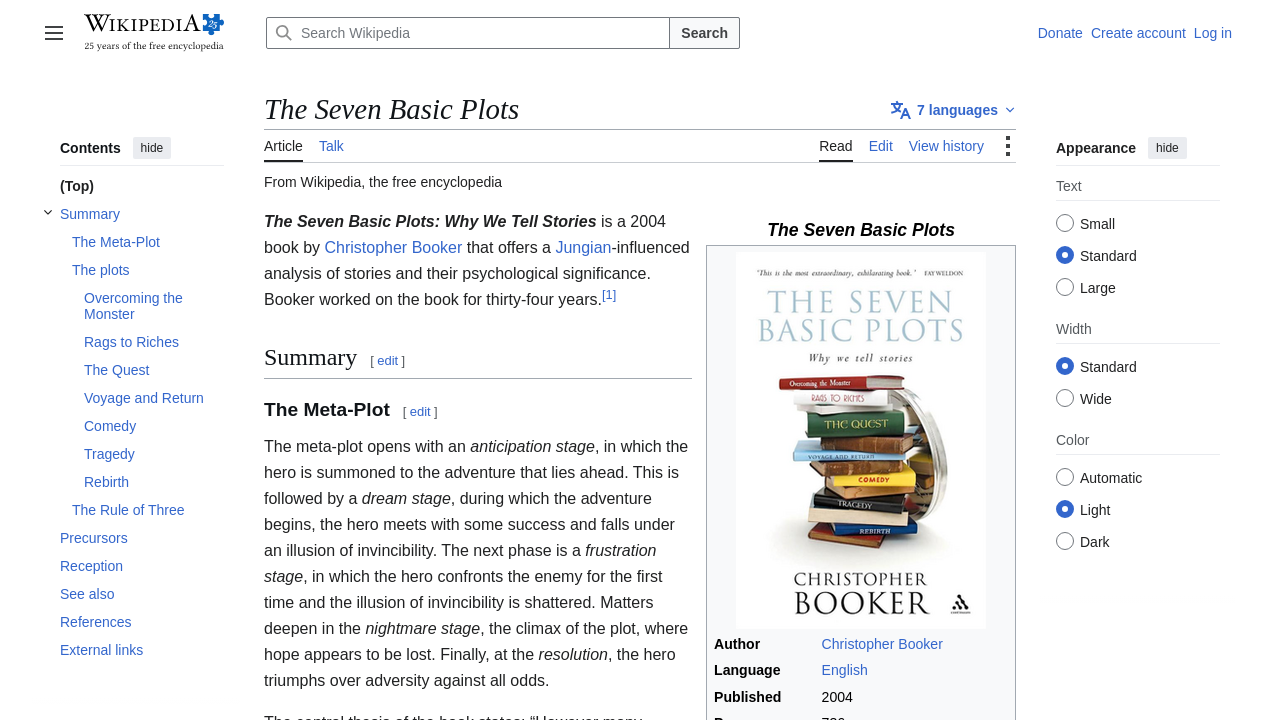
Christopher Booker’s 2004 book The Seven Basic Plots: Why We Tell Stories argues that virtually every narrative in human history falls into one of seven archetypal patterns. Drawing on Jungian psychology and thirty-four years of research, Booker’s framework gives writers a practical lens for diagnosing story structure problems before they harden into draft problems. ClearARC helps writers apply patient, human frameworks like this one at every stage of a book, from first outline to final revision.
What Are Christopher Booker’s Seven Basic Plots
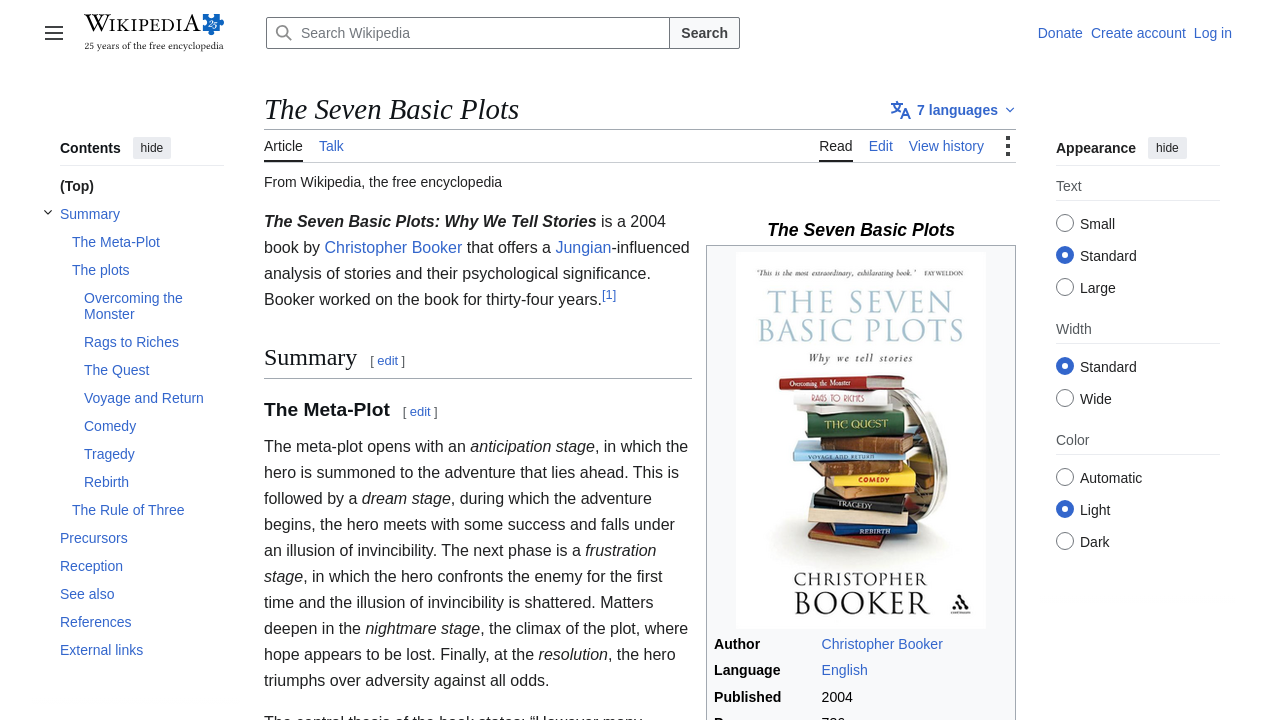
Booker’s central claim is simple: strip away setting, era, and genre, and stories repeat the same handful of shapes. He is not the first critic to argue this, but he is the one who committed most of a working life to defending it. For writers, the practical value is pattern recognition. If you can name the shape you are writing, you can spot the places where that shape usually strains. Compare his taxonomy with the seven major plots every fiction writer should know as you read on.
The Book Behind the Theory
Booker published The Seven Basic Plots: Why We Tell Stories in 2004 after thirty-four years of research; the book runs to 736 pages and draws heavily on Jungian archetypes. The framing treats stories as psychological road maps in which the protagonist moves from incompleteness toward self-realisation. That psychological reading matters, because it explains why the framework spends so much time on the hero’s inner state, an idea that dovetails with familiar advice about character arc basics in modern craft books.
The Meta-Plot That Unifies All Seven
Booker argues that all seven plots share a hidden five-stage engine, the meta-plot, which moves through anticipation, dream, frustration, nightmare, and resolution. He also insists that every story’s real concern is one hero whose fate readers identify with, and that other characters are aspects of that hero’s inner state. It is a strong claim, and one reason other characters can feel like the real engine of change in practice, even when Booker frames them as reflections.
Takeaway: treat the seven plots as diagnostic shapes, not rules. Know the shape, then decide which conventions serve your story.
The Seven Plots Broken Down

Here is the short version of each plot, with the classic examples Booker cites. Keep a pen nearby; the point is to try each shape on your own manuscript.
Overcoming the Monster
The protagonist defeats an antagonistic force threatening their world. Booker’s examples run from Beowulf and Dracula to Jaws and Star Wars: A New Hope. The shape only works if the monster feels genuinely dangerous, which is why so much rewriting energy goes into hero and villain tension that crackles rather than into monster design.
Rags to Riches
A poor protagonist acquires power or wealth, loses it, and regains it while growing as a person. Think Cinderella, Great Expectations, Jane Eyre. The version that lands emotionally is not about the money; it is about who the character becomes after losing everything. That inner shift is where the gap between want and need in character arcs usually does its quiet work.
The Quest
A protagonist and companions travel toward an important object or location, facing temptations and obstacles along the way. The Lord of the Rings, The Iliad, and Raiders of the Lost Ark all sit here. Quests tend to sag in the middle, which is why writers benefit from planning waypoints carefully; a deep plan for your novel usually rescues a quest draft that has wandered off the map.
Voyage and Return
The protagonist enters a strange world, faces its dangers or learns its lessons, and returns changed. The Odyssey, Alice’s Adventures in Wonderland, and The Hobbit are Booker’s touchstones. The shape lives or dies on how strange the strange world actually feels, which is one reason making places in your novel feel believable matters more than any single plot mechanic.
Comedy, Tragedy, and Rebirth
Comedy resolves confusion and misunderstanding in a happy union. Tragedy traces a protagonist’s fatal flaw all the way to destruction. Rebirth sees a dark force trap a hero until a redemptive act frees them. All three depend on setups planted early, particularly the lie the hero believes; writers often lean on the lie your character tells themselves to seed exactly that.
Takeaway: pick the shape closest to your book, then reread the classic example on Booker’s list. The comparison is faster than any workshop.
How the Meta-Plot Works in Practice

Underneath each of the seven plots, Booker plants the same five-stage arc. Once you can name the stages, you can pace them.
The Five-Stage Story Arc
- Anticipation. The hero is called to adventure. Stakes and desire are established. This is also the moment to signal the character’s inner wound; a well-shaped opening often turns on opening a book with a character worth following rather than on plot mechanics.
- Dream. The adventure begins and early wins create an illusion of invincibility. Readers relax. Something is about to break.
- Frustration. The hero confronts the central opposing force for the first time, and the illusion of invincibility shatters. Momentum stalls; the story asks a harder question.
- Nightmare. The darkest moment. Hope appears lost. This is the emotional climax, the pressure point that makes the resolution earn its keep. It is also where scenes that make readers cry usually live.
- Resolution. The hero triumphs against the odds and completes their psychological journey toward self-realisation.
Applying the Meta-Plot to Your Manuscript
Print the five stages on an index card. Read your draft with the card next to your keyboard. Note the chapter number where each stage lands. If your Nightmare arrives on page 40 of a 300-page book, you have a pacing problem; if you cannot find one at all, you have a bigger one. The exercise pairs well with one field that holds your plot together, because it forces you to name the central pressure the plot is testing.
Takeaway: the meta-plot is a ruler, not a recipe. Use it to measure what you already have.
Practical Writing Applications of Booker’s Framework
Naming your plot is not the point; using the name to fix problems is.
- Diagnose structural gaps. If your Rags to Riches draft skips the loss, readers will feel the win is unearned. If your Quest never reaches genuine Frustration, the middle drifts. Writers often find that subplots are trying to tell them something about a missing stage in the main plot.
- Blend and layer plots. Many successful novels stack a primary plot with one or more secondary plots. A Quest narrative may carry a Rags to Riches arc for a supporting character, and the two arcs illuminate each other. Practical technique for this sits in writing subplots that complement the main plot rather than compete with it.
- Combine frameworks. Booker’s shape works alongside three-act structure or the Hero’s Journey rather than replacing them. Tragedy and Comedy in particular need the protagonist’s flaw or the central misunderstanding planted in Act One for the resolution to pay off; this is where self-deception scenes that turn readers into fans do the heavy lifting.
- Use the five stages as a checklist. Walk an existing draft against Anticipation, Dream, Frustration, Nightmare, Resolution and mark the page number where each occurs. Uneven gaps are pacing gaps. Writers who plan lightly especially benefit here; looping for pantsers to keep readers turning pages is a useful companion tactic.
Takeaway: Booker is at his most useful as a revision tool, not a first-draft prescription.
Criticisms and Limitations of the Seven Plots Theory
Any framework this broad has honest limits. Booker’s has more than most, and pretending otherwise weakens your craft.
Where the Framework Falls Short
Booker is more likely to judge stories that fall outside his seven plots as flawed than to treat them as evidence that more than seven plots exist. He himself concedes that detective fiction and creation myths do not fit the structure. That is a large carve-out. When your book bends genre, the shape may not sit cleanly, and forcing it can flatten what makes the story yours; the corrective is often as small as the tiny final action that makes your novel memorable rather than a wholesale restructure.
Gender, Jungian Bias, and Modern Storytelling
Critics, including writer Rhiannon Grant, have noted that Booker’s Jungian mapping of masculine and feminine virtues onto characters reflects dated assumptions about gender roles. The romance genre and many works by women writers receive little attention, which limits the framework’s breadth. Read the seven plots as a broad pattern-recognition tool, not a prescriptive rule set; other lenses, including work on why major characters need strong beliefs, fill gaps Booker leaves open.
Takeaway: keep Booker on the shelf, but never as the only book on it.
Frequently Asked Questions
What are Christopher Booker’s seven basic plots?
The seven are Overcoming the Monster, Rags to Riches, The Quest, Voyage and Return, Comedy, Tragedy, and Rebirth. Booker argues almost every narrative in human history fits one of these archetypal shapes.
How long did Christopher Booker spend writing The Seven Basic Plots?
Booker worked on the book for thirty-four years before publishing it in 2004. The finished volume runs to 736 pages and includes both the taxonomy of plots and a lengthy critical and psychological analysis of storytelling.
What is the meta-plot in Booker’s theory?
The meta-plot is the underlying five-stage arc Booker says runs through all seven plots. Its stages are anticipation, dream, frustration, nightmare, and resolution, tracing the hero from initial call to psychological self-realisation.
Is The Seven Basic Plots based on Jungian psychology?
Yes. Booker draws heavily on Carl Jung’s ideas about archetypes and the shadow, treating stories as psychological road maps in which the protagonist moves from incompleteness to self-realisation. The Jungian frame shapes both his taxonomy and his interpretations.
Can a story belong to more than one of Booker’s seven plots?
Yes, and most long novels do. A primary plot often carries secondary plots for supporting characters, so a Quest may contain a Rags to Riches arc. Booker treats the primary shape as the story’s defining pattern.
What are the main criticisms of Booker’s seven basic plots theory?
Critics point to dated Jungian assumptions about gender, limited engagement with women writers and romance, and Booker’s tendency to dismiss stories that do not fit rather than expand the framework. Detective fiction and creation myths are acknowledged exceptions.
How can writers use the seven basic plots in their own work?
Identify the shape closest to your draft, then walk it through the five meta-plot stages to find pacing or setup gaps. Use the framework as a diagnostic during revision, not as a prescription during first drafts.
What stories does Booker say do not fit the seven basic plots?
Booker concedes that creation myths and detective stories do not fit neatly into his seven-plot structure. Many critics argue this exception, combined with limited coverage of romance, suggests the framework is descriptive rather than exhaustive.
Bringing Booker to Your Desk
The seven basic plots are most useful when you stop treating them as a claim about all of literature and start treating them as a set of shapes to lay over your own manuscript. Print the meta-plot stages. Mark the chapter where each lands. Notice where the shape strains, and ask whether the strain is a problem or the point. Frameworks like Booker’s belong in the toolkit next to ClearARC and any other patient method that helps you finish the book only you can write.