
Christopher Booker’s The Seven Basic Plots: Why We Tell Stories (2004) argues that nearly every narrative in human history maps onto seven fundamental story shapes. For a novelist finishing a first draft or staring at a blank notebook, understanding these patterns offers a structural foundation before the pen ever touches paper. ClearARC helps writers identify their story’s plot shape and develop it from concept through completion, turning Booker’s framework into something you can actually work with at the kitchen table.
What Are the Seven Basic Plots
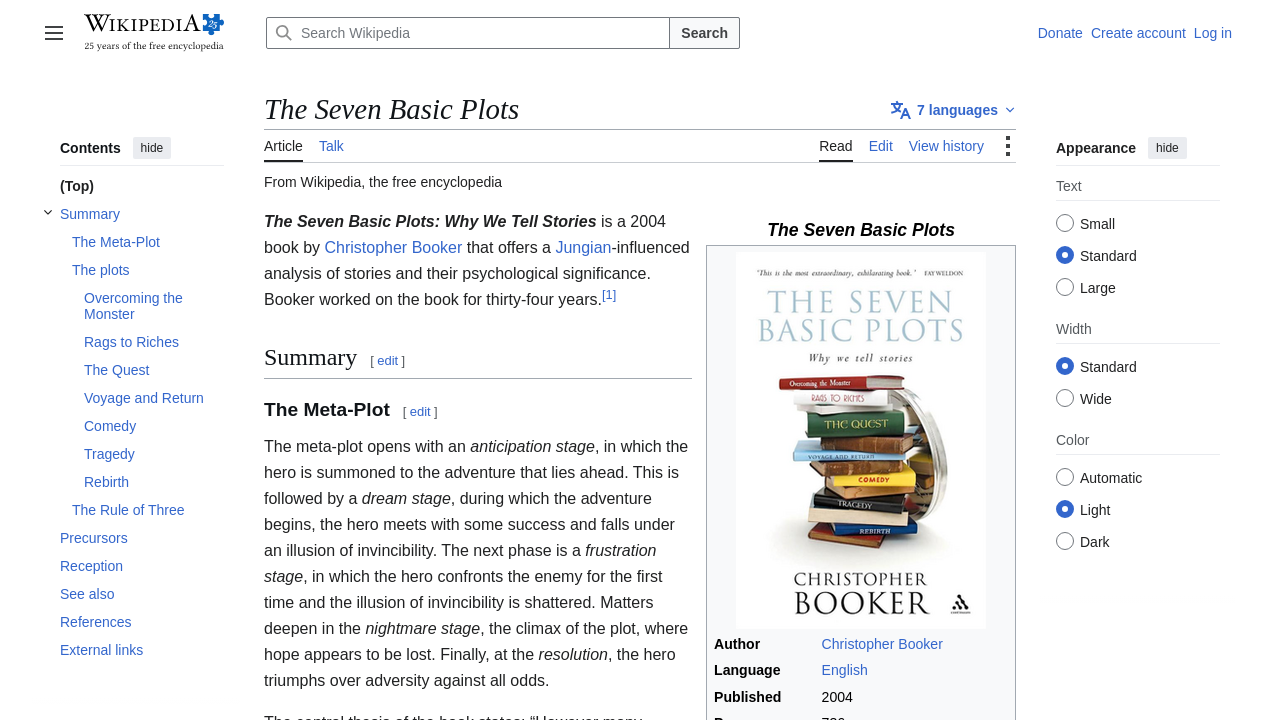
Christopher Booker’s Thesis
Booker spent thirty-four years writing the book, and the finished volume runs to 736 pages according to the Wikipedia entry on the work. His central claim is Jungian in flavour: every story, whatever its costume, is really about one character, and every other figure on the page represents some aspect of that hero’s inner life. The point is not to reduce fiction to a formula but to explain why particular story shapes echo across centuries. If you are still learning how a lead character carries the weight of a book, our guide on how to open a book with a character worth following is a useful companion to Booker’s argument.
The Meta-Plot That Underlies All Seven
Beneath the seven plots, Booker identifies a single meta-plot in five stages: anticipation, dream, frustration, nightmare, and resolution. The hero is called to adventure, tastes early success, meets the true opposition, faces apparent defeat, and finally emerges transformed. Interestingly, despite the title, Booker actually discusses nine plot types; two of them, Rebellion Against the One and Mystery, he treats as incomplete or derivative forms. That structural spine is what makes his framework a diagnostic rather than a straitjacket, and it pairs neatly with our thinking on the one field that holds your plot together.
Takeaway: the seven plots sit on top of a single five-stage arc of self-realisation, not a checklist of tropes.
The Seven Plots Defined With Classic Examples

Each plot is a recognisable shape with centuries of examples. Reading them as patterns rather than genres helps you see the machinery under your own draft, and it can also loosen a stuck project. Writers wrestling with structural doubt often find our note on pantsers facing the most ferocious obstacle sits usefully next to Booker’s typology.
Overcoming the Monster
A protagonist confronts an antagonistic force threatening their world. Beowulf, Dracula, Jaws, and Harry Potter all belong here. The pattern lives or dies on the strength of the opposition, which is why we spend so much time on hero and villain tension and how to make it crackle.
Rags to Riches and The Quest
Rags to Riches follows a poor protagonist who gains, loses, and regains power or wealth with genuine personal growth: Cinderella, Jane Eyre, Great Expectations. The Quest sends a hero and companions toward a vital goal past temptations and obstacles: The Lord of the Rings, The Iliad, Watership Down. Both shapes lean heavily on interior change, which is where our piece on character arc basics earns its keep.
Voyage and Return
Here the protagonist enters a strange world, survives it, and returns transformed. The Odyssey, Alice’s Adventures in Wonderland, and The Hobbit are canonical examples. The emotional payload depends on the reader believing the strange world is genuinely other, which is why making places in your novel feel believable matters so much in this plot.
Comedy, Tragedy, and Rebirth
Comedy resolves accumulated confusion through misunderstanding and reunion. Tragedy charts a fatal flaw toward destruction, as in Macbeth or Oedipus. Rebirth traces a dark force clouding the hero until a life-changing event restores them, as in Sleeping Beauty or A Christmas Carol. In each case the protagonist’s private deception drives the shape, which is exactly the ground our essay on the lie your character tells themselves explores.
Takeaway: name the plot shape and you can name the emotional promise the reader is quietly expecting.
How the Seven Plots Function Psychologically

The Jungian Foundation
Booker draws on Carl Jung’s concepts of the shadow, the anima and animus, and the Self to explain why certain shapes produce deep emotional resonance. Each of the seven plots follows the meta-plot’s five stages to a greater or lesser degree, and the resolution always requires the hero to confront and integrate their shadow self. Practically, that means your antagonist is rarely just an obstacle; they are often carrying a truth the protagonist has refused. Our piece on why other characters are the real engine of change unpacks how that reflection actually works on the page.
Why These Patterns Recur Across Cultures
Booker argues that stories which deviate from these patterns, where the hero never achieves self-realisation, tend to feel unresolved or unsatisfying to readers. The universality of the plots across unconnected cultures, from Greek myth to Norse saga to Asian folklore, supports a psychological rather than a purely literary explanation. Joseph Campbell reached parallel conclusions independently with the monomyth, which reinforces the structural claim. If you want a scene-level illustration of shadow integration, the self-deception scene that turns your readers into fans is a good worked example.
Takeaway: the plots endure because they mirror an inner journey readers recognise even when they cannot name it.
Common Misconceptions About the Seven Basic Plots
Misconception: The Plots Are Rigid Formulas
Reality: they are descriptive patterns derived from existing literature, not prescriptive rules. Booker himself notes that many great novels blend two or more shapes. Writers who treat the seven plots as a diagnostic, rather than a cage, tend to write freer books. If you find yourself frozen by structure, writing by the seat of your pants with pantser is a healthy counterweight.
Misconception: Every Story Fits Exactly One Plot
Reality: critics of Booker’s thesis point out that the number of “basic” plots varies wildly by theorist, from Foster-Harris’s three to Georges Polti’s thirty-six. Many novels sit across two shapes, and doing so deliberately can add layers rather than muddle them. How to write subplots that complement the main plot is a practical starting point for stacking plots without losing coherence.
Misconception: Knowing the Plots Kills Originality
Reality: knowing a story’s plot shape helps you diagnose structural problems mid-draft rather than constraining your creative choices upfront. Many celebrated novels deliberately subvert one of the seven patterns to create irony or literary commentary, which only works because the reader recognises the underlying shape. If your third act feels flat, how to write twists and unexpected turns in fiction is a good place to test your instincts.
Takeaway: the framework is a lens, not a leash.
Related Story Frameworks Aspiring Novelists Should Know
The Hero’s Journey
Joseph Campbell’s The Hero with a Thousand Faces (1949) describes the monomyth in seventeen stages. Christopher Vogler condensed this into twelve stages specifically for screenwriters in The Writer’s Journey (1992). The Hero’s Journey overlaps heavily with Overcoming the Monster, The Quest, and Voyage and Return, and it foregrounds the internal transformation Booker also emphasises. Our take on the gap between want and need in character arcs sits directly on that overlap.
Three-Act Structure
The three-act structure of setup, confrontation, and resolution maps loosely onto Booker’s meta-plot stages and remains the default vocabulary of screenwriting and commercial fiction. It is coarser than Booker’s five stages, but easier to sketch on a napkin, and it works particularly well when paired with a deeper outlining pass such as how to deep plan your novel.
Other Plot Taxonomies
Georges Polti’s 36 Dramatic Situations (1895) offers a much more granular taxonomy of conflict types and is often used alongside Booker for scene-level planning. Dramatica theory (Phillips and Huntley) proposes a four-throughline model whose proponents argue it describes over 32,000 distinct story structures. Blake Snyder’s Save the Cat offers fifteen beat-by-beat markers many practitioners find easier to apply scene by scene. For a companion piece from our own bookshelf, see the seven major plots every fiction writer should know.
Takeaway: treat these frameworks as complementary lenses, not competing religions.
Applying the Seven Basic Plots to Your Novel

Choosing Your Primary Plot Shape
Identify your novel’s primary plot shape early. Doing so helps each act fulfil the emotional promise readers of that pattern quietly expect. A thriller that keeps forgetting it is Overcoming the Monster, or a coming-of-age novel that never lets its protagonist actually grow, tends to land flat. If your lead feels indistinct, why your protagonist feels boring and how to fix it is a useful pre-outline check.
Using the Meta-Plot as a Diagnostic Tool
Map Booker’s five stages, anticipation, dream, frustration, nightmare, resolution, onto your chapter outline. Where the stages compress or vanish, you will usually find pacing problems. Writers in genre fiction often discover their genre defaults to one or two of the seven plots, which turns the framework into a genre-specific checklist. Combining a primary plot with a secondary one, for example a Quest that contains a Rags-to-Riches arc for the protagonist, adds depth without abandoning coherence. During revision, comparing a finished draft against the expected shape of its plot type often reveals unresolved arcs or missing beats, a habit that sits well alongside is your subplot trying to tell you something.
Takeaway: use the meta-plot as an X-ray, not a blueprint.
Frequently Asked Questions
What are the seven basic plots according to Christopher Booker?
Overcoming the Monster, Rags to Riches, The Quest, Voyage and Return, Comedy, Tragedy, and Rebirth. Booker also discusses Rebellion Against the One and Mystery, but treats these as incomplete or derivative forms of the primary seven.
Who created the seven basic plots theory?
Christopher Booker, a British journalist and author, developed the framework over thirty-four years and published it in 2004. He drew on Jungian psychology and decades of reading across myth, folklore, drama, and modern fiction to identify the recurring shapes.
Can a novel use more than one of the seven basic plots?
Yes, and many great novels do. Booker himself notes that stories often blend two or more shapes simultaneously or in sequence, such as a Quest that also functions as Voyage and Return, or a Tragedy layered under an outer Overcoming the Monster arc.
How is the seven basic plots theory different from the hero’s journey?
Campbell’s Hero’s Journey describes a single seventeen-stage monomyth focused on transformation. Booker’s framework identifies seven distinct plot shapes sharing a five-stage meta-plot. They overlap significantly but Booker’s model classifies stories by shape, not just by stage progression.
What is the meta-plot in Christopher Booker’s framework?
The meta-plot is a five-stage pattern underlying all seven plots: anticipation, dream, frustration, nightmare, and resolution. The hero is called to adventure, tastes early success, meets true opposition, faces apparent defeat, then achieves self-realisation and integration.
Are the seven basic plots a formula writers have to follow?
No. The plots are descriptive patterns derived from existing literature, not prescriptive rules. Writers use them to diagnose structural weaknesses, understand reader expectations, or intentionally subvert a pattern for effect, never as a paint-by-numbers instruction sheet.
What are some criticisms of the seven basic plots theory?
Some literary scholars argue the framework is over-reductive. Rival theorists propose very different counts, from Foster-Harris’s three plots to Polti’s thirty-six situations, and Dramatica proponents contend that structural theory should describe possibilities rather than compress stories into a small set.
How can I use the seven basic plots to plan my novel?
Identify your primary plot shape, sketch the five meta-plot stages across your chapters, and check whether each stage carries genuine emotional weight. During revision, compare your draft to the shape’s expected beats to surface missing arcs or unresolved character work.
Bringing the Seven Plots to Your Own Desk
Booker’s framework is most useful when you treat it as a quiet companion rather than a rulebook. Name the shape your novel wants to be, sketch the meta-plot across your chapters, and let the pattern point at the scenes that still need work. That is craft, not formula. If you want a calm, no-AI workspace to plan, draft, and revise against these shapes, ClearARC was built for exactly that kind of patient, chapter-by-chapter work.