Tag: snowflake method

  • What Is the Snowflake Method? A Novelist’s Guide Explained

    What Is the Snowflake Method? A Novelist’s Guide Explained

    The Snowflake Method is a way of designing a novel by starting with a one-sentence summary and expanding it in stages into character charts, a synopsis and a scene list. It was created by Randy Ingermanson. At ClearARC we help first-time novelists plan their books.

    What the Snowflake Method is

    The Snowflake Method is a novel-planning process taught by Randy Ingermanson, an award-winning author and theoretical physicist. You start small, with a single sentence about your story, then add detail about characters and plot in rounds until you have a full outline with a list of every scene. Ingermanson borrowed the idea from a snowflake fractal: a simple triangle that grows more detailed with each step until it looks like a snowflake.

    In plain language

    Write the heart of your book in one line, then keep enlarging it until you know every scene.

    Next step: before reading further, grab paper and a pen. You will need them in a moment.

    How the Snowflake Method works
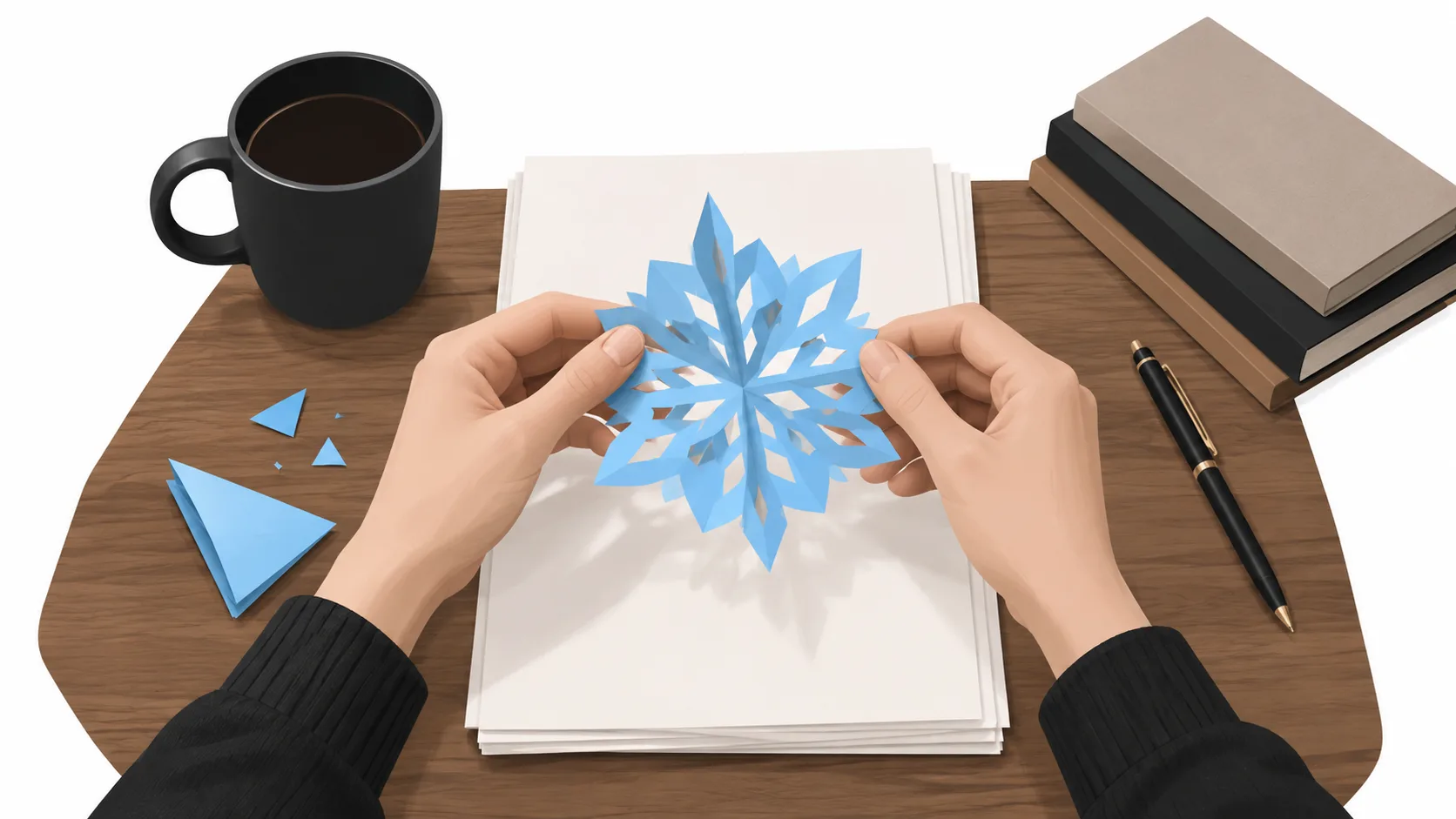
    Paper snowflake unfolding over a manuscript, illustrating layered novel planningThe core idea is simple. You pen the heart of the novel first, then flesh it out layer by layer. Each layer uses the one before it as its seed.

    The ten steps at a glance

    According to Writing Mastery’s step-by-step guide, the method runs roughly like this:

    1. Write a one-sentence summary of the book.
    2. Expand it into a one-paragraph summary: setup, three disasters, ending.
    3. Write a short summary for each main character, including goals.
    4. Expand each sentence of the paragraph into its own paragraph.
    5. Write a fuller description of each main character.
    6. Grow the plot into a longer synopsis.
    7. Build full character charts.
    8. List every scene.
    9. Add notes to each scene.
    10. Write the first draft.

    The five-sentence paragraph in step two maps neatly onto the three-act story structure: setup, first disaster, midpoint, a dark moment near the end of act two, then climax and resolution.

    A worked example: one sentence to a full plan

    Here is an invented story to show the first three steps in action.

    Step 1, the sentence. For example: A disgraced lighthouse keeper must expose the smugglers who framed her before the island’s last ferry leaves for winter. Notice it names her role, not her name, and ties her inner wound (disgrace) to an outer task.

    Step 2, the paragraph. For example:

    • Setup: Mara tends a lighthouse on a Hebridean island, shunned since a wreck she was blamed for.
    • Disaster one: she finds cargo from that wreck in a neighbour’s barn.
    • Disaster two: her only ally is revealed as one of the smugglers.
    • Disaster three: the smugglers lock her in the lamp room as the ferry is due.
    • Ending: she signals the ferry with the light itself, and the island finally sees the truth.

    Step 3, the characters. Give each person a starting position on the inside and a goal on the outside. For example:

    Character Internal starting position External goal
    Mara Believes she deserves the blame Prove who caused the wreck
    The ally Sees smuggling as harmless survival Keep the island’s secret
    The ferry captain Distrusts the keeper Get passengers off before the storms

    That split between internal start and external goal is the pairing ClearARC’s character planning view uses.

    First-novel pitfalls at this stage:

    • Cramming the plot into step one. One sentence, one problem.
    • Disasters that happen to the hero but never force a choice.
    • Characters with goals but no inner starting point, so they cannot change.

    Next step: write your own sentence now, then check it against those three pitfalls.

    Why the Snowflake Method matters

    Novelist with a stack of planning pages before drafting, showing why planning saves draftsPlanning is not glamorous, but it saves drafts. Three cases stand out.

    • First novels needing structure. The literary agency Liza Dawson Associates writes that a friend who used the method on her first novel produced a book that was admirably tight, with characters of rare depth for a debut.
    • Avoiding the saggy middle. The same agent calls the vast middle of a story “the Sahara Desert called plot”, where writers face endless drafts and restarts.
    • A second book after a contract. The agency points out that debut authors often face a second-novel deadline from scratch, and that treating plotting as a learnable skill eases the panic.

    It is also popular. Ingermanson says his page draws over a thousand views a day and has been viewed more than six million times.

    If the middle is where you tend to give up, read our guide on how to finish your novel when you feel like quitting.

    Common misconceptions about the Snowflake Method

    Misconception: it is only for plotters who hate creativity

    Reality: it grows from a seed. Every layer is a creative decision. Ingermanson says the design work is partly creative and partly organising.

    Misconception: you must follow all ten steps exactly

    Reality: use what works for you. Ingermanson himself tells readers to decide what might work and ignore the rest.

    Misconception: it is the snowflake theory or the maths snowflake

    Reality: it is a novel-planning method. The mathematical snowflake fractal only inspired the name, as a picture of something growing from simple to detailed. If you searched for maths or another “snowflake theory”, this is a different topic.

    Misconception: it writes the book for you

    Reality: it only plans. Step ten still says write the draft. A tool can hold your plan, but the sentences remain yours.

    Next step: pick which steps you will actually use, and cross the rest off.

    Related concepts

    Three-act structure

    A beginning, middle and end, split by turning points. See what the three-act structure is.

    Save the Cat

    A beat sheet originally built for screenplays, now widely used by novelists. Our guide to Save the Cat story structure covers it.

    Hero’s Journey

    A pattern of departure, trial and return, often used for quest and coming-of-age stories.

    Plotter vs pantser

    Plotters plan first; pantsers discover the story while drafting. Read plotter vs pantser to place yourself.

    Story structure template

    A reusable frame of beats to fill in. Try using a story structure template for your plan.

    How to get started with the Snowflake Method today

    Keep it small. Do these three things before bed:

    1. Write your one-sentence summary on paper. Role, problem, stakes.
    2. Expand it to five sentences. Setup, three disasters, ending.
    3. Give each main character a start and a goal. One inner position, one outer aim.

    When you want a structured place to keep it, our walk-through on using the Snowflake Method template to plot your novel takes you further. ClearARC is a no AI app built for first-time novelists to plan, plot, write and publish a book, with a character view for those start-and-goal pairs. Prefer paper? The free kit needs only pen and paper and includes a one-page plan, a chapter-planning grid, a seven-plots cheat sheet and a series of emails. For turning scenes into chapters, see how to create a novel outline from scratch.

    FAQ: Frequently Asked Questions

    What is the Snowflake Method?

    It is a novel-planning process that starts with a one-sentence summary and expands it in stages into a paragraph, character summaries, a synopsis, character charts and a scene list, before you write the first draft.

    Who created the Snowflake Method?

    Randy Ingermanson, an award-winning novelist and theoretical physicist, created and teaches it. He named it after a snowflake fractal, which starts as a simple triangle and grows more detailed with each repeated step.

    What is the snowflake theory?

    In novel writing, people usually mean the Snowflake Method: growing a story from one sentence into a full outline. The phrase is used in other fields too, so check the context of what you are reading.

    Is the Snowflake Method the same as the snowflake method in maths?

    No. The maths snowflake is a fractal shape. Ingermanson only borrowed it as a metaphor for building a story from simple to detailed. The writing method involves no mathematics at all, just planning.

    Is it good for first novels?

    Yes, for many writers. A literary agent at Liza Dawson Associates reports a friend’s first novel planned this way was admirably tight. Start with the first three steps and see whether the structure helps you.

    How long does it take?

    It depends on your book’s length, how many steps you use, and how much you already know about your characters. The first three steps are short; scene lists and character charts take considerably longer.

    Can software help with it?

    Yes, software can hold your sentence, characters and scene list in one place. It will not plan for you, though. A good tool stores your decisions; you still make them and write every sentence.

    Conclusion

    The Snowflake Method is one sentence, grown carefully until it becomes a book you can draft. You do not need all ten steps; you need enough plan to reach the end of the middle. Write your sentence today, then your paragraph tomorrow. ClearARC, made by Quentin Pain, is there when you want somewhere to keep it, and the free First-Novel Finisher’s Kit is the pen-and-paper way to start.

  • How To Use the Snowflake Method Template To Plot Your Novel

    How To Use the Snowflake Method Template To Plot Your Novel

    Use the Snowflake Method template by starting with a one-sentence summary and expanding it in ten steps, adding character detail and plot until you have a scene list. Check each step before growing the next layer. This guide takes a first-time novelist from blank page to scene list, at beginner level.

    What you’ll need

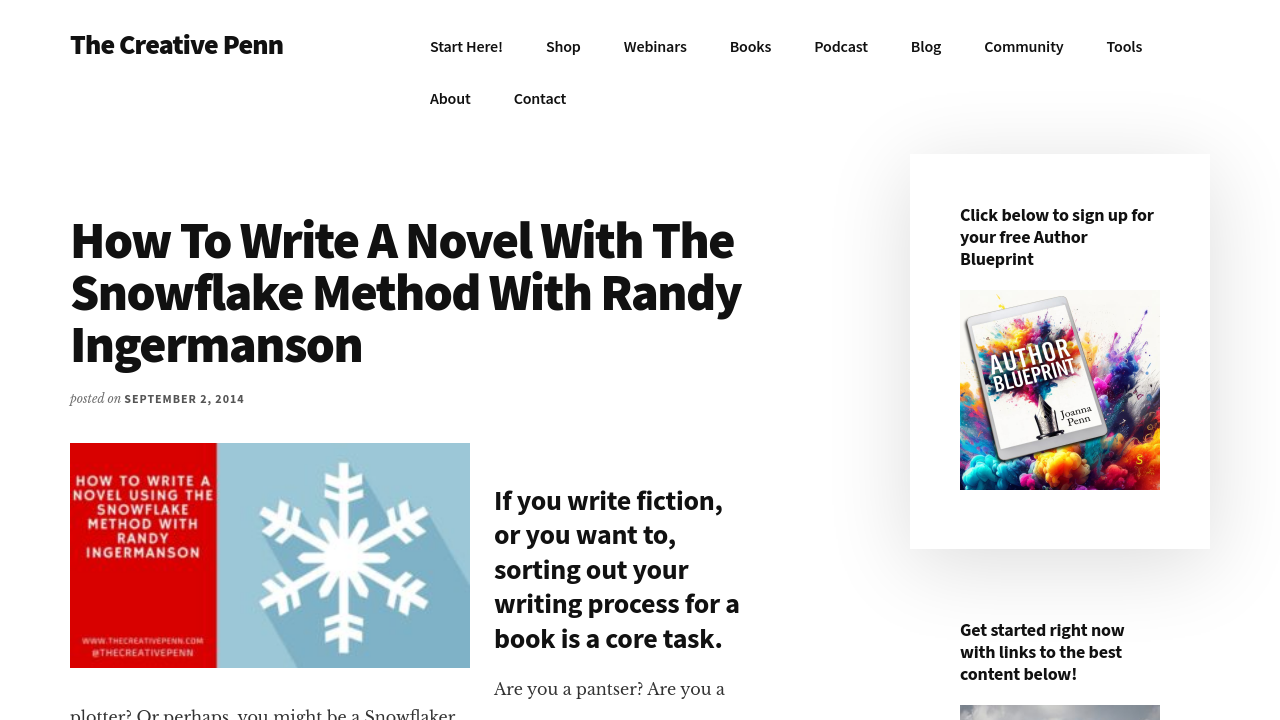
    thecreativepenn.com page screenshot

    The method comes from Randy Ingermanson, a physicist and novelist who describes it as growing a story from something small into something complex, as he explains in a Creative Penn interview. You need very little to try it.

    1. Pen and paper, or a blank document. Nothing fancier is required.
    2. The ten-step list. Copy the step headings below onto ten sheets or ten document headings.
    3. A free starting kit, if you want one. The free First-Novel Finisher’s Kit contains a one-page plan, a chapter-planning grid, a seven-plots cheat sheet and a series of emails, and it needs only pen and paper. It works as a free alternative to a downloadable template.
    4. A character planning view for step 3. The app’s character planning view gives each character a separate internal starting position and external goal, which is the split step 3 asks for.
    5. Beginner skills. You only need a story idea you care about.

    If the seven-plots cheat sheet sparks questions, read the seven basic plots explained before you start.

    Next step: label your ten pages tonight.

    Before you start

    Hands sketching a character silhouette while choosing a viewpoint character

    Make two decisions before step 1, because they are painful to change later. First, pick your genre. Second, pick your viewpoint character. Everything in the template grows from those two choices.

    Keep every version of every layer. Number your pages (Summary v1, v2) rather than overwriting them. Early layers will change once later ones expose a weak spot, and that is the point. The method sits between planning and pantsing, so if you are unsure which camp you fall into, plotter vs pantser is a useful read. If you want a broader frame first, a story structure template pairs well with Snowflake.

    One more thing: an app can hold your plan, but it cannot teach you craft or write your sentences. You do that part.

    Next step: write your genre and viewpoint character at the top of page one.

    Step-by-step: filling in the Snowflake template

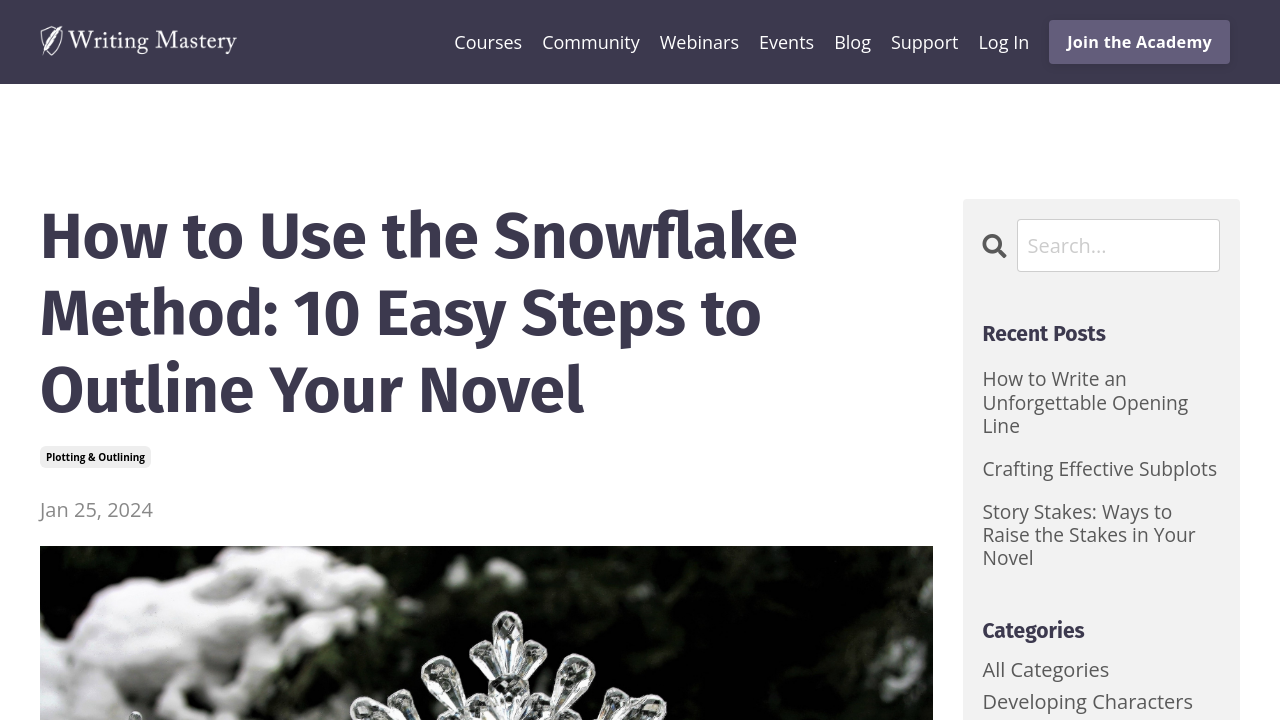
    writingmastery.com page screenshot

    Step 1: Write a one-sentence summary

    Write one sentence that says what your book is about. Use the hero’s role or goal rather than a name, and link the inner problem to the outer one. Writing Mastery suggests keeping it to about 15 words.

    Check: it fits on one line and a friend could repeat it back.

    Step 2: Expand it to a one-paragraph summary

    Grow the sentence into five sentences: setup, three disasters, then the ending. If you know three-act structure, the disasters map onto the catalyst, the midpoint and the low point before the finale.

    Check: each of the five sentences names one event, and the last one resolves the problem from step 1.

    Step 3: Build a profile for each main character

    For each main character, write a name, a one-line storyline, what they want and what they must learn. Keep the internal starting position (who they are at page one) separate from the external goal (what they chase). The ClearARC character planning view holds those two fields side by side, but a two-column sheet of paper does the same job.

    Check: every main character has both columns filled, and the two columns are different.

    Step 4: Grow the paragraph into a one-page summary

    Turn each sentence of your step 2 paragraph into its own paragraph. Fill in cause and effect between disasters.

    Check: it fits on one page, and every paragraph ends in a consequence that drives the next.

    Step 5: Write a character synopsis for each major character

    Tell the story from each major character’s point of view in about a page. Villains included.

    Check: each synopsis reads as that character’s own story, not a copy of the hero’s.

    Step 6: Expand to a four-page synopsis

    Grow each paragraph of the one-page summary into about a page. This is where the plot thickens and holes show up.

    Check: you can trace the hero from opening to climax without a gap you have to explain aloud.

    Step 7: Build a full character chart

    Add backstory, habits, relationships and how each person changes. Writing Mastery notes that the method ends with full character charts alongside the scene list.

    Check: for each major character you can say what they want, fear and lose.

    Step 8: List every scene

    Go through the four-page synopsis and pull out each scene, one line each: who, where, what goes wrong. Ingermanson treats the scene, not the chapter, as the working unit. To see what a finished outline looks like, compare yours against a sample.

    Check: every event in the synopsis appears in at least one scene line.

    Step 9 and 10: Plan scenes and begin drafting

    For each scene, jot a short note on its goal, conflict and outcome. Then start drafting scene one. Group scenes into chapters with a chapter planning template if that helps.

    Check: you have written the first scene, not just planned it.

    Next step: finish step 1 today, even if the sentence is clumsy.

    Troubleshooting

    Writer pausing at a desk lamp to fix a vague novel summary

    Summary too vague

    • Symptom: your sentence could describe a dozen novels.
    • Cause: no specific goal or stakes.
    • Fix: name the hero’s role, the thing they want and what happens if they fail.

    Characters feel flat

    • Symptom: everyone sounds alike in step 5.
    • Cause: internal start and external goal are the same thing.
    • Fix: give each character a belief at page one that the plot will test.

    The paragraph sprawls

    Scene list stalls

    • Symptom: step 8 stops halfway.
    • Cause: the four-page synopsis skips a stretch.
    • Fix: return to step 6, fill the gap, then resume. If you are stuck for longer, try these ideas for writer’s block on a first novel.

    The plan feels rigid

    • Symptom: drafting feels like filling in forms.
    • Cause: treating the plan as fixed.
    • Fix: change the plan when the draft finds something better, then update the earlier layer.

    Next step: pick the symptom that matches you and apply its fix tonight.

    FAQ: Frequently Asked Questions

    What is the Snowflake Method?

    It is a planning method that grows a novel from a single summary sentence into a full outline. Each layer adds detail to plot and characters until you finish with character charts and a scene list.

    Who created the Snowflake Method?

    Randy Ingermanson, a physicist and novelist, created it. He also wrote a book on it, How to Write a Novel Using the Snowflake Method, which presents the method as a story about a frustrated writer.

    How many steps does the Snowflake Method have?

    It has ten steps. They run from a one-sentence summary through paragraph and page summaries, character work and a four-page synopsis, to a scene list, scene notes and finally the first draft.

    Is the Snowflake Method good for first-time novelists?

    Yes, for many. It breaks a daunting project into small, checkable pieces. It suits writers with plenty of ideas and no finished book, provided you let early layers change as later ones reveal problems.

    Can I use a spreadsheet or Scrivener for the template?

    Yes. Spreadsheet versions of the template exist, and Joanna Penn at The Creative Penn has described setting up a Scrivener template for it. Choose whichever tool you will actually open every day.

    How is it different from three-act structure?

    Three-act structure describes the shape of a story; Snowflake is a process for building the plan. They combine well, as your five-sentence paragraph can follow a three-act structure template.

    Do I need software to use it?

    No. Pen and paper work fine. The free First-Novel Finisher’s Kit from the same team needs only pen and paper, and gives you a one-page plan and chapter-planning grid to start from.

    Does ClearARC write the story for me?

    No. ClearARC is a no AI writing tool, not a writing teacher. It holds your plan, but it does not write the sentences, so every sentence in the draft is yours to write.

    Conclusion

    Start small and grow in layers. One sentence, then five, then a page, then the people, then the scenes. Check each layer before you build the next, and go back when something wobbles. Once the scene list exists, the job is drafting. If you want one place to plan, plot, write and publish your first novel without AI, ClearARC is a single app made by Quentin Pain for first-time novelists. For a broader overview, see how to plot a novel.

    Next step: write your one-sentence summary before you close this page.