Tag: three act structure

  • What Is The Three-Act Structure? A Guide For New Novelists

    What Is The Three-Act Structure? A Guide For New Novelists

    The three-act structure is one of the oldest frameworks in storytelling, tracing its roots back to Aristotle’s Poetics and still shaping novels, films, and plays written today. For a new novelist staring at a blank page, it offers something invaluable: a reliable map from opening scene to final chapter. ClearARC is built for writers who want that scaffolding without the noise. This guide explains what the three acts are, how they work, and how to put them to use in your own fiction.

    Definition: What the Three-Act Structure Actually Is
    ClearARC article page explaining three-act structure with Setup, Confrontation, and Resolution

    The One-Sentence Definition

    The three-act structure divides a story into three connected parts: the Setup (Act One), the Confrontation (Act Two), and the Resolution (Act Three). Each act carries specific dramatic work, and the transitions between them are marked by turning points rather than arbitrary chapter breaks. If you are new to structural thinking, a short primer like this walkthrough of the three-act model can help the labels stick.

    In Plain English

    Think of it as beginning, middle, and end, with rules about how one gives way to the next. Aristotle argued in his Poetics that stories must be a chain of cause-and-effect beats, never a string of isolated episodes. Screenwriter Syd Field formalized the modern labels in his 1979 book Screenplay: The Foundations of Screenwriting, and novelists have borrowed the vocabulary ever since. The structure is scaffolding, not a cage; it gives shape to material that would otherwise feel random. For a plain-language introduction aimed at first-time novelists, this explainer covers the same ground with a fiction lens.

    How the Three Acts Work

    Character in everyday environment experiencing a disruptive inciting incident in Act One

    Act One: The Setup

    Act One establishes your main characters, the world they inhabit, and the shape of their ordinary life. Somewhere in the first quarter, an inciting incident disrupts that ordinary life and pushes the protagonist toward a decision. That decision leads to the first plot point, which closes Act One and raises the central dramatic question the rest of the book will answer. A strong opening asks the reader to invest in a person, not a premise, so opening with a character worth following matters as much as the incident itself.

    Act Two: The Confrontation

    Act Two is typically the longest stretch of the novel, often around half the total length. The protagonist tries to solve their problem and keeps making it worse, because they lack the skills, self-knowledge, or allies to succeed yet. Roughly at the halfway point, a midpoint shift raises the stakes; later, a “dark night of the soul” drives the protagonist to their lowest point before they find the resolve to press on. This is also where the character arc does its heaviest lifting, because internal change is what earns the eventual climax.

    Act Three: The Resolution

    Act Three answers the dramatic question. The climax brings the main tensions to their most intense point, and the falling action shows the protagonist and the people around them with a new sense of who they are. Endings often turn on a single decisive gesture, which is why writers pay so much attention to the small final action that makes a novel memorable. The point is not spectacle; it is meaning.

    Takeaway: the three acts are joined by turning points, not chapter numbers. If you cannot name the incident that ends Act One, you probably have not written it yet.

    A Concrete Worked Example

    Character in home setting discovering inherited responsibility, opening of Act One

    Mapping a Familiar Story to the Three Acts

    Consider a story you already know: a young protagonist living an ordinary life discovers she has inherited a burden she did not ask for. Act One introduces her home, her routines, and the arrival of the burden itself. The first plot point is her decision to leave home, which makes returning to the old life impossible. Sketching this on paper before drafting is often easier with a simple story-structure template to keep the beats in view.

    Act Two follows her escalating attempts to carry the burden. She gains allies, loses them, and reaches a midpoint where the true antagonist reveals himself. A crushing setback sends her into the dark night, and only then does she find the internal shift that lets her act. Along the way, the secondary cast pushes her forward, because other characters are the real engine of change in most novels; the protagonist rarely transforms alone.

    Act Three answers the question the reader has been holding since the end of Act One: will she carry the burden through? The climax provides the answer, and the falling action shows how her world, and she herself, have changed. Every scene between the first plot point and the climax should either advance the plot or reveal character; anything else is filler, however lovely the prose. Writers who habitually plan their novels deeply find this filter easier to apply.

    Takeaway: cause and effect is the connective tissue. Each scene must earn the next.

    Why the Three-Act Structure Matters for Novelists

    Credibility Across Genres

    The three acts are not a screenwriter’s private tool. Literary fiction, thrillers, romance, and epic fantasy all lean on the same scaffolding, though they weight the beats differently. Romance often front-loads the meet-cute as the inciting incident; thrillers stretch Act Two into a corridor of escalating threats; fantasy uses Act One to build a world before disrupting it. Genres also share a common weakness, which is why comparing frameworks like the seven-point story structure alongside three-act thinking can sharpen your sense of pacing.

    Common Misconceptions

    Misconception: structure kills creativity. Reality: structure frees creative energy for character and prose. Writers who know what beat they are writing spend less time guessing and more time making sentences worth keeping.

    Misconception: the three acts must be equal in length. Reality: Act Two is conventionally the longest, often around half the book. Equal thirds usually produce a rushed middle.

    Misconception: three-act structure replaces every other framework. Reality: it happily layers with the hero’s journey, Save the Cat, Freytag’s pyramid, and Christopher Booker’s seven basic plots. Many working novelists use two or three models at once.

    A saggy middle almost always signals a weak Act Two: insufficient escalation, a missing midpoint, or a subplot that never connects. Diagnostic thinking of that kind is one reason a wandering subplot is worth listening to rather than deleting outright.

    Takeaway: the structure is a diagnostic tool as much as a drafting one. Use it on drafts that are not working.

    How to Apply the Three-Act Structure to Your Novel
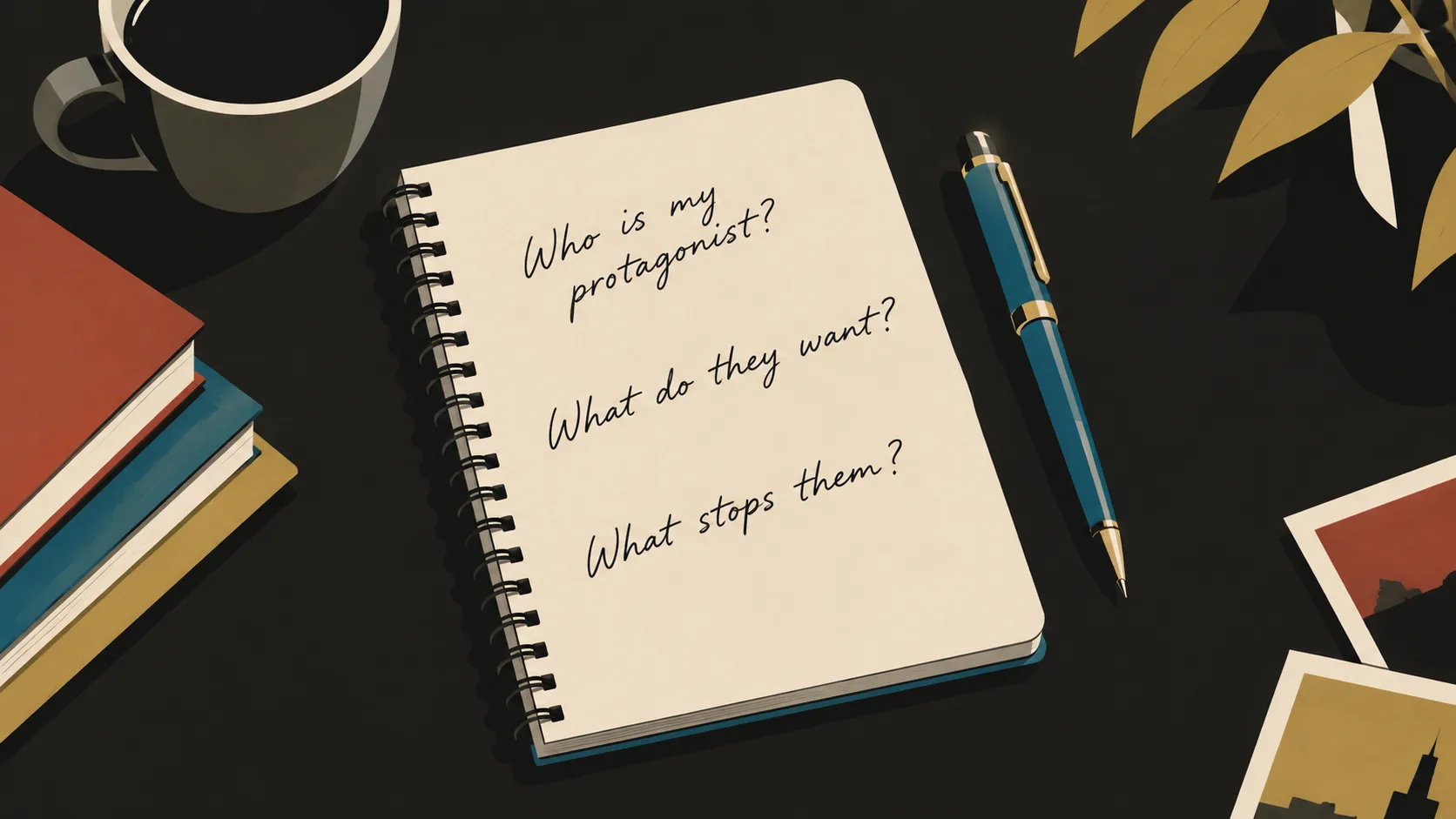
    Writer's notebook with three foundational questions about protagonist, desire, and obstacles

    Start With Your Dramatic Question

    Before you draft, answer three questions on paper: who is the protagonist, what do they want, and what prevents them from getting it? Those three answers form the spine of your three acts. If your protagonist feels vague on the page, the fix is usually here, at the level of desire and obstacle, which is often why a protagonist reads as boring in early drafts.

    Build Your Key Plot Points First

    Sketch the four essential beats before you write a scene:

    1. The inciting incident that shakes the ordinary world.
    2. The first plot point that ends Act One and forces the protagonist forward.
    3. The midpoint that raises the stakes and reframes the story.
    4. The climax that answers the dramatic question.

    Everything else hangs off these anchors. If you are working with a template, a three-act template built for novelists will give you rows to fill in for each beat rather than a blank page.

    Using an Outline as a Working Document

    An outline is a working document, not a contract. Most novelists change it substantially as they get to know their characters, and that is a good sign, not a failure. What the outline gives you is direction: each writing session begins with a clear destination, even if the route changes. Ask of every scene whether it moves the story forward or reveals character in a meaningful way; if it does neither, it is filler. Discovery writers can still use the model as a check after each chapter, which is one reason the pantser approach benefits from occasional structural review.

    Takeaway: know how the book ends before you draft the middle. Direction is the single biggest gift structure gives you.

    Related Concepts

    Inciting Incident

    The event in Act One that disrupts the protagonist’s ordinary world and sets the story in motion. It is not the same as the first plot point, which comes later and locks the protagonist into Act Two.

    Midpoint

    The scene near the center of Act Two that shifts the story’s terms, often by revealing new information or raising the stakes. Without a strong midpoint, Act Two sags.

    Character Arc

    The internal change a protagonist undergoes from Act One to Act Three. External plot and internal arc should turn on the same events, which is why writers spend so much effort on creating characters readers cannot stop thinking about.

    Rising Action

    The escalating sequence of obstacles across Act Two that pushes the protagonist toward the climax. Rising action is not just more events; it is events that cost more.

    Conclusion

    The three-act structure has shaped storytelling from Aristotle to contemporary bestsellers, and it endures because it matches how readers process cause and effect. Mastery does not come from memorizing labels; it comes from understanding why one act must give way to the next. Writers who internalize the framework find the blank page less daunting because they always know, at minimum, what kind of story moment they are writing toward. If you want a quiet drafting space that keeps your beats visible without adding noise, ClearARC was built with exactly that discipline in mind. Pick up a pen, pour the coffee, and put the first act on paper.

    Frequently Asked Questions

    What are the three acts in the three-act structure?

    The three acts are the Setup, the Confrontation, and the Resolution. Act One establishes character and world, Act Two escalates conflict as the protagonist struggles, and Act Three delivers the climax and its aftermath.

    How long should each act be in a novel?

    Roughly one quarter, one half, and one quarter. Act Two is conventionally the longest, often around fifty percent of the total length, with Act One and Act Three sharing the remaining half between them.

    Where did the three-act structure come from?

    Aristotle described the principle of beginning, middle, and end in his Poetics in the 4th century BC. Screenwriter Syd Field formalized the modern Setup, Confrontation, and Resolution labels in his 1979 book Screenplay.

    Is the three-act structure only for screenwriting or does it work for novels too?

    It works for both. Novelists across literary fiction, thrillers, romance, and fantasy use the same three-act scaffolding, though they weight the beats differently. The structure describes narrative cause-and-effect, not medium.

    What is the inciting incident and where does it appear in the three-act structure?

    The inciting incident is the disruptive event that pulls the protagonist out of ordinary life. It usually appears early in Act One and triggers the chain of decisions leading to the first plot point that ends Act One.

    What happens at the midpoint of a three-act structure?

    The midpoint sits near the center of Act Two and shifts the story’s terms. New information, a reversal, or a raised stake reframes what the protagonist is fighting for and prevents the middle of the novel from sagging.

    Can I use the three-act structure if I am a pantser (discovery writer)?

    Yes. Many discovery writers use the model retrospectively, checking after each draft chapter that the beats are landing. The pantser’s tricky planning problem is often solved by structural review rather than heavy pre-outlining.

    What is the difference between the three-act structure and the hero’s journey?

    The three-act structure is a general scaffold of beginning, middle, and end joined by turning points. The hero’s journey is a more specific pattern of stages, such as the call to adventure and the return, that fits inside three-act thinking rather than replacing it.

  • Story Writing Structure Explained: A Beginner’s Guide To Novels

    Story Writing Structure Explained: A Beginner’s Guide To Novels

    Understanding story writing structure is the first real step toward finishing a novel that works. Every book readers love, from quiet literary fiction to page-turning thrillers, rests on a recognizable architecture: a disruption, a journey, a climax, a resolution. ClearARC exists to help writers map that architecture before a single chapter goes sideways. This guide breaks down what structure is, why it matters, and how to choose the right framework for your book.

    What Story Writing Structure Actually Means

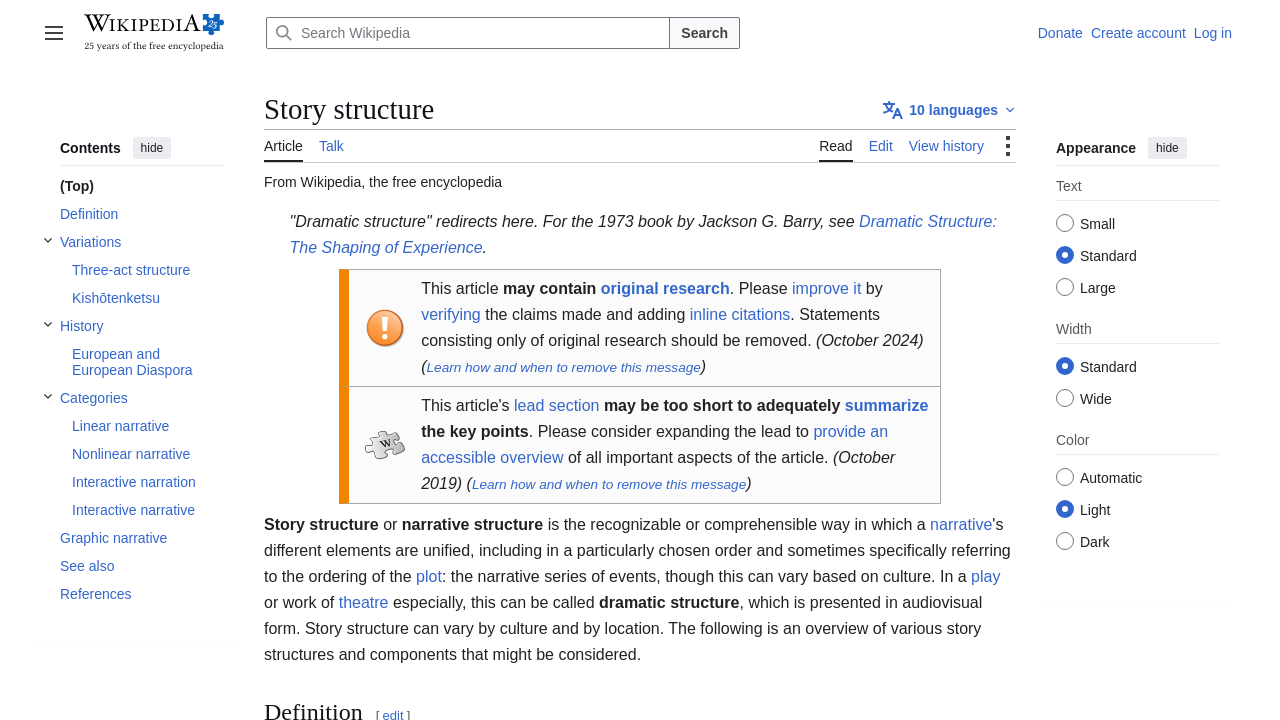
    Wikipedia's article on story structure showing the foundational definition of narrative architecture.Structure is the shape you give a story so a reader can follow it without getting lost. It’s the invisible skeleton beneath the scenes, the reason a chapter ends where it does and a revelation lands when it lands. Without it, even beautiful prose drifts. With it, a modest premise can carry four hundred pages.

    A Working Definition

    According to Wikipedia’s overview of narrative structure, story structure is the recognizable order in which a narrative’s different elements are unified and presented to the reader. Most Western stories share five core elements: exposition, rising action, climax, falling action, and resolution. Research cited in that same overview suggests structure influences how the brain organizes information, which is why a well-shaped story feels easier to hold in mind, and why a character worth following from page one tends to anchor the whole architecture.

    Structure vs. Plot: The Key Difference

    Plot is what happens. Structure is the sequence and shape in which those events are delivered. A murder solved chronologically is a different book than the same murder revealed backward, even though the plot beats are identical. Even loose, character-driven literary fiction has structure; it simply wears it more quietly than a thriller. The takeaway: if your draft feels shapeless, the fix is usually structural, not sentence-level, and you can often trace it to a weak character arc underneath.

    The Core Story Structures Every Novelist Should Know

    There is no single correct framework. Reedsy identifies at least seven distinct story structures that working novelists actively use, and most of them overlap in useful ways. Learning two or three well is more practical than collecting all of them.

    Three-Act Structure

    The three-act structure divides a novel into setup, confrontation, and resolution. It was first described formally in the fourth century A.D. by Aelius Donatus, and popularized for modern writers by Syd Field in Screenplay. Act One introduces the protagonist and the world, then delivers the inciting incident. Act Two, the bulk of the story, is where conflict deepens and the gap between want and need grows sharp enough to hurt. Act Three brings the climax and the fallout.

    The Hero’s Journey

    Popularized by Joseph Campbell, the Hero’s Journey follows a protagonist who leaves an ordinary world, crosses a threshold, faces trials, and returns transformed. It maps cleanly onto fantasy and adventure, but it also underpins quieter coming-of-age novels. The pattern is worth knowing even if you never use it wholesale, because it teaches you how transformation is earned scene by scene, especially when you make hero and villain tension crackle.

    Other Frameworks Worth Knowing

    Save the Cat beats, Freytag’s Pyramid, Dan Harmon’s Story Circle, Fichtean plot, and Christopher Booker’s seven basic plots each offer a slightly different lens. Genre matters here: a mystery needs a crime and a solution, a romance needs obstacles followed by union. If you’re curious about the archetypal end of the spectrum, Booker’s seven basic plots is a strong starting point. Takeaway: pick one framework for your first draft and stop shopping.

    The Anatomy of a Well-Structured Novel

    Books on a shelf representing the moving parts of a well-structured novel: disruption, rising tension, climax, and landing.Zoom in on any framework and you find the same moving parts. A disruption. A rising line of tension. A peak. A landing. Understanding these parts at the whole-novel level and at the scene level is what separates writers who finish from writers who stall in the middle.

    The Inciting Incident and Rising Tension

    Every well-structured story begins with a disruption to the protagonist’s equilibrium, often called the inciting incident or catalyst. From there, tension climbs. According to the National Centre for Writing, this principle of climbing tension applies at the level of a short story, a chapter, and even a single scene. Turning points punctuate the climb, giving you peaks and troughs rather than a flat line, and each turn is a good place to check whether your subplot is trying to tell you something.

    Climax and Resolution

    The climax answers the story’s central dramatic question. Will the detective name the killer? Will the marriage survive the confession? The resolution then delivers some form of reversal or surprise, so readers leave satisfied rather than merely relieved. That final beat matters more than most beginners realize; often it’s the tiny final action that makes your novel memorable rather than the big explosion two chapters earlier.

    How Scene-Level Structure Mirrors the WholeA scene is a novel in miniature. It opens with a question, escalates, turns, and closes on a shift. If your middle drags, it’s usually because individual scenes have no internal arc, and readers stop leaning forward. A practical fix is looping techniques that make readers want to read on, planting a hook at the end of every scene. Takeaway: fractal structure. What works at the book level should work at the chapter and scene level too.

    How to Choose the Right Structure for Your Novel

    Writer choosing between outlining and drafting approaches to structure their writingDifferent writers apply structure at different stages. Some outline every beat before chapter one, others find structure only during revision. As Ian Nettleton notes for the National Centre for Writing, there is no single correct way in, only the approach that suits the writer and the project.


    Plotting vs. Discovering as You Write

    Stephen King famously writes without a predetermined plot, placing characters in a situation and following them. Brian Aldiss described plotting as telling himself the story as he goes. Both approaches are legitimate. If you lean discovery, be honest about the tradeoff: pantsers face the most ferocious obstacle of all in the messy middle, and structural awareness during revision is not optional for you, it’s survival.

    Matching Structure to Genre

    Genre choice shapes structural expectations. Plot-driven genre fiction (thriller, mystery, romance) calls for tighter, more prescribed structure than character-driven literary fiction. Readers pick up a cozy mystery expecting a body by chapter three and a solution by the last chapter. Break that promise without a strong reason and you lose them. Even in literary work, structure quietly holds the protagonist’s interior life in focus.

    When to Apply Structure in Your Process

    Structure is a diagnostic tool as much as a planning tool. It reveals why a draft feels slow or unsatisfying and points toward specific fixes: a missing turning point, a climax that arrives too early, a resolution that skips reversal. Reedsy editors suggest beginners start with a well-understood framework, because breaking rules effectively requires mastering them first. A deeper planning pass before revision can save months. Takeaway: structure early or structure late, but structure eventually.

    Common Misconceptions About Story Structure

    Most resistance to structure comes from misreading what it actually asks of you. It doesn’t ask for a formula. It asks for a spine.

    Misconception: Structure Makes Stories Formulaic / Reality: Readers Crave Pattern

    Most beloved novels can be analyzed through standard frameworks, yet they feel wholly original because character voice and specific detail make familiar shapes feel new. A well-drawn character readers can’t stop thinking about will lift a conventional structure into something singular.

    Misconception: Structure Kills Creativity / Reality: Constraints Focus Imagination

    Tight structure answers reader questions, delivers a satisfying climax, and furthers character development. Constraints give imagination somewhere to push against. A rigid frame often produces stranger, braver scenes than an open field does, especially when it exposes the lie your character tells themselves.

    Misconception: You Must Plan Structure Before Writing / Reality: Timing Is Personal

    Some writers plan for months. Others draft blind and shape in revision. Both work. What doesn’t work is refusing to think structurally at all. Even a loose, character-led novel needs the promise of a story, and even committed pantsers benefit from writing by the seat of your pants with a light framework in mind. Takeaway: structure is guidance, not a cage.

    Getting Started: Applying Structure to Your First Novel

    The overwhelm of a first novel usually comes from trying to hold everything in your head at once. Structure lets you set that weight down in pieces.

    Map Your Story’s Spine Before You Outline

    Begin by identifying three anchors: the inciting incident, the climax, and the resolution. Everything else builds outward from those fixed points. Write a one-paragraph summary that names the disruption, the journey, and the outcome. If you can’t fit the story into that paragraph, you don’t know it yet. A simple story structure template can hold the three anchors while you fill in the rest.

    Use Structure as a Revision Compass

    During revision, lay your chapter list against your chosen framework. Look for sagging middles, missing turning points, and unearned climaxes. Structure awareness also turns a daunting manuscript into a series of achievable chapter-level goals, which is often the difference between finishing and stalling. The team at ClearARC built its planning approach around exactly this: pick a structure to guide the first draft, then let the story tell you what it actually became. Takeaway: structure is how you finish, not just how you start.

    Frequently Asked Questions

    What is story writing structure?

    Story writing structure is the recognizable order in which a narrative’s events are organized and presented to the reader. It gives a story its shape, controlling pacing, tension, and the timing of key emotional beats across scenes, chapters, and the whole book.

    What are the most common types of story structure for novels?

    The most common are the three-act structure, the Hero’s Journey, Save the Cat, Freytag’s Pyramid, Dan Harmon’s Story Circle, the Fichtean curve, and Christopher Booker’s seven basic plots. Reedsy identifies at least seven frameworks in active use.

    Does every novel need a strict story structure?

    Every novel needs structure, but not every novel needs a strict framework. Literary and experimental fiction often use looser shapes, while genre fiction leans on tighter, reader-expected patterns. Structure is guidance, not a cage around your creative choices.

    What is the three-act structure in simple terms?

    The three-act structure splits a novel into setup, confrontation, and resolution. Act One introduces the world and the inciting incident, Act Two develops conflict and character across the story’s middle, and Act Three delivers the climax and its aftermath.

    What is the difference between story structure and plot?

    Plot is what happens in the story. Structure is the order and shape in which those events are delivered to the reader. The same plot told chronologically or in flashback produces two structurally different books with different emotional effects.

    When should I think about structure: before writing or during revision?

    Both are valid. Some writers outline structure before chapter one; others discover it during revision. Stephen King writes without a plot; other novelists plan every beat. What matters is that structure gets addressed at some point in the process.

    Can following a story structure make my novel feel formulaic?

    Not if character, voice, and specific detail are strong. Most beloved novels fit standard frameworks yet feel entirely original because the writer filled familiar shapes with particular people and vivid scenes. Formula lives in generic execution, not in structure itself.

    What story structure is best for a beginner writing their first novel?

    The three-act structure is the friendliest starting point. It’s widely understood, easy to diagnose against, and flexible enough to fit most genres. Master it first, then experiment with Hero’s Journey, Save the Cat, or looser frameworks on later projects.

    Finishing What You Started

    Structure is not a cage and it’s not a shortcut. It’s the map that lets you keep walking when the fog rolls in around chapter fourteen. Pick one framework, name your three anchors, and start drafting. When you get stuck, come back to the shape. That’s the whole discipline, and it’s what ClearARC is built to support: quiet, focused planning that respects the craft and gets the book finished.

  • Three-Act Story Structure Explained: A Novel-Writing Guide

    Three-Act Story Structure Explained: A Novel-Writing Guide

    The three-act story structure is one of the oldest and most widely used frameworks for plotting fiction, dividing a narrative into Setup, Confrontation, and Resolution. Traced back to Aristotle’s Poetics and formalized for modern writers by Syd Field’s 1979 book Screenplay: The Foundations of Screenwriting, the model gives novelists a clear cause-and-effect scaffold for pacing, character development, and dramatic tension. ClearARC is built around this kind of quiet, analog planning, helping writers apply the structure from first outline to final draft.

    What Is the Three-Act Structure?

    Definition and Origins

    The three-act structure is a model that divides a story into three parts: Setup (Act 1), Confrontation (Act 2), and Resolution (Act 3). Each act carries out a specific narrative function, and each is bridged by a plot point that turns the story in a new direction. If you have ever sketched a novel on the back of a napkin as beginning, middle, and end, you have already used a rough version of it, and a story structure template simply makes those instincts more deliberate.

    The earliest written record of this beginning-middle-end model comes from Aristotle’s Poetics, written in the 4th century B.C., where he argued that stories should be a chain of cause-and-effect beats rather than loose episodes. Syd Field formalized the modern three-act framework in 1979 for screenwriters, and novelists adopted it because the same logic serves prose. Understanding the seven basic plots alongside three-act shape gives you two complementary lenses for planning.

    The Dramatic Question

    Every three-act story poses a central dramatic question early on: Will the detective solve the crime? Will the farmer save the harvest? Will the reluctant heir accept the throne? The question is set up in Act 1, complicated across Act 2, and answered in the climax of Act 3. Keeping one clear question at the heart of the manuscript is what stops a first draft from wandering.

    Takeaway: Before you outline, write your dramatic question in a single sentence and pin it above your desk.

    Act 1: The Setup

    An illustration showing a protagonist in their ordinary world before the inciting incident disrupts their normal life.

    Exposition and World-Building

    Act 1 introduces the protagonist, their relationships, and the world they inhabit. It shows the reader what “normal” looks like so the disruption to come actually feels like a disruption. A grounded opening chapter tends to hinge on a character worth following, doing something specific in a specific place, rather than on abstract world-building.

    Exposition should also plant the protagonist’s want and the obstacles standing in their way. Weave in setting through sensory detail; a believable place does more work than three paragraphs of history dump.

    The Inciting Incident

    The inciting incident, sometimes called the catalyst, is the on-page event that confronts the protagonist and disrupts the ordinary world. A phone call, an arrest, a stranger at the door, a body in the woods. It should force the protagonist to make a choice, and that choice starts the story’s engine. Characters who react passively feel thin, which is often why protagonists feel boring in early drafts.

    The First Plot Point

    The first plot point closes Act 1 by locking the protagonist into a new situation from which there is no return. This is where the dramatic question sharpens into focus and the reader understands what the book is actually about. In a novel, Act 1 typically occupies roughly the first quarter of total length, which for an 80,000-word manuscript is around 20,000 words. Use the gap between want and need to give this turning point emotional weight, not just plot weight.

    Takeaway: By the last page of Act 1, the protagonist should not be able to walk away.

    Act 2: The Confrontation

    An illustration of a protagonist facing mounting obstacles and tensions during the rising action of Act 2.

    Rising Action and Escalating Obstacles

    Act 2, often called the rising action, depicts the protagonist’s repeated attempts to resolve the central problem while facing ever-worsening situations. Protagonists at this stage lack the skills or self-awareness needed to overcome the antagonistic forces confronting them, and that gap is the raw material of character arc growth. Make each attempt cost something.

    Subplots enter here too, threading themes and secondary characters through the main line. A well-placed subplot can carry the theme when the A-plot is busy with mechanics, and subplots that argue with the main story tend to produce the richest middles.

    The Midpoint

    The midpoint sits near the center of Act 2 and either raises the stakes or shifts the protagonist’s approach. It is the structural beat that saves the middle from sagging, the moment where a mystery deepens, an ally betrays, or the goal changes shape. Good midpoints often force the protagonist to face the lie they tell themselves for the first time.

    The Dark Night of the Soul

    Near the end of Act 2 comes the second plot point, sometimes called the dark night of the soul. The protagonist is at their lowest: stripped of allies, plans in ruins, the old strategy discredited. Only when they hit this floor can they gather the resolve to enter the final confrontation as someone changed. Antagonists sharpen this scene, and the tension between hero and villain should crackle at its highest voltage here.

    Takeaway: Act 2 is roughly half the book. If your middle feels slack, check whether your midpoint actually shifts anything.

    Act 3: The Resolution

    An illustration of a protagonist equipped with newfound skills and knowledge, ready to face the climactic moment.

    The Climax

    Act 3 opens with the protagonist entering the final confrontation equipped with the skills, allies, and self-knowledge earned across Act 2. The climax is the scene or sequence where the main tensions reach their most intense point and the dramatic question is answered. This is also where planted setups from Act 1 pay off, so a strong Act 3 echoes its opening chapters rather than introducing new machinery.

    Falling Action and Denouement

    After the climax comes the falling action, which resolves subplots and shows how secondary characters have been affected. The denouement then gives readers a sense of the protagonist’s new normal, showing how they have changed from who they were in Act 1. A short, precise final beat lands harder than a long one; the tiny final action is what readers actually carry home.

    Takeaway: Every payoff in Act 3 should trace back to a setup in Act 1 or Act 2. If it does not, plant it.

    Three-Act Structure in Practice: Examples and Application

    Recognizing the Structure in Popular Novels and Films

    Story expert K.M. Weiland frequently uses Jurassic Park as a teaching example because its beats are cleanly visible: the setup on the mainland, the inciting incident of the invitation, the first plot point when the tour begins, the midpoint when the power fails, the dark night in the visitor center, and the climax in the raptor kitchen. Once you learn to see the shape, it becomes visible in almost every mainstream story you read. Notice, too, how secondary characters drive change at each turning point rather than the protagonist acting alone.

    How to Outline Your Novel Using Three Acts

    Most writers begin by identifying five anchor beats: inciting incident, first plot point, midpoint, second plot point, and climax. With those pinned, filling in scenes becomes a matter of connective tissue rather than blind exploration. A deeper planning process turns those five beats into a scene list you can actually draft against.

    Not every writer plans this way, and that is fine. Discovery writers can apply the structure retroactively during revision, using the three acts as a diagnostic tool rather than a pre-writing blueprint; if you write by the seat of your pants, the framework becomes a lantern for revision instead of a leash for drafting. Whatever your process, hold each scene to a simple test: does it move the story forward or deepen characterization? Scenes that do neither are candidates for cuts.

    Takeaway: Compare your draft’s act proportions against roughly 25% / 50% / 25% to spot pacing imbalances before final revision.

    Common Misconceptions About the Three-Act Structure

    An illustration showing a writer's approach to the three-act structure as a flexible guide rather than rigid rules.

    Misconception: It Makes Stories Formulaic

    Reality: The three-act model is descriptive, derived from observing thousands of successful stories, not prescriptive. It tells you what tends to work, not what you must do. Within its walls you can still write anything from a quiet literary novel to a heist thriller, and unexpected turns live comfortably inside the framework.

    Misconception: It Only Works for Screenplays

    Reality: Although Syd Field popularized the model in a screenwriting context, the structure applies equally to novels, memoirs, and short fiction. According to Reedsy’s guide to the three-act structure, the model is the most widely used plotting technique in English-language fiction, screen and page alike. Novelists sometimes stretch or compress acts, but the functions stay the same.

    Misconception: Every Story Must Follow It Exactly

    Reality: Many literary and experimental works invert or subvert the structure deliberately. Understanding the convention is a prerequisite for breaking it purposefully. Related frameworks like the Hero’s Journey, the Five-Act structure, and the Save the Cat beat sheet offer overlapping but distinct scaffolding, and choosing between them is often a matter of the story’s genre and emotional register. What matters is that each act fulfills its function: establish, complicate, resolve, powered by characters with strong beliefs rather than page-count math.

    Takeaway: Learn the rules before you break them, and break them for a reason.

    Frequently Asked Questions

    What are the three acts in a story structure?

    The three acts are Setup, Confrontation, and Resolution. Act 1 establishes characters and world, Act 2 escalates the central problem through rising action and a midpoint shift, and Act 3 delivers the climax and denouement that answer the dramatic question.

    How long should each act be in a novel?

    Convention suggests roughly 25% Act 1, 50% Act 2, and 25% Act 3. For an 80,000-word novel, that is about 20,000 / 40,000 / 20,000 words. These are guidelines for pacing checks, not laws; function matters more than exact word counts.

    What is the inciting incident in the three-act structure?

    The inciting incident is the on-page event in Act 1 that disrupts the protagonist’s ordinary world and forces them toward a decision. It is not the first plot point itself but the catalyst that eventually pushes the story across that first threshold.

    What is the difference between the midpoint and the climax?

    The midpoint occurs near the center of Act 2 and shifts the stakes or the protagonist’s approach, keeping the middle from sagging. The climax comes in Act 3 and is the highest tension point of the entire novel, where the dramatic question is finally answered.

    Can the three-act structure be used for short stories?

    Yes. Short stories often compress the three acts into a few scenes or even a single scene, but the functions remain: establish a situation, complicate it, resolve it. Flash fiction sometimes collapses Act 1 into a single sentence of implied backstory.

    How does the three-act structure differ from the Hero’s Journey?

    The Hero’s Journey is a more granular monomyth with roughly twelve stages built around a call, trials, and return. The three-act structure is a broader container; you can map most Hero’s Journey beats inside it, but three-act shape works for stories that are not journeys at all.

    Is the three-act structure only for screenwriting or does it work for novels too?

    It works for both. Syd Field codified it for screenwriters, but the underlying logic predates film by two millennia. Novels benefit from the same cause-and-effect scaffolding, though prose gives you more room for interior character work between the major beats.

    What happens if my story doesn’t fit the three-act structure?

    That may be fine. Some stories genuinely need a different frame, such as five-act tragedy, kishotenketsu, or braided-narrative shapes. Before abandoning three acts, though, check whether your draft simply has a weak midpoint or an underdeveloped Act 1, which are the most common causes.

    Bringing It All Together

    The three-act structure is a scaffold, not a cage. It tells you where the load-bearing beats belong so the rest of the manuscript can rest on something solid, and it gives you a shared vocabulary for talking about pacing with editors, critique partners, and yourself. Learn the shape, draft your book, and let the framework do its quiet work in the background. When you are ready to plan your next novel with pen, paper, and no algorithms in the way, ClearARC is built for exactly that kind of writer.

  • How To Use A Three-Act Structure Template For Your Novel

    How To Use A Three-Act Structure Template For Your Novel

    Plotting a novel is easier when you have a proven framework to follow. A three-act structure template gives you a clear map of your story’s beginning, middle, and end, along with the key beats that keep readers turning pages. Whether you are writing your first draft or restructuring an existing manuscript, ClearARC offers tools designed to help novelists apply this classic framework with confidence, pen in hand and coffee within reach.

    Outcome: a filled-in three-act template for a novel-length project. Time: 2 to 4 hours across one or two sittings. Skill level: beginner.

    What You Will Need Before You Start

    A writer's workspace with scattered story premise notes and character sketches on paper, showing pre-planning materials.

    Before you open the template, gather the raw material. A template only works if you have a story premise to pour into it.

    Tools and materials

    • A working story premise: a protagonist, a central want or goal, and at least one major obstacle standing between them and it.
    • A three-act structure template, digital or printable, that labels Act 1 as roughly 25% of the story, Act 2 as 50%, and Act 3 as the final 25%.
    • Familiarity with the nine core beats that sit inside those acts: inciting incident, first plot point, first pinch, midpoint reversal, second pinch, second plot point, climax, and resolution.
    • A blank page or notes file for the ending you have in mind, even if it is only a rough sketch.

    If any of that feels shaky, spend an hour on premise work first. A companion piece on how to plan a novel in depth walks through the pre-template thinking that saves days of frustration later.

    Time and skill level

    Expect 2 to 4 hours to complete a full template for a novel-length project, split across one or two sittings so your subconscious can chew on it between sessions. The work is beginner-friendly; you do not need prior craft training, only a story you care about and enough patience to sit with hard questions. If you tend to write by instinct, the framing in writing by the seat of your pants will help you approach the template as a scaffold rather than a cage.

    Takeaway: show up with a premise, a printed template, and a rough sense of your ending. Everything else follows.

    Before You Start Filling In the Template

    Reedsy guide to three-act structure displayed on a laptop screen

    Two decisions save enormous rewrite time later: knowing your protagonist’s core drive, and knowing where the book lands.

    Identify your protagonist’s core want and wound

    Ask yourself three questions. Whose story is this? What does that character want? What keeps them from getting it? Editors at Reedsy point to exactly this trio as the foundation of a workable premise, according to Reedsy’s guide to three-act structure. A protagonist without a clear want produces a plot without a clear shape, which is the most common reason middle acts collapse. Pair the want with a wound, the old hurt or false belief the character carries into the story. That inner ache is what turns plot into character arc, an idea developed further in character arc basics.

    Clarify your ending before plotting Act 1

    Editors consistently advise writers to know how the book ends before filling in a template, so every act moves toward a defined outcome rather than drifting. You do not need the final scene word-for-word, only a fixed target: who changes, what they choose, and what the world looks like after. The three-act structure is built on cause-and-effect, an idea Aristotle first documented in Poetics; each beat must result from the previous beat and cause the next. Working backward from the ending is how you enforce that logic. The essay on the gap between want and need is a useful primer for defining the internal ending, not just the external one.

    Nothing needs to be backed up before starting a template, but do save any prior outlines or notes in a separate file before overwriting them. Old drafts often contain the seed of the beat you are currently missing.

    Takeaway: name your protagonist’s want, name their wound, and sketch the ending. Then, and only then, open the template.

    Step-by-Step: Filling In Your Three-Act Structure Template

    A writer's hands filling in sections of a three-act structure template worksheet with a pen, working through story beats.

    Work through the acts in order. Resist the temptation to jump to your favorite scene; the template earns its keep by forcing you to answer the awkward questions first.

    Step 1: Map Act 1 (Setup)

    Act 1 covers roughly the first 25% of the story. Introduce the protagonist and their ordinary world in the first few scenes, showing the routines and relationships that will soon be disrupted. Then deliver the inciting incident, the moment that pushes them irrevocably into the central conflict. In the template, fill in three fields for this act: ordinary world, inciting incident, and first plot point (the point of no return at the 25% mark). A strong opening scene often depends on a protagonist worth following, which is the exact craft problem explored in how to open a book with a character worth following.

    Step 2: Map Act 2 (Confrontation)

    Act 2 occupies the middle 50% of your novel and is structured around a midpoint reversal that shifts the protagonist from reactive to active. Without that midpoint, the middle sags and readers drift. Fill in five fields: first pinch point (around 37%), midpoint reversal (50%), second pinch point (62%), rising complications, and the second plot point at 75% that launches Act 3. This is also where subplots need to earn their place; the diagnostic in is your subplot trying to tell you something is a good check once your Act 2 fields are populated.

    Two overlays are worth mentioning here. The “3 Acts, 9 Blocks, 27 Chapters” framework, popularised in writing communities, subdivides each act into three blocks of three segments, giving chapter-level scaffolding. Blake Snyder’s Save the Cat! beat sheet maps neatly onto three-act structure and is often used for finer control inside Act 2.

    Step 3: Map Act 3 (Resolution)

    Act 3 covers the final 25%. The climax forces the protagonist to use everything they have learned; the resolution shows the changed world that results. Fill in three fields: climax setup, climax, and resolution. Pay attention to the small closing gesture that signals your protagonist has genuinely changed, an idea unpacked in the tiny final action that makes your novel memorable. Readers remember endings more than any other beat.

    Takeaway: eleven fields, three acts, one page. If a beat resists definition, that is a signal to keep thinking, not to skip the row.

    Layering Character Arc Onto the Plot Template

    Plot structure and character arc templates layered on a desk

    External events are half a novel. The other half is who the protagonist becomes on the way through them.

    Add a column to your template for the protagonist’s emotional or psychological state at each beat. This turns the template into a two-track document: what happens, and what it costs. Writing educators consistently argue that character transformation is the ingredient that makes a story memorable, and the three-act structure explicitly makes room for it at the midpoint and climax. The mechanics of that transformation are covered in more detail in how to create unforgettable characters.

    The inciting incident should disturb not only the protagonist’s external situation but also challenge a core belief or wound, setting up the internal journey through Act 2. That challenged belief is often the false story the character has been telling themselves for years, explored in the lie your character tells themselves. By the start of Act 3, the template should show a clear gap between who the protagonist was in Act 1 and who they have become. When that gap is visible on the page, the climax feels earned. When it is missing, no amount of action will rescue it.

    Takeaway: track internal state in a parallel column. If Act 3 looks identical to Act 1 on that column, your character has not moved.

    Troubleshooting Common Template Problems

    Every writer hits the same snags. Here are four with clean fixes.

    Symptom: Act 2 feels shapeless

    Cause: the midpoint beat is missing or too weak. Fix: insert a clear reversal at the 50% mark that forces the protagonist to change tactics or raise the stakes. A midpoint often lands harder when it uses a genuine plot twist, and the techniques in how to write twists and unexpected turns in fiction transfer directly to that beat.

    Symptom: The climax feels unearned

    Cause: the protagonist’s growth in Act 2 is not tracked in the template. Fix: add a character state field to each beat and verify the arc is progressing. A climax feels earned when the reader has watched belief-by-belief change, which is the exact terrain covered in why your protagonist feels boring and how to fix it.

    Symptom: The template feels too rigid

    Cause: treating the template as a fixed script rather than a flexible guide. Fix: use the template as a checklist of story questions to answer, not a locked sequence of scenes. The Hero’s Journey and other structures fit inside three-act structure and can be layered on for variety, an approach discussed in Christopher Booker’s seven basic plots explained.

    Symptom: Acts are proportionally unbalanced

    Cause: writers commonly over-write Act 1, packing it with backstory. Fix: apply the 25/50/25 word-count check after your first draft and cut ruthlessly in Act 1. If the imbalance is chronic, the broader diagnostic in how to use a story structure template to plan your novel is worth a read.

    Takeaway: most template problems trace back to a missing midpoint, a missing character-state column, or too much Act 1 real estate. Check those first.

    Frequently Asked Questions

    What is a three-act structure template and how does it work?

    A three-act structure template is a plotting worksheet dividing your novel into setup, confrontation, and resolution. You fill in fields for each major beat, giving yourself a cause-and-effect map before you draft the manuscript.

    How long should each act be in a novel?

    Standard proportions are Act 1 at 25%, Act 2 at 50%, and Act 3 at 25%. In a 90,000-word novel that means roughly 22,500 words of setup, 45,000 of confrontation, and 22,500 of resolution.

    What are the key beats I need to include in a three-act structure?

    The nine core beats are the ordinary world, inciting incident, first plot point, first pinch, midpoint reversal, second pinch, second plot point, climax, and resolution. Everything else is scaffolding around those load-bearing moments.

    Can I use a three-act structure template for genre fiction like fantasy or romance?

    Yes. The three-act structure is genre-agnostic and underlies most commercial fantasy, romance, mystery, and literary fiction. Genre conventions layer on top of the template as required beats, such as the romance meet-cute or the mystery reveal.

    What is the difference between a three-act structure and the Hero’s Journey?

    The Hero’s Journey is a more granular seventeen-stage mythic pattern that fits inside three-act structure. Think of three-act as the shape of the room and Hero’s Journey as furniture arrangement; you can use one or both.

    How does the Save the Cat beat sheet relate to a three-act structure template?

    Blake Snyder’s Save the Cat! beat sheet maps fifteen specific beats onto three-act structure, giving finer resolution inside each act. Many novelists use three-act for the skeleton and Save the Cat for the connective tissue.

    Can I use a three-act structure template if I am a discovery writer (pantser)?

    Yes, though lightly. Discovery writers often fill in only the ending and midpoint, leaving the rest to emerge in drafting. The perspective in pantser planning obstacles is useful reading before deciding how much scaffolding you want.

    What is the midpoint reversal and why does it matter in Act 2?

    The midpoint reversal is a beat at the 50% mark that shifts the protagonist from reactive to active, often through a revelation or a raised stake. Without it, the middle of the novel drifts and readers lose engagement.

    Closing the Template, Opening the Draft

    A finished three-act structure template is not the novel; it is the map that lets you draft without getting lost. Fill it in slowly, revisit it after every few chapters, and let it evolve as your characters surprise you. When you are ready to move from plotting to prose, the writing tools at ClearARC are built for novelists who want structure without noise, and pages without the intrusions of AI. Keep your coffee close and your ending in view. The rest is craft.

  • Three-Act Structure Explained: A Guide For First-Time Novelists

    Three-Act Structure Explained: A Guide For First-Time Novelists

    The three-act structure is one of the most widely used frameworks in narrative fiction, dividing a story into three sequential parts: Setup, Confrontation, and Resolution. First-time novelists often struggle to move from a promising idea to a finished manuscript, and a clear structural model gives that long process a reliable backbone. ClearARC helps writers plan and execute story structure from the opening scene to the final page, without pushing AI drafts into your prose.

    What Is the Three-Act Structure

    An illustration showing the three-act structure as a traced narrative arc on paper, with the setup, confrontation, and resolution phases marked along a rising and falling tension line.

    A Precise Definition

    The three-act structure is a narrative model that divides a story into Act One (Setup), Act Two (Confrontation), and Act Three (Resolution). Screenwriter Syd Field codified the modern version in his 1979 book Screenplay: The Foundations of Screenwriting, giving the acts the labels most writers still use today. Its roots reach back much further, to Aristotle’s Poetics in the 4th century B.C., where he argued that every story must have a beginning, middle, and end connected by cause-and-effect beats (our word, not his, haha). Each act carries its own dramatic weight and must stand on its own while serving the larger story arc, a principle every writer of the seven major plots will recognize.

    In Plain English

    Think of the three-act structure as scaffolding. It tells you where the load-bearing beams go, then trusts you to design the rooms. Writers use it to plan, to diagnose, and sometimes to break the rules deliberately, but knowing where the beams sit matters even if you plan to move them. It is a guideline for deep planning your novel (guidelines are like rules, they don’t need to be followed all the time, but they help).

    How the Three Acts Work

    Three open books stacked on a writer's desk, each marked to represent Act One, Act Two, and Act Three, illustrating the different lengths and roles of each act.Each act does a specific job, and understanding those jobs is the first real step toward controlling pace.
    Act One: Setup

    Act One establishes the main characters, their ordinary world, and the relationships that will be tested. It ends with an inciting incident that forces the protagonist into a new situation from which there is no return. The transition from Act One to Act Two, often called the first plot point, raises the central dramatic question the whole book must answer: Will she escape? Will he solve the murder? Will they win back what was lost? A strong opening also means opening with a character worth following, because scaffolding cannot carry a protagonist readers do not care about.

    Act Two: Confrontation

    Act Two is usually the longest act, roughly half of the total story. Here the protagonist attempts to solve the problem the inciting incident created, faces escalating obstacles, and slowly develops the skills, allies, and self-knowledge needed for the climax. This is where character arc basics get built brick by brick. Somewhere near the middle sits a false victory or false defeat, a moment that raises the stakes further and pushes the protagonist toward their lowest point, sometimes called the dark night of the soul.

    Act Three: Resolution

    Act Three opens as tension reaches its peak. The climax answers the dramatic question, and the resolution that follows shows readers who the protagonist has become. Subplots close, promises made in Act One are paid off, and the story earns its last page. The tiny final action that makes your novel memorable usually lives in this act, in the quiet beat after the climax.

    Takeaway: Setup poses the question. Confrontation earns the answer. Resolution shows what the answer cost.

    Key Plot Points Every First-Time Novelist Must Know

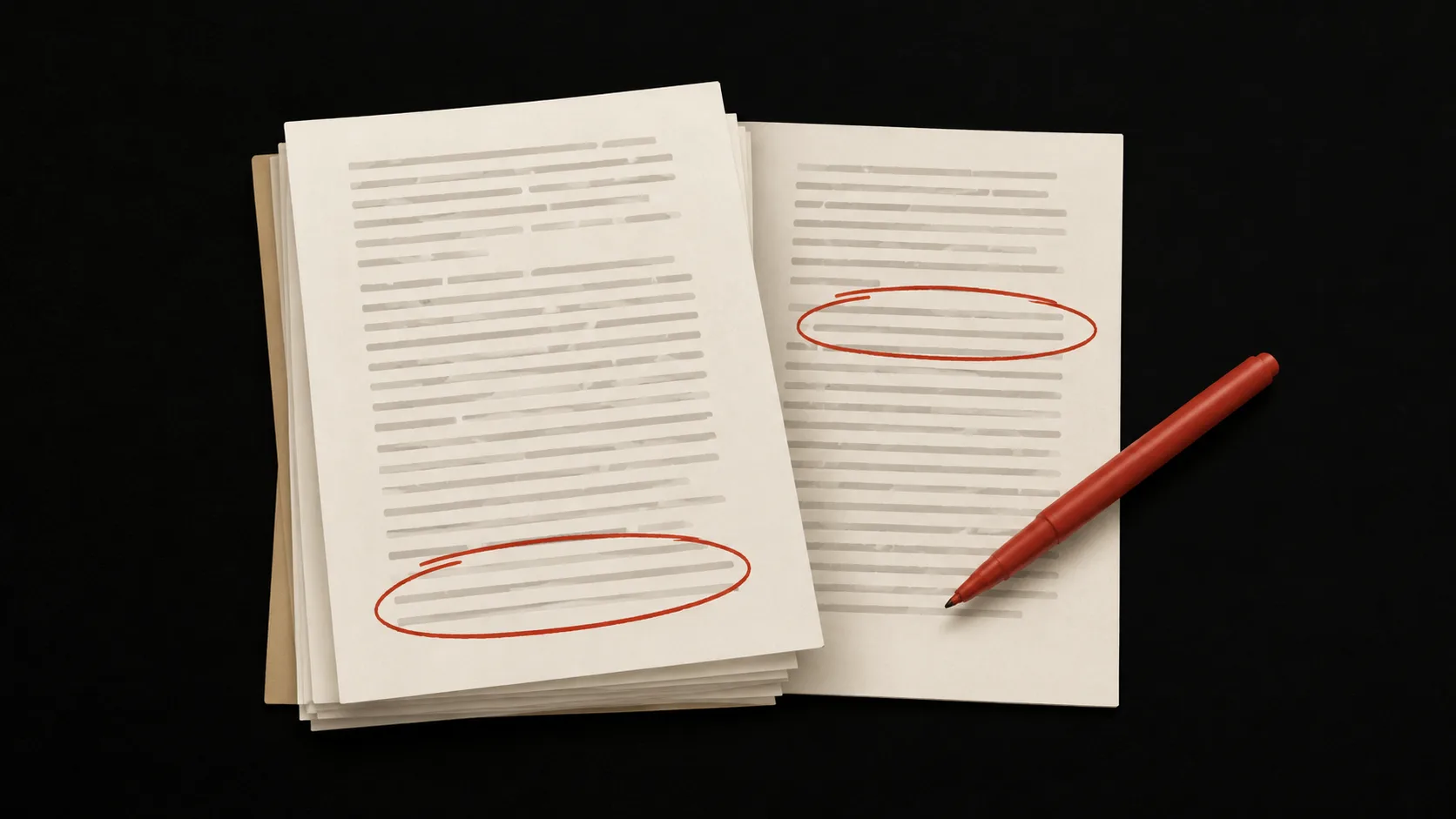
    A manuscript page with red pen marking two critical turning points in the text, showing how plot points redirect the narrative arc.

    Turning Points and Plot Pivots

    A turning point is a specific scene that redirects the narrative. The three-act model contains at least two major ones: the first plot point at the end of Act One and the second plot point entering Act Three. Aristotle insisted scenes form a chain of cause and effect, so every event should lead logically into the next rather than sitting like a stranded episode. Writers who plan turns well often understand how to write twists and unexpected turns that feel inevitable in hindsight.

    The Climax vs. the Resolution

    The climax is not the end of the story. It is the moment of highest tension where the dramatic question is answered. The resolution, sometimes called the denouement, shows the aftermath and the protagonist’s new normal. Subplots also need to reach resolution in Act Three, since loose ends undermine a reader’s sense of a complete story. Writing subplots that complement the main plot is often what separates a satisfying finale from a merely functional one.

    First-time novelists frequently compress Act Two, which should account for roughly half the total page count. Under-developing the middle is one of the most common structural errors in debut manuscripts, and it usually announces itself as a saggy, aimless second act followed by a rushed ending.

    Common Misconceptions About the Three-Act Structure

    Misconception: It Makes Stories Predictable

    Reality: Readers do not consciously notice structural beats. They feel pacing effects, tension, release, momentum, without ever identifying the architecture underneath. A well-executed structure feels invisible. What makes a story feel alive is character specificity, including the self-deception scene that turns readers into fans.

    Misconception: It Only Works for Screenplays

    Reality: The three-act model is used across novels, films, plays, and television. Syd Field popularized it for screenwriters, but the framework predates cinema by more than two millennia. Novels simply give you more room to breathe between the beats, which is where hero and villain tension can develop the depth prose allows.

    Misconception: You Must Outline Before Writing

    Reality: Some writers, often called pantsers, write without a formal outline and discover structure during revision. The three-act model is equally useful as a diagnostic tool applied after a first draft. Alternative structures like the Hero’s Journey, Save the Cat, and Freytag’s Pyramid are largely compatible with the three-act model, adding granularity to the same fundamental arc rather than replacing it. If drafting without a map is your style, writing by the seat of your pants is still compatible with sound structure in revision.

    Related Storytelling Concepts

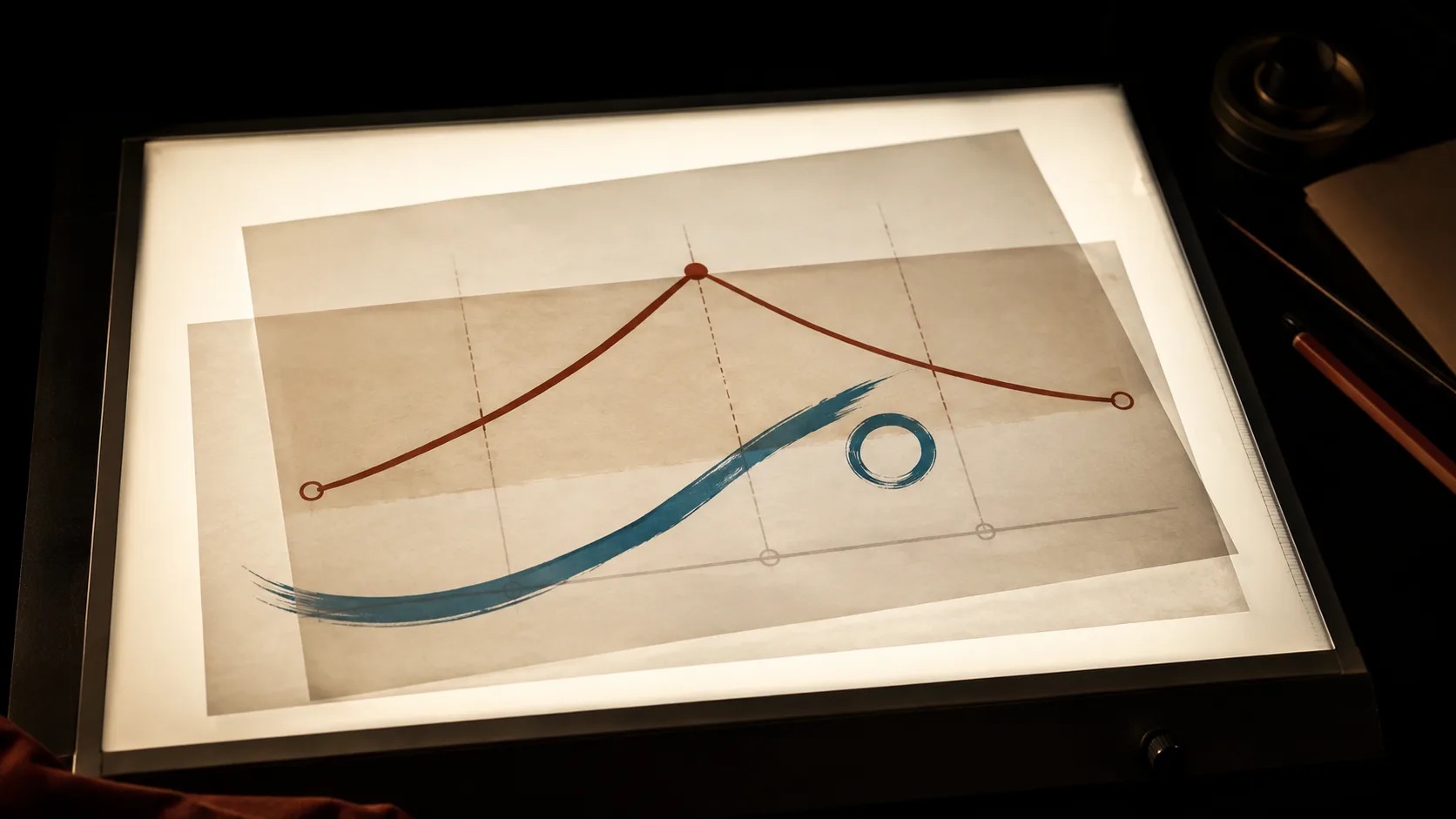
    Two transparent overlays on a lightbox showing the external three-act structure and internal character arc working in parallel, illustrating how structure and character transformation interact.

    Character Arc

    A character arc tracks the internal change the protagonist undergoes across the story. The three-act structure creates the external pressure that forces that internal transformation. The tension between what the protagonist wants and what they need is the fuel, which is why the gap between want and need in character arcs sits at the heart of nearly every strong novel.

    The Dramatic Question

    The dramatic question is the story’s central spine: a yes/no question posed at the end of Act One whose answer arrives at the climax. Every scene in Act Two should push toward or pull away from that answer. It is the one field that holds your plot together more reliably than any beat sheet.

    Inciting Incident

    The inciting incident is the first major disruption to the protagonist’s ordinary world. It must occur early enough in Act One to launch Act Two without delay. Mentors and co-protagonists then play a structural role through Act Two, providing tools, knowledge, or emotional support, which is why other characters are the real engine of change in most novels.

    Climax and Denouement

    The denouement, or falling action after the climax, resolves remaining subplots, shows the protagonist’s transformed state, and gives readers emotional closure. A rushed denouement is the fastest way to sour a reader on an otherwise strong book. Even a small moment can do the work, especially a scene that makes readers cry after the tension breaks.

    How to Get Started With the Three-Act Structure

    Map Your Story’s Three Acts Before You Write

    Begin by identifying three anchor events: the inciting incident at the end of Act One, the protagonist’s lowest point at the end of Act Two, and the climax in the middle of Act Three. Everything else fills in around these pivots. Index cards, a spreadsheet, or dedicated story-planning software all work; the goal is to see the shape at a glance and spot gaps in pacing. If you are drafting without an outline, pantsers face particular obstacles that structural mapping can quietly solve.

    Use Structure as a Revision Diagnostic

    If you already have a draft, map each existing scene to one of the three acts. Scenes that do not clearly belong to an act, or do not advance the dramatic question, are candidates for cutting or reworking. A single concrete first action beats a week of theorising: write a one-sentence dramatic question for your novel (Will Anna clear her father’s name before the trial ends?) and test every scene against it. To keep momentum in the middle, study looping techniques that make readers want to read on, then apply the diagnostic scene by scene.

    Reading published novels with the three-act framework in mind accelerates structural intuition faster than any theoretical study alone. Pick two books you love, mark the inciting incident, midpoint, and climax on paper, and notice how the writer distributed weight between the acts.

    Frequently Asked Questions

    What is the three-act structure in simple terms?

    It is a story model that splits a narrative into a beginning that sets things up, a middle that raises trouble, and an end that resolves it. Setup, Confrontation, Resolution. Beginning, middle, end.

    How long should each act be in a novel?

    A common ratio is roughly 25% Act One, 50% Act Two, and 25% Act Three. Exact percentages vary by genre and pacing preference, but Act Two is almost always the longest, and first-time novelists usually shorten it too much.

    What is the difference between the inciting incident and the first plot point?

    The inciting incident is the disruption that unsettles the ordinary world. The first plot point is the decision or event that commits the protagonist to the new situation and raises the central dramatic question, closing Act One and launching Act Two.

    Can the three-act structure work for short stories?

    Yes, though the acts compress dramatically. A short story might spend two paragraphs on setup, most of its length on confrontation, and a single scene on resolution. The proportions shift, but the underlying beginning-middle-end logic still applies.

    What is the midpoint in the three-act structure?

    The midpoint sits in the middle of Act Two and typically delivers a false victory or false defeat. It raises the stakes, shifts the protagonist’s approach, and pushes the story toward the lowest point that closes the second act.

    Is the three-act structure the same as the Hero’s Journey?

    No, but they overlap. The Hero’s Journey adds more granular stages (Call to Adventure, Ordeal, Return) inside the same underlying arc. Most Hero’s Journey beats can be mapped cleanly onto the three-act structure without contradiction.

    Do I need to outline before writing if I use the three-act structure?

    No. Many writers discover their structure in revision. The three-act model works equally well as a planning tool before drafting or as a diagnostic during pantser-friendly revision, depending on your temperament and project.

    What is the most common mistake writers make with Act Two?

    Compressing it. First-time novelists often rush through the middle, skipping the escalating obstacles and character growth that make Act Three feel earned. A thin Act Two produces a saggy, unmotivated climax, no matter how strong the opening was.

    Closing Thoughts

    The three-act structure will not write your novel for you, and it will not tell you what your story is about. What it will do is give you a dependable map for the long walk from page one to the final scene, one you can trust when the middle gets murky and the ending feels far away. Use it to plan, use it to revise, and use it to read other writers with sharper eyes. When you are ready to sketch your acts on paper, ClearARC is built for writers who want structure without a machine writing the sentences for them.

  • Novel Story Structure Explained: Planning Your First Book

    Novel Story Structure Explained: Planning Your First Book

    Novel story structure gives your first book a backbone that keeps readers turning pages from the opening hook to the final resolution. Understanding the core frameworks used by published authors helps you make deliberate plotting decisions rather than guessing at what should happen next. ClearARC is built to help writers plan and track those structural decisions from the earliest outline notes through to a finished draft, without any AI writing your book for you.

    What Is Novel Story Structure

    Abstract visualization of narrative tension rising through a story, representing how structure creates emotional impact and inevitability.Story structure is the order in which plot events are told to the reader. It is the framework that determines how cause and effect unfold across a narrative, and it is the reason a book can feel taut and inevitable rather than aimless. Every scene, chapter, and act sits inside that framework, and the framework itself is older than the novel form.

    Aristotle identified plot as the most important component of drama as early as the fourth century BCE, establishing exposition, rising action, climax, falling action, and resolution as the core elements. That vocabulary still travels with us today. If you want a longer view of the recurring patterns underneath most published fiction, the seven major plots every fiction writer should know is a useful primer alongside classical theory.

    A Working Definition

    Structure is not decoration. It is the deliberate arrangement of events that creates emotional impact on a reader who does not yet know where the story is going. As the National Centre for Writing puts it, basic structure is climbing tension building toward a climax, and that principle applies equally to a short story, a chapter, and an individual scene. If you understand that recurring shape, you can plan your novel at any depth you like without losing the pulse of the story.

    Structure vs. Plot: Why the Distinction Matters

    Plot is the raw sequence of events. Structure is how you arrange those events for the reader. A murder can happen on page one or in a flashback three hundred pages in, and the choice changes the entire book. Genre also shapes expectation: plot-driven genre fiction tends to follow tighter frameworks, while character-driven literary fiction may run looser, though even the loosest literary novel still relies on strong character beliefs to give scenes structural weight.

    Takeaway: Structure is a set of decisions about arrangement, not a checklist to be filled in.

    The Major Novel Story Structures Every First-Time Author Should Know

    Multiple published novels arranged to show how different story structures can map the same core events in different ways.Most published novels can be mapped to one of a handful of frameworks. Learning them means you can steal deliberately rather than reinvent the wheel with each draft.

    Three-Act Structure

    Three-act structure divides a narrative into setup, confrontation, and resolution, each act subdivided into beats that mark key plot events. It is the foundational framework of Western storytelling, and it maps cleanly onto reader expectations across most commercial genres. Aristotle’s version places the inciting incident in Act 1, rising stakes and a false victory in Act 2, and the climax and denouement in Act 3, which is broadly how a protagonist gets built into something worth following.

    Freytag’s Pyramid

    Gustav Freytag’s nineteenth-century modification places the climax at the midpoint rather than near the end. The result gives equal narrative weight to the build-up and the untying of tensions, which suits stories where the emotional cost of victory matters as much as the victory itself. Freytag’s pyramid rewards writers who care about the gap between what a character wants and what they need, because the back half is spent living with the consequences of the peak.

    The Hero’s Journey

    Joseph Campbell’s Hero’s Journey, formalised in the 1960s, describes a cycle of departure, initiation, and return that underpins epics from Homer’s Odyssey to modern blockbusters. It is particularly suited to fantasy, sci-fi, and coming-of-age fiction. The cycle also puts real pressure on your antagonist, since a returning hero has to face someone credible, which is why hero and villain tension belongs at the centre of any journey-shaped book.

    Seven-Point Structure

    The Seven-Point Structure uses a hook, two plot turns, a pinch point, a midpoint, a second pinch point, and a resolution. It gives writers a granular beat map across the full manuscript, and it plays especially well with subplots that complement the main plot rather than competing with it. Many thriller and romance writers use it because the pinch points force regular escalations of pressure.

    Takeaway: Pick one framework to learn deeply before mixing them.

    How Story Structure Works in Practice: Key Structural Elements

    Character surrounded by other figures representing how secondary characters and turning points function as structural engines in a novel.Frameworks are made of parts. A few of those parts do more work than the others.

    The Inciting Incident and Door One

    The inciting incident disrupts the protagonist’s equilibrium and launches the quest. It must occur early enough to hook the reader but carry enough weight to sustain the entire narrative. Storm Writing School’s aggregate approach sequences it right after a brief stasis, followed by a first major door, then two to six complications before the midpoint. That first door often forces a character to confront the lie they tell themselves, which is where structure and character arc meet.

    The Midpoint and Major Complications

    The midpoint is not merely a halfway marker. It typically involves a false victory or a revelation that raises the stakes and reorients the protagonist’s goal. Between the midpoint and the climax, complications escalate, and secondary characters carry more weight, which is why the other characters are the real engine of change in most successful novels.

    Climax, Resolution, and Reversal

    The climax is the highest point of tension in the book. As Jane Friedman’s analysis of classic structures points out, every story worth telling is fundamentally about transformation through trials, and the climax is where that transformation costs the protagonist something real. A well-executed resolution usually includes a reversal or surprise that recontextualises earlier events, delivering earned closure. If you want your ending to linger, study the tiny final action that makes your novel memorable rather than piling on more explosions.

    Takeaway: Three moments matter most: inciting incident, midpoint, climax. Nail those and the rest becomes easier.

    Choosing the Right Structure for Your Novel

    Author comparing two different genre novels to select the structural framework that matches their story's needs and voice.Not every framework suits every book. The choice is genre-led first, temperament-led second.

    Matching Structure to Genre

    Genre conventions create reader expectations that structural choices must address. A mystery requires a body and a resolution to the puzzle. A romance requires a meeting, obstacles, and a union. A fantasy epic often blends three-act and Hero’s Journey to accommodate multiple viewpoints. Even literary fiction, which can run looser, benefits from a conscious structural foundation, because readers still want twists and unexpected turns placed with intent.

    Plotters vs. Pantsers: A Structural Middle Ground

    Stephen King famously avoids pre-plotting and discovers structure as he drafts, while many commercial fiction authors outline beats in detail before writing a single chapter. Neither approach is universally correct. Reedsy notes that breaking structural rules successfully requires first mastering them, which is why first-time authors aiming at traditional publishing usually stick to established frameworks. If pure discovery writing terrifies you, there is a hybrid path documented in the pantser’s approach to planning that maps only the major beats and leaves room for scene-level improvisation.

    Takeaway: Match the framework to the genre, then adjust for your temperament, not the other way around.

    Common Misconceptions About Story Structure

    Structure gets a bad reputation among writers who have not yet used it well. Three misconceptions do most of the damage.

    Misconception: Structure Makes Stories Feel Formulaic

    Reality: most critically acclaimed novels can be mapped to a classic structure without feeling predictable. Character, voice, and theme differentiate execution, which is why two books that share the same beat sheet can read as completely different experiences. A tight structure actually amplifies unforgettable characters readers cannot stop thinking about because the scaffolding gives them room to breathe.

    Misconception: Structure Must Be Decided Before You Write

    Reality: structure can be applied retroactively during revision. Many authors discover the shape of their story after drafting and restructure in editing rather than outlining upfront. If you are a discovery writer, the pain typically comes later, which is why pantsers face the most ferocious obstacle of all when their manuscript hits sixty thousand words with no midpoint in sight.

    Misconception: One Structure Fits Every Novel

    Reality: no single structure is universally correct. Reedsy documents at least seven distinct story structures in active use, and other guides list closer to sixteen. Longer novels, particularly epic fantasy or multi-POV literary fiction, often layer multiple frameworks simultaneously, and subplots often try to tell you something about which structural layer they actually belong to.

    Takeaway: Structure is scaffolding, not a straitjacket. Discard the myths early.

    How to Start Planning Your Novel’s Structure Today

    You do not need to solve everything before you start. You need to solve enough.

    Step 1: Identify Your Core Structural Framework

    Select one structural model that matches your genre and writing style. Three-act structure is the recommended starting point for first-time novelists because it maps cleanly to reader expectations across most commercial genres. Once you have chosen, read two or three books in your genre with the framework in mind, ideally ones with protagonists who feel anything but boring, and mark the beats in the margin.

    Step 2: Map Your Key Beats Before You Draft

    Map at minimum five anchor beats before drafting (note – beats are called ‘events’ in ClearARC – ‘beats’ is very much a screenplay writer’s term, ‘events’ is a better description of what they’re about – treat beats as single events): the opening hook, the inciting incident, the midpoint, the darkest moment, and the climax. Everything between can be discovered in the draft. Sketch each on an index card or a single page, and note the emotional shift each beat delivers, because a scene that makes readers cry tends to sit on one of those anchor beats rather than between them.

    Step 3: Use Planning Tools to Track Structure Across Chapters

    Tracking structure at the chapter and scene level helps you catch pacing problems early, such as a midpoint that arrives too late or a second act that stalls. The National Centre for Writing advises that each scene should mirror the macro structure of a full novel: a disruption, escalating tension, and a small resolution or reversal that propels the reader forward. Digital planning tools that visualise story arcs and chapter tension, along with resources on character arc basics, let you course-correct before you invest hundreds of hours in a structurally flawed draft.

    Takeaway: Pick a framework, map five anchor beats, and track structure as you draft.

    Frequently Asked Questions

    What is novel story structure and why does it matter?

    Novel story structure is the deliberate arrangement of plot events for the reader. It matters because it turns raw incidents into cause-and-effect narrative, controls pacing, and meets the genre expectations that keep readers turning pages.

    What is the best story structure for a first novel?

    Three-act structure is the safest starting point. It is genre-flexible, easy to learn, and it maps cleanly to reader expectations across commercial fiction. Master it first, then experiment with Freytag, Hero’s Journey, or seven-point structure on later projects.

    What are the main elements of three-act structure in a novel?

    Three-act structure contains setup, confrontation, and resolution. Inside those acts sit key beats: the hook, inciting incident, first plot point, midpoint, second plot point, climax, and denouement. Each beat marks a shift in stakes or the protagonist’s understanding.

    Can I write a novel without following a story structure?

    Technically yes, but readers still expect a promise of story movement. Discovery writers usually impose structure during revision rather than skipping it entirely. Books that ignore structure completely tend to feel aimless and rarely find a traditional publisher.

    What is the difference between story structure and plot?

    Plot is the raw sequence of events in your story. Structure is how you arrange those events on the page for the reader. Same plot, different structure, entirely different reading experience, especially in mystery and literary fiction.

    How long should each act be in a novel?

    A common split is 25 percent for Act 1, 50 percent for Act 2, and 25 percent for Act 3. Freytag’s model puts the climax at the midpoint, which shifts the ratio. Use these as guidance, not law.

    What is the inciting incident in a novel?

    The inciting incident is the event that disrupts the protagonist’s equilibrium and launches the quest. It typically arrives within the first fifty pages, carries enough weight to sustain the entire narrative, and forces the character to act rather than merely react.

    How do I choose the right story structure for my genre?

    Start with reader expectations. Mystery and thriller favour seven-point or tight three-act. Fantasy and coming-of-age suit Hero’s Journey. Literary fiction can use looser Freytag variations. Read three successful books in your genre and reverse-engineer their beats.

    Conclusion

    Novel story structure is not a formula you fill in. It is the quiet architecture that lets your characters, voice, and themes carry real weight for a reader who is trusting you with several hours of their attention. Learn one framework properly, map your anchor beats before you draft, and track how each chapter sits inside the whole. When you are ready to move from margin notes and index cards to a planning system that keeps every beat and arc in view, ClearARC is designed for writers who want to plan their own novel, by hand, with no AI writing over their shoulder.