Tag: novel plotting

  • Three-Act Story Structure Explained: A Novel-Writing Guide

    Three-Act Story Structure Explained: A Novel-Writing Guide

    The three-act story structure is one of the oldest and most widely used frameworks for plotting fiction, dividing a narrative into Setup, Confrontation, and Resolution. Traced back to Aristotle’s Poetics and formalized for modern writers by Syd Field’s 1979 book Screenplay: The Foundations of Screenwriting, the model gives novelists a clear cause-and-effect scaffold for pacing, character development, and dramatic tension. ClearARC is built around this kind of quiet, analog planning, helping writers apply the structure from first outline to final draft.

    What Is the Three-Act Structure?

    Definition and Origins

    The three-act structure is a model that divides a story into three parts: Setup (Act 1), Confrontation (Act 2), and Resolution (Act 3). Each act carries out a specific narrative function, and each is bridged by a plot point that turns the story in a new direction. If you have ever sketched a novel on the back of a napkin as beginning, middle, and end, you have already used a rough version of it, and a story structure template simply makes those instincts more deliberate.

    The earliest written record of this beginning-middle-end model comes from Aristotle’s Poetics, written in the 4th century B.C., where he argued that stories should be a chain of cause-and-effect beats rather than loose episodes. Syd Field formalized the modern three-act framework in 1979 for screenwriters, and novelists adopted it because the same logic serves prose. Understanding the seven basic plots alongside three-act shape gives you two complementary lenses for planning.

    The Dramatic Question

    Every three-act story poses a central dramatic question early on: Will the detective solve the crime? Will the farmer save the harvest? Will the reluctant heir accept the throne? The question is set up in Act 1, complicated across Act 2, and answered in the climax of Act 3. Keeping one clear question at the heart of the manuscript is what stops a first draft from wandering.

    Takeaway: Before you outline, write your dramatic question in a single sentence and pin it above your desk.

    Act 1: The Setup

    An illustration showing a protagonist in their ordinary world before the inciting incident disrupts their normal life.

    Exposition and World-Building

    Act 1 introduces the protagonist, their relationships, and the world they inhabit. It shows the reader what “normal” looks like so the disruption to come actually feels like a disruption. A grounded opening chapter tends to hinge on a character worth following, doing something specific in a specific place, rather than on abstract world-building.

    Exposition should also plant the protagonist’s want and the obstacles standing in their way. Weave in setting through sensory detail; a believable place does more work than three paragraphs of history dump.

    The Inciting Incident

    The inciting incident, sometimes called the catalyst, is the on-page event that confronts the protagonist and disrupts the ordinary world. A phone call, an arrest, a stranger at the door, a body in the woods. It should force the protagonist to make a choice, and that choice starts the story’s engine. Characters who react passively feel thin, which is often why protagonists feel boring in early drafts.

    The First Plot Point

    The first plot point closes Act 1 by locking the protagonist into a new situation from which there is no return. This is where the dramatic question sharpens into focus and the reader understands what the book is actually about. In a novel, Act 1 typically occupies roughly the first quarter of total length, which for an 80,000-word manuscript is around 20,000 words. Use the gap between want and need to give this turning point emotional weight, not just plot weight.

    Takeaway: By the last page of Act 1, the protagonist should not be able to walk away.

    Act 2: The Confrontation

    An illustration of a protagonist facing mounting obstacles and tensions during the rising action of Act 2.

    Rising Action and Escalating Obstacles

    Act 2, often called the rising action, depicts the protagonist’s repeated attempts to resolve the central problem while facing ever-worsening situations. Protagonists at this stage lack the skills or self-awareness needed to overcome the antagonistic forces confronting them, and that gap is the raw material of character arc growth. Make each attempt cost something.

    Subplots enter here too, threading themes and secondary characters through the main line. A well-placed subplot can carry the theme when the A-plot is busy with mechanics, and subplots that argue with the main story tend to produce the richest middles.

    The Midpoint

    The midpoint sits near the center of Act 2 and either raises the stakes or shifts the protagonist’s approach. It is the structural beat that saves the middle from sagging, the moment where a mystery deepens, an ally betrays, or the goal changes shape. Good midpoints often force the protagonist to face the lie they tell themselves for the first time.

    The Dark Night of the Soul

    Near the end of Act 2 comes the second plot point, sometimes called the dark night of the soul. The protagonist is at their lowest: stripped of allies, plans in ruins, the old strategy discredited. Only when they hit this floor can they gather the resolve to enter the final confrontation as someone changed. Antagonists sharpen this scene, and the tension between hero and villain should crackle at its highest voltage here.

    Takeaway: Act 2 is roughly half the book. If your middle feels slack, check whether your midpoint actually shifts anything.

    Act 3: The Resolution
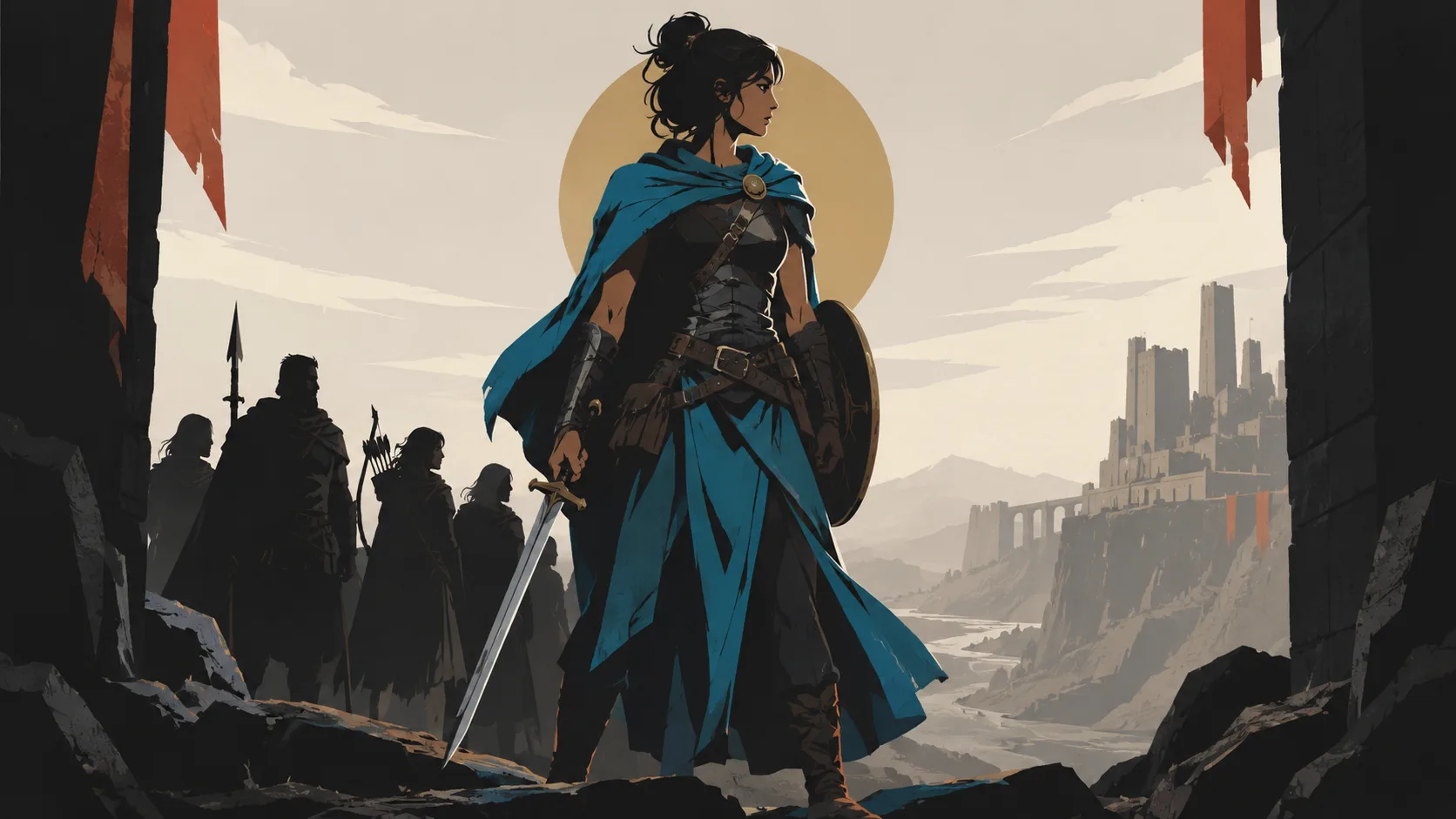
    An illustration of a protagonist equipped with newfound skills and knowledge, ready to face the climactic moment.

    The Climax

    Act 3 opens with the protagonist entering the final confrontation equipped with the skills, allies, and self-knowledge earned across Act 2. The climax is the scene or sequence where the main tensions reach their most intense point and the dramatic question is answered. This is also where planted setups from Act 1 pay off, so a strong Act 3 echoes its opening chapters rather than introducing new machinery.

    Falling Action and Denouement

    After the climax comes the falling action, which resolves subplots and shows how secondary characters have been affected. The denouement then gives readers a sense of the protagonist’s new normal, showing how they have changed from who they were in Act 1. A short, precise final beat lands harder than a long one; the tiny final action is what readers actually carry home.

    Takeaway: Every payoff in Act 3 should trace back to a setup in Act 1 or Act 2. If it does not, plant it.

    Three-Act Structure in Practice: Examples and Application

    Recognizing the Structure in Popular Novels and Films

    Story expert K.M. Weiland frequently uses Jurassic Park as a teaching example because its beats are cleanly visible: the setup on the mainland, the inciting incident of the invitation, the first plot point when the tour begins, the midpoint when the power fails, the dark night in the visitor center, and the climax in the raptor kitchen. Once you learn to see the shape, it becomes visible in almost every mainstream story you read. Notice, too, how secondary characters drive change at each turning point rather than the protagonist acting alone.

    How to Outline Your Novel Using Three Acts

    Most writers begin by identifying five anchor beats: inciting incident, first plot point, midpoint, second plot point, and climax. With those pinned, filling in scenes becomes a matter of connective tissue rather than blind exploration. A deeper planning process turns those five beats into a scene list you can actually draft against.

    Not every writer plans this way, and that is fine. Discovery writers can apply the structure retroactively during revision, using the three acts as a diagnostic tool rather than a pre-writing blueprint; if you write by the seat of your pants, the framework becomes a lantern for revision instead of a leash for drafting. Whatever your process, hold each scene to a simple test: does it move the story forward or deepen characterization? Scenes that do neither are candidates for cuts.

    Takeaway: Compare your draft’s act proportions against roughly 25% / 50% / 25% to spot pacing imbalances before final revision.

    Common Misconceptions About the Three-Act Structure
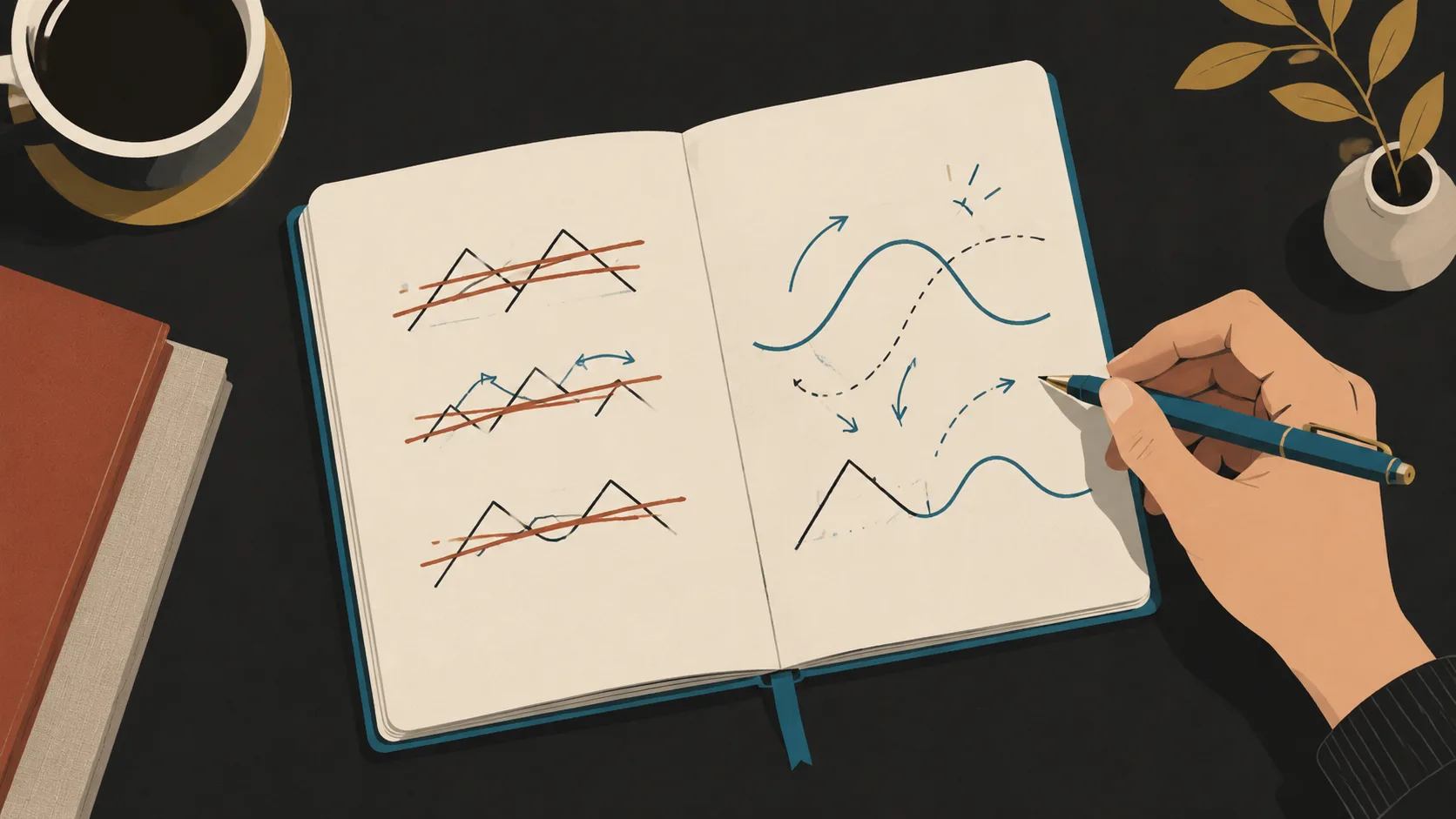
    An illustration showing a writer's approach to the three-act structure as a flexible guide rather than rigid rules.

    Misconception: It Makes Stories Formulaic

    Reality: The three-act model is descriptive, derived from observing thousands of successful stories, not prescriptive. It tells you what tends to work, not what you must do. Within its walls you can still write anything from a quiet literary novel to a heist thriller, and unexpected turns live comfortably inside the framework.

    Misconception: It Only Works for Screenplays

    Reality: Although Syd Field popularized the model in a screenwriting context, the structure applies equally to novels, memoirs, and short fiction. According to Reedsy’s guide to the three-act structure, the model is the most widely used plotting technique in English-language fiction, screen and page alike. Novelists sometimes stretch or compress acts, but the functions stay the same.

    Misconception: Every Story Must Follow It Exactly

    Reality: Many literary and experimental works invert or subvert the structure deliberately. Understanding the convention is a prerequisite for breaking it purposefully. Related frameworks like the Hero’s Journey, the Five-Act structure, and the Save the Cat beat sheet offer overlapping but distinct scaffolding, and choosing between them is often a matter of the story’s genre and emotional register. What matters is that each act fulfills its function: establish, complicate, resolve, powered by characters with strong beliefs rather than page-count math.

    Takeaway: Learn the rules before you break them, and break them for a reason.

    Frequently Asked Questions

    What are the three acts in a story structure?

    The three acts are Setup, Confrontation, and Resolution. Act 1 establishes characters and world, Act 2 escalates the central problem through rising action and a midpoint shift, and Act 3 delivers the climax and denouement that answer the dramatic question.

    How long should each act be in a novel?

    Convention suggests roughly 25% Act 1, 50% Act 2, and 25% Act 3. For an 80,000-word novel, that is about 20,000 / 40,000 / 20,000 words. These are guidelines for pacing checks, not laws; function matters more than exact word counts.

    What is the inciting incident in the three-act structure?

    The inciting incident is the on-page event in Act 1 that disrupts the protagonist’s ordinary world and forces them toward a decision. It is not the first plot point itself but the catalyst that eventually pushes the story across that first threshold.

    What is the difference between the midpoint and the climax?

    The midpoint occurs near the center of Act 2 and shifts the stakes or the protagonist’s approach, keeping the middle from sagging. The climax comes in Act 3 and is the highest tension point of the entire novel, where the dramatic question is finally answered.

    Can the three-act structure be used for short stories?

    Yes. Short stories often compress the three acts into a few scenes or even a single scene, but the functions remain: establish a situation, complicate it, resolve it. Flash fiction sometimes collapses Act 1 into a single sentence of implied backstory.

    How does the three-act structure differ from the Hero’s Journey?

    The Hero’s Journey is a more granular monomyth with roughly twelve stages built around a call, trials, and return. The three-act structure is a broader container; you can map most Hero’s Journey beats inside it, but three-act shape works for stories that are not journeys at all.

    Is the three-act structure only for screenwriting or does it work for novels too?

    It works for both. Syd Field codified it for screenwriters, but the underlying logic predates film by two millennia. Novels benefit from the same cause-and-effect scaffolding, though prose gives you more room for interior character work between the major beats.

    What happens if my story doesn’t fit the three-act structure?

    That may be fine. Some stories genuinely need a different frame, such as five-act tragedy, kishotenketsu, or braided-narrative shapes. Before abandoning three acts, though, check whether your draft simply has a weak midpoint or an underdeveloped Act 1, which are the most common causes.

    Bringing It All Together

    The three-act structure is a scaffold, not a cage. It tells you where the load-bearing beats belong so the rest of the manuscript can rest on something solid, and it gives you a shared vocabulary for talking about pacing with editors, critique partners, and yourself. Learn the shape, draft your book, and let the framework do its quiet work in the background. When you are ready to plan your next novel with pen, paper, and no algorithms in the way, ClearARC is built for exactly that kind of writer.

  • How To Use A Three-Act Structure Template For Your Novel

    How To Use A Three-Act Structure Template For Your Novel

    Plotting a novel is easier when you have a proven framework to follow. A three-act structure template gives you a clear map of your story’s beginning, middle, and end, along with the key beats that keep readers turning pages. Whether you are writing your first draft or restructuring an existing manuscript, ClearARC offers tools designed to help novelists apply this classic framework with confidence, pen in hand and coffee within reach.

    Outcome: a filled-in three-act template for a novel-length project. Time: 2 to 4 hours across one or two sittings. Skill level: beginner.

    What You Will Need Before You Start

    A writer's workspace with scattered story premise notes and character sketches on paper, showing pre-planning materials.

    Before you open the template, gather the raw material. A template only works if you have a story premise to pour into it.

    Tools and materials

    • A working story premise: a protagonist, a central want or goal, and at least one major obstacle standing between them and it.
    • A three-act structure template, digital or printable, that labels Act 1 as roughly 25% of the story, Act 2 as 50%, and Act 3 as the final 25%.
    • Familiarity with the nine core beats that sit inside those acts: inciting incident, first plot point, first pinch, midpoint reversal, second pinch, second plot point, climax, and resolution.
    • A blank page or notes file for the ending you have in mind, even if it is only a rough sketch.

    If any of that feels shaky, spend an hour on premise work first. A companion piece on how to plan a novel in depth walks through the pre-template thinking that saves days of frustration later.

    Time and skill level

    Expect 2 to 4 hours to complete a full template for a novel-length project, split across one or two sittings so your subconscious can chew on it between sessions. The work is beginner-friendly; you do not need prior craft training, only a story you care about and enough patience to sit with hard questions. If you tend to write by instinct, the framing in writing by the seat of your pants will help you approach the template as a scaffold rather than a cage.

    Takeaway: show up with a premise, a printed template, and a rough sense of your ending. Everything else follows.

    Before You Start Filling In the Template

    Reedsy guide to three-act structure displayed on a laptop screen

    Two decisions save enormous rewrite time later: knowing your protagonist’s core drive, and knowing where the book lands.

    Identify your protagonist’s core want and wound

    Ask yourself three questions. Whose story is this? What does that character want? What keeps them from getting it? Editors at Reedsy point to exactly this trio as the foundation of a workable premise, according to Reedsy’s guide to three-act structure. A protagonist without a clear want produces a plot without a clear shape, which is the most common reason middle acts collapse. Pair the want with a wound, the old hurt or false belief the character carries into the story. That inner ache is what turns plot into character arc, an idea developed further in character arc basics.

    Clarify your ending before plotting Act 1

    Editors consistently advise writers to know how the book ends before filling in a template, so every act moves toward a defined outcome rather than drifting. You do not need the final scene word-for-word, only a fixed target: who changes, what they choose, and what the world looks like after. The three-act structure is built on cause-and-effect, an idea Aristotle first documented in Poetics; each beat must result from the previous beat and cause the next. Working backward from the ending is how you enforce that logic. The essay on the gap between want and need is a useful primer for defining the internal ending, not just the external one.

    Nothing needs to be backed up before starting a template, but do save any prior outlines or notes in a separate file before overwriting them. Old drafts often contain the seed of the beat you are currently missing.

    Takeaway: name your protagonist’s want, name their wound, and sketch the ending. Then, and only then, open the template.

    Step-by-Step: Filling In Your Three-Act Structure Template

    A writer's hands filling in sections of a three-act structure template worksheet with a pen, working through story beats.

    Work through the acts in order. Resist the temptation to jump to your favorite scene; the template earns its keep by forcing you to answer the awkward questions first.

    Step 1: Map Act 1 (Setup)

    Act 1 covers roughly the first 25% of the story. Introduce the protagonist and their ordinary world in the first few scenes, showing the routines and relationships that will soon be disrupted. Then deliver the inciting incident, the moment that pushes them irrevocably into the central conflict. In the template, fill in three fields for this act: ordinary world, inciting incident, and first plot point (the point of no return at the 25% mark). A strong opening scene often depends on a protagonist worth following, which is the exact craft problem explored in how to open a book with a character worth following.

    Step 2: Map Act 2 (Confrontation)

    Act 2 occupies the middle 50% of your novel and is structured around a midpoint reversal that shifts the protagonist from reactive to active. Without that midpoint, the middle sags and readers drift. Fill in five fields: first pinch point (around 37%), midpoint reversal (50%), second pinch point (62%), rising complications, and the second plot point at 75% that launches Act 3. This is also where subplots need to earn their place; the diagnostic in is your subplot trying to tell you something is a good check once your Act 2 fields are populated.

    Two overlays are worth mentioning here. The “3 Acts, 9 Blocks, 27 Chapters” framework, popularised in writing communities, subdivides each act into three blocks of three segments, giving chapter-level scaffolding. Blake Snyder’s Save the Cat! beat sheet maps neatly onto three-act structure and is often used for finer control inside Act 2.

    Step 3: Map Act 3 (Resolution)

    Act 3 covers the final 25%. The climax forces the protagonist to use everything they have learned; the resolution shows the changed world that results. Fill in three fields: climax setup, climax, and resolution. Pay attention to the small closing gesture that signals your protagonist has genuinely changed, an idea unpacked in the tiny final action that makes your novel memorable. Readers remember endings more than any other beat.

    Takeaway: eleven fields, three acts, one page. If a beat resists definition, that is a signal to keep thinking, not to skip the row.

    Layering Character Arc Onto the Plot Template

    Plot structure and character arc templates layered on a desk

    External events are half a novel. The other half is who the protagonist becomes on the way through them.

    Add a column to your template for the protagonist’s emotional or psychological state at each beat. This turns the template into a two-track document: what happens, and what it costs. Writing educators consistently argue that character transformation is the ingredient that makes a story memorable, and the three-act structure explicitly makes room for it at the midpoint and climax. The mechanics of that transformation are covered in more detail in how to create unforgettable characters.

    The inciting incident should disturb not only the protagonist’s external situation but also challenge a core belief or wound, setting up the internal journey through Act 2. That challenged belief is often the false story the character has been telling themselves for years, explored in the lie your character tells themselves. By the start of Act 3, the template should show a clear gap between who the protagonist was in Act 1 and who they have become. When that gap is visible on the page, the climax feels earned. When it is missing, no amount of action will rescue it.

    Takeaway: track internal state in a parallel column. If Act 3 looks identical to Act 1 on that column, your character has not moved.

    Troubleshooting Common Template Problems

    Every writer hits the same snags. Here are four with clean fixes.

    Symptom: Act 2 feels shapeless

    Cause: the midpoint beat is missing or too weak. Fix: insert a clear reversal at the 50% mark that forces the protagonist to change tactics or raise the stakes. A midpoint often lands harder when it uses a genuine plot twist, and the techniques in how to write twists and unexpected turns in fiction transfer directly to that beat.

    Symptom: The climax feels unearned

    Cause: the protagonist’s growth in Act 2 is not tracked in the template. Fix: add a character state field to each beat and verify the arc is progressing. A climax feels earned when the reader has watched belief-by-belief change, which is the exact terrain covered in why your protagonist feels boring and how to fix it.

    Symptom: The template feels too rigid

    Cause: treating the template as a fixed script rather than a flexible guide. Fix: use the template as a checklist of story questions to answer, not a locked sequence of scenes. The Hero’s Journey and other structures fit inside three-act structure and can be layered on for variety, an approach discussed in Christopher Booker’s seven basic plots explained.

    Symptom: Acts are proportionally unbalanced

    Cause: writers commonly over-write Act 1, packing it with backstory. Fix: apply the 25/50/25 word-count check after your first draft and cut ruthlessly in Act 1. If the imbalance is chronic, the broader diagnostic in how to use a story structure template to plan your novel is worth a read.

    Takeaway: most template problems trace back to a missing midpoint, a missing character-state column, or too much Act 1 real estate. Check those first.

    Frequently Asked Questions

    What is a three-act structure template and how does it work?

    A three-act structure template is a plotting worksheet dividing your novel into setup, confrontation, and resolution. You fill in fields for each major beat, giving yourself a cause-and-effect map before you draft the manuscript.

    How long should each act be in a novel?

    Standard proportions are Act 1 at 25%, Act 2 at 50%, and Act 3 at 25%. In a 90,000-word novel that means roughly 22,500 words of setup, 45,000 of confrontation, and 22,500 of resolution.

    What are the key beats I need to include in a three-act structure?

    The nine core beats are the ordinary world, inciting incident, first plot point, first pinch, midpoint reversal, second pinch, second plot point, climax, and resolution. Everything else is scaffolding around those load-bearing moments.

    Can I use a three-act structure template for genre fiction like fantasy or romance?

    Yes. The three-act structure is genre-agnostic and underlies most commercial fantasy, romance, mystery, and literary fiction. Genre conventions layer on top of the template as required beats, such as the romance meet-cute or the mystery reveal.

    What is the difference between a three-act structure and the Hero’s Journey?

    The Hero’s Journey is a more granular seventeen-stage mythic pattern that fits inside three-act structure. Think of three-act as the shape of the room and Hero’s Journey as furniture arrangement; you can use one or both.

    How does the Save the Cat beat sheet relate to a three-act structure template?

    Blake Snyder’s Save the Cat! beat sheet maps fifteen specific beats onto three-act structure, giving finer resolution inside each act. Many novelists use three-act for the skeleton and Save the Cat for the connective tissue.

    Can I use a three-act structure template if I am a discovery writer (pantser)?

    Yes, though lightly. Discovery writers often fill in only the ending and midpoint, leaving the rest to emerge in drafting. The perspective in pantser planning obstacles is useful reading before deciding how much scaffolding you want.

    What is the midpoint reversal and why does it matter in Act 2?

    The midpoint reversal is a beat at the 50% mark that shifts the protagonist from reactive to active, often through a revelation or a raised stake. Without it, the middle of the novel drifts and readers lose engagement.

    Closing the Template, Opening the Draft

    A finished three-act structure template is not the novel; it is the map that lets you draft without getting lost. Fill it in slowly, revisit it after every few chapters, and let it evolve as your characters surprise you. When you are ready to move from plotting to prose, the writing tools at ClearARC are built for novelists who want structure without noise, and pages without the intrusions of AI. Keep your coffee close and your ending in view. The rest is craft.

  • Narrative Story Structure Explained For Fiction Writers

    Narrative Story Structure Explained For Fiction Writers

    Narrative story structure is the framework that organizes how a story’s events, characters, and conflicts are arranged and delivered to readers. For fiction writers, understanding this framework is the difference between a manuscript that holds the reader’s attention and one that loses it. ClearARC helps writers map, test, and refine their structure before drafting, so the foundation is solid from the first page.

    What Narrative Story Structure Actually Means

    Wikipedia's story structure entry showing narrative theory and definitions for fiction writers.Narrative structure is the recognizable, organized way a story’s different elements are unified, including the particular ordering of plot events. According to Wikipedia’s entry on story structure, this ordering has been shown to influence how the brain organizes and retains narrative information, which means structure is a cognitive concern as much as a craft one. Most Western structures share the same five beats: exposition, rising action, climax, falling action, and resolution. If you understand that skeleton, you can plan your novel with intention instead of hoping the shape will appear on its own. There’s a beautiful talk by Kurt Vonnegut on story shape on YouTube.
    The Difference Between Story and Plot

    Story is the full sequence of events as they happen inside the fictional world. Plot is the specific order in which you choose to present those events to the reader. A character’s childhood happens in the story; whether the reader learns about it in chapter one or chapter twelve is a plot decision. Confusing these two is one reason drafts feel muddled, and it is why writers benefit from thinking about the seven major plots every fiction writer should know before drafting the first scene.

    Why Structure Is Not a Formula

    Adopting a pre-existing structural blueprint does not guarantee a formulaic story. Nearly every novel can be analyzed through one or more classic structures without losing its individuality, because structure organizes sequence while voice, theme, and character remain entirely yours. Compelling characters live comfortably inside a three-act shape or a seven-point scaffold; the structure gives them room to move.

    The Core Elements Every Narrative Structure Contains

    An open book on a table with a bookmark, representing the core elements and turning points within narrative structure.Nearly every recognized structure rests on the same underlying elements. Learning them once means you can recognize them everywhere, from a genre thriller to a literary novel, and you can use them to write scenes that land emotionally rather than sitting inert on the page.

    Exposition and Inciting Incident

    The exposition establishes setting, main characters, their backgrounds, relationships, and the dynamics of the world before conflict begins. Then the inciting incident, sometimes called the catalyst, arrives as the dynamic event that disrupts the protagonist’s ordinary world and compels action. This is not the climax and not a subplot; it is the specific hinge that starts the story. Give your protagonist a real ordinary life first, because a character worth following in chapter one makes the disruption matter. Adding a note about the inciting incident in ClearARC is easy using the attachment feature, it will then show up in the timeline pinpointing not only where it occurs in your book and what happens, but also who or what is involved.

    Rising Action and Midpoint

    Rising action is the bulk of most stories. It is where the protagonist and antagonist conflict develops most fully, where character arcs deepen, and where subplots braid into the spine. The midpoint reorients everything: new information lands, stakes rise, or the goal shifts. This is also where the gap between what a character wants and what they need usually becomes visible to the reader, even if the character is still blind to it.

    Climax, Falling Action, and Resolution

    The climax answers the story’s central dramatic question, for example, “Will X defeat the antagonist?” or “Will Y and Z reconcile?” It marks the peak of tension. Falling action releases pressure, and the resolution closes the loop on remaining crises and loose ends. Both success and failure are valid outcomes, but the ending must be conclusive. Often, a tiny final action is what turns a competent ending into a memorable one.

    The Most Widely Used Narrative Story Structures

    A notebook with hand-sketched story arcs showing different narrative structure patterns that writers use.Several named structures dominate craft conversations. None is objectively best, but each solves a slightly different problem. If you already know that your subplot is trying to tell you something, the right structure will help you hear it more clearly.
    Three-Act Structure

    The three-act structure, setup, confrontation, and resolution, was first described in the fourth century A.D. by Aelius Donatus in his commentary on Terence, and later popularized for modern writers by Syd Field’s Screenplay. It is the default for commercial fiction and film, and it pairs naturally with strong hero-villain tension because the confrontation act gives that conflict room to breathe across a long middle.

    The Hero’s Journey

    Drawn from Joseph Campbell’s monomyth, the Hero’s Journey follows a protagonist who leaves an ordinary world, faces trials, meets mentors and allies, confronts a supreme ordeal, and returns transformed. You can trace it through The Odyssey, Star Wars, and countless fantasy novels. The transformation piece is the heart of it, which is why it works best when your protagonist has a lie they tell themselves at the start, ready to be dismantled by the journey.

    Five-Act Structure and the Freytag Pyramid

    Gustav Freytag developed his pyramid in 1863 while analyzing Greek and Shakespearean drama. It maps five acts: exposition, rising action, climax, falling action, and denouement. It is still useful for tragedies and long novels with sprawling casts, particularly when you need to give supporting characters enough space to matter before the story tightens toward its climax.

    Other Structures: Save the Cat and the Seven-Point Method

    Blake Snyder’s Save the Cat beat sheet breaks the narrative into 15 precise plot beats, originally for screenwriters but widely adopted by novelists. The Seven-Point Story Structure, hook, plot turn one, pinch point one, midpoint, pinch point two, plot turn two, and resolution, offers a symmetrical scaffold that genre fiction writers find easy to memorize. Both frameworks make it easier to write twists and unexpected turns because they mark the exact places where a turn belongs.

    Narrative Structure Across Different Fiction Genres

    Different genres carry different structural expectations, and readers absorb those expectations long before they open your book.

    Genre Conventions and Structural Expectations

    Commercial fiction genres, romance, thriller, fantasy, mystery, carry reader expectations for specific structural beats. Romance readers expect the meet, the deepening, the dark moment, and the reconciliation. Thriller readers expect escalating stakes and a climactic confrontation. Deviating from these beats without clear purpose risks losing audience satisfaction, so treat conventions as promises. The antagonist in a thriller, for instance, has structural work to do that a literary novel’s antagonist may not.

    Non-Linear and Experimental Structures

    Literary fiction more often employs non-linear, fragmented, or episodic structures. In medias res openings, reverse chronology, and parallel timelines reorder when events are revealed without changing the underlying story logic. Story structure also varies by cultural context; the named Western structures do not universally apply across global storytelling traditions. Editors generally advise newer writers to establish a track record with conventional structure first, particularly when pursuing traditional publishing, and to save experimentation for later work where the connective tissue between plot and character is already second nature.

    How to Choose the Right Structure for Your Story

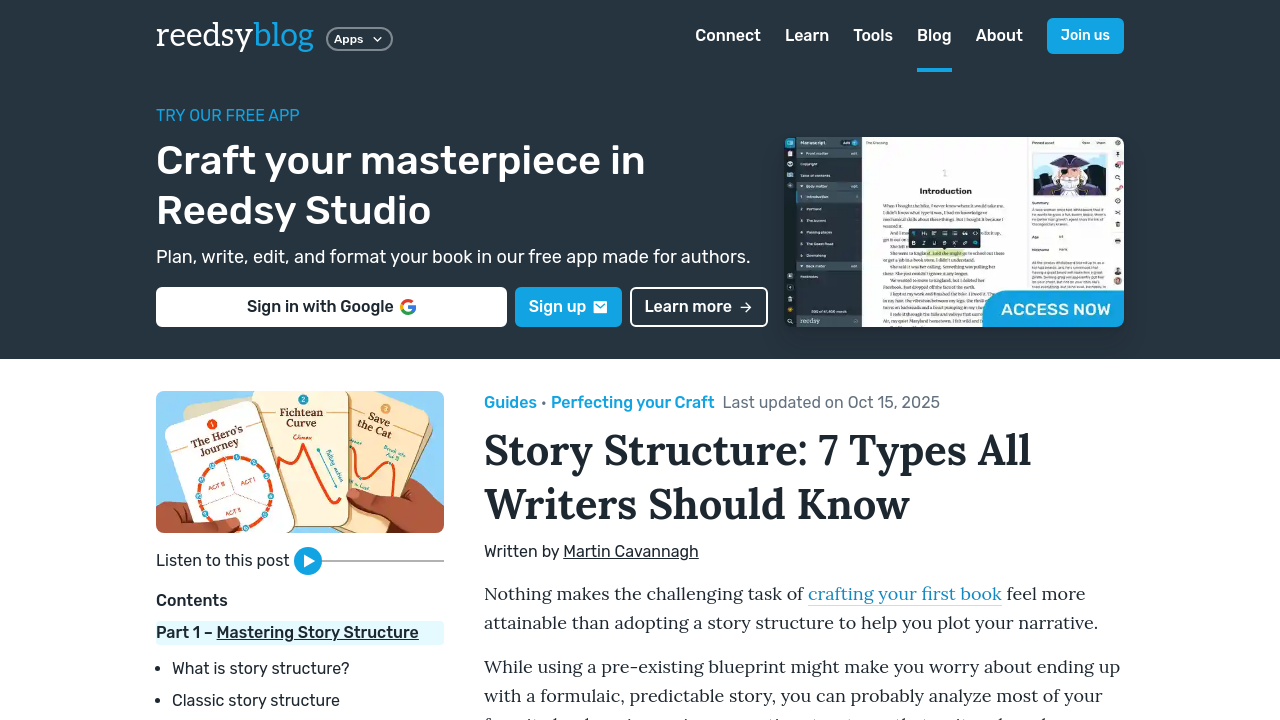
    Reedsy's guide to story structure on screen, showing resources for matching narrative frameworks to your story type.The right structure follows the type of journey your story takes and the obstacles your characters face. According to Reedsy’s guide to the seven story types, Christopher Booker’s archetypes, Overcoming the Monster, Rags to Riches, The Quest, Voyage and Return, Comedy, Tragedy, and Rebirth, offer a useful lens for matching structure to premise before you commit.

    Matching Structure to Story Type

    If you can identify your inciting incident, first-act turn, midpoint, second-act turn, and climax before drafting, you already have a functional structural skeleton regardless of which named framework you use. A quest story fits the Hero’s Journey. A domestic drama may sit more comfortably in five acts. A high-concept thriller often snaps neatly into Save the Cat. What matters is that your protagonist has something specific and hard to do, and the structure gives them the runway to do it.

    Plotting vs. Pantsing Within a Structure

    Plotters map structure in detail before drafting. Pantsers can use the same frameworks retroactively during revision to diagnose pacing problems. Both approaches work, and neither is superior. If you are the second kind of writer, structure applied in revision can rescue a draft that feels shapeless without asking you to change how you generate scenes in the first place.

    Common Misconceptions About Narrative Story Structure

    A few durable myths keep writers from using structure well. Clearing them up is often enough to unblock a stalled draft, especially when paired with attention to the beliefs your major characters carry into every scene.

    Misconception: Structure Kills Creativity

    Reality: Structure organizes the sequence of events. It does not dictate voice, theme, character, or subject matter. The creative choices about what happens and how it is written stay entirely with you, which is why two novels built on the same three-act scaffold can feel nothing alike.

    Misconception: All Stories Must Follow a Three-Act Shape

    Reality: The three-act structure is not universal. Episodic fiction, linked short story collections, and many literary novels operate on entirely different organizing principles. Aristotle himself argued for a two-act structure, complication and dénouement, split by a peripeteia; the three-act attribution to him is a long-running mistake. Read widely, and you will find subplots and structures that break the mold on purpose.

    Misconception: Structure and Style Are the Same Thing

    Reality: Style refers to how prose is written, sentence rhythm, diction, point of view. Structure refers to the order and arrangement of narrative events. They operate independently. Breaking conventional structure intentionally and successfully requires understanding those conventions deeply first; effective rule-breaking is informed, not accidental, and it usually rests on a character arc strong enough to carry the risk.

    Frequently Asked Questions

    What is narrative story structure in simple terms?

    Narrative story structure is the order and shape in which you present the events of a story to the reader. It organizes exposition, conflict, climax, and resolution so the story feels intentional rather than accidental.

    What are the main types of narrative story structure?

    The most common are the three-act structure, the Hero’s Journey, Freytag’s five-act pyramid, Save the Cat’s fifteen-beat sheet, and the seven-point method. Each maps the same underlying story elements onto a slightly different scaffold.

    What is the difference between story structure and plot structure?

    Story is the full sequence of events in the fictional world. Plot is the order in which you reveal those events to the reader. Story structure and plot structure overlap heavily, but plot is where authorial choice lives.

    Does every fiction story need a formal structure?

    Every story has structure whether you plan it or not. The question is whether that structure is intentional. Formal frameworks are optional, but readers still expect setup, conflict, escalation, and resolution in some recognizable form.

    What is the three-act structure in storytelling?

    The three-act structure divides a story into setup, confrontation, and resolution. Act one introduces character and world, act two develops the central conflict through rising action and a midpoint, and act three delivers the climax and aftermath.

    How do I choose the right narrative structure for my novel?

    Match the structure to the journey. Quest and transformation stories suit the Hero’s Journey. Genre fiction often fits three acts or Save the Cat. Literary work may need a looser scaffold. Start with your dramatic question.

    Can I break traditional narrative structure rules and still write a good book?

    Yes, but successful rule-breakers know the rules deeply first. Editors generally advise establishing a track record with conventional structure before experimenting, particularly if you plan to pursue traditional publishing with a debut novel.

    What is the difference between story and plot?

    Story is what happens, in chronological order, inside the fictional world. Plot is how you arrange and present those events to the reader. A flashback, for example, is a plot choice imposed on an unchanged underlying story.

    Conclusion

    Narrative story structure is a tool, not a cage. Learn the classic frameworks, understand the elements they share, and choose the one that fits the specific journey your protagonist has to take. Then trust the shape and write the book. When you are ready to sketch beats, test act turns, and pressure-check your climax before you commit to a full draft, ClearARC’s structure-first approach is built for exactly that work.