
For a first novel, pick an outline format that fits how you think: a stage-based structure such as the Hero’s Journey gives a clear sequence, while Kurt Vonnegut’s Shape of Stories gives a looser emotional graph, and a planning tool can hold either. Pour the coffee. Choose one. Then write.
How we ranked these novel outline formats

Most pages on this topic are template dumps or one writer’s personal method. This one judges each option against four tests you can argue with:
- Beginner clarity. Can someone who has never finished a book follow it without a glossary?
- Flexibility. Does it bend to your genre and voice, or force every story down the same road?
- Character focus. Does it keep your protagonist’s change at the centre, not just events?
- Fit with a plan-then-write workflow. Can you move from the outline straight into chapters?
Only two named formats are ranked here, alongside one planning tool. For any other format you meet, run it through the same four questions. If it fails two, put it down and pick up a pen.
Takeaway: a format earns its place by how easily it gets you to chapter one, not by how clever it looks.
Quick summary
- ClearARC: a no AI app to plan, plot, write and publish.
- Hero’s Journey: a twelve-stage route through a familiar storyline.
- Kurt Vonnegut’s Shape of Stories: a graph of emotional highs and lows.
At a glance
| Tool | Pricing | Best for | Standout | |
|---|---|---|---|---|
| 1 | ClearARC | Single version with everything included | First-time novelists who want structure and character in one place | Arc tracker plotting internal shift against plot points |
| 2 | Hero’s Journey | Not a product, a storytelling structure | Writers who want a step-by-step route – use it inside ClearARC, or just use pen and paper. | Stage-by-stage structure |
| 3 | Vonnegut’s Shape of Stories | Not a product, a storytelling approach | Writers who think in mood and momentum – use it inside ClearARC or pen and paper | Line graph of the protagonist’s emotional swoops |
Takeaway: the question is which shape your brain prefers.
1. ClearARC: outline around character change
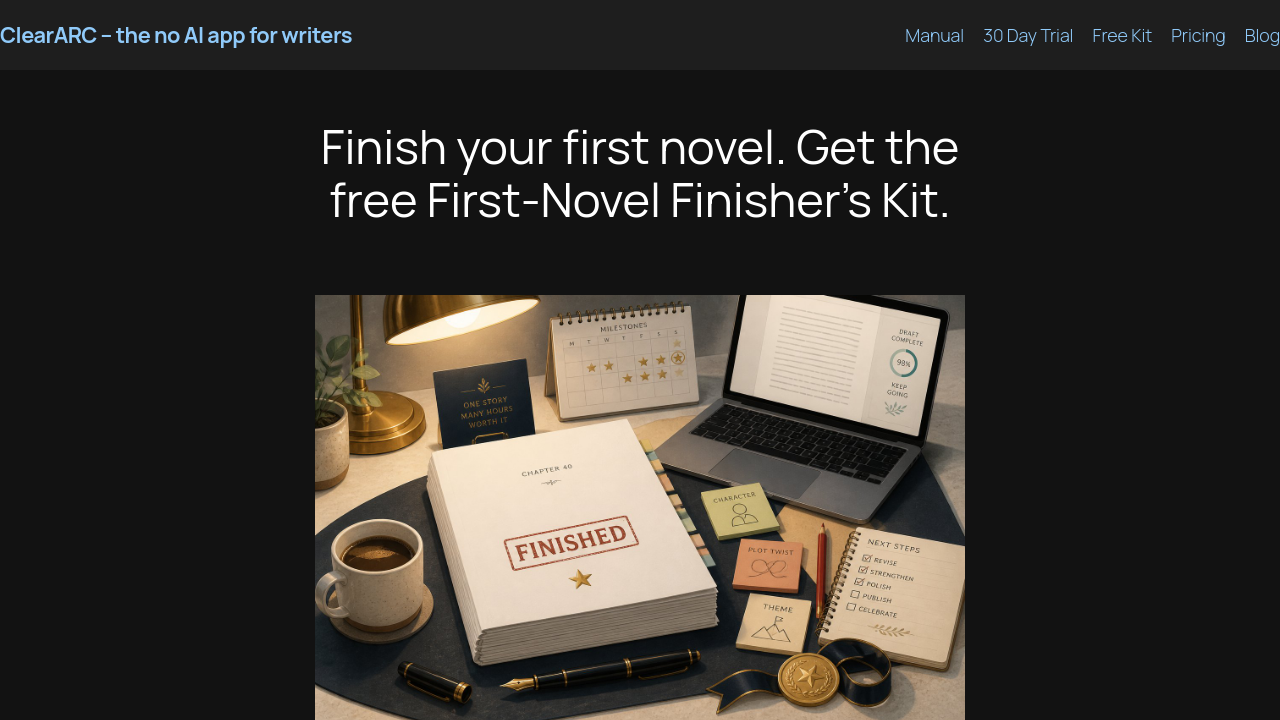
ClearARC is not a format. It is the desk the format sits on. It is a no AI writing tool that lets you build a book from scratch in one app: plan, plot, write, publish.
Here is why it ranks first for a novice. Its character planning view asks for two separate things: your protagonist’s internal starting position and their external goal presented through their character arc. Plenty of first drafts fail because the hero wants a thing but never changes as a person.
The character arc tracker (shown in both the timeline and the character editor) then plots that internal shift alongside your external plot points. Lay the twelve stages of the Hero’s Journey down as plot points, or sketch Vonnegut’s rises and falls, and the tracker shows where your character’s inner change lands against them. Any format, same anchor: change.
Practical details:
- Pricing: one version that includes everything for everyone, with no tiers to puzzle over.
- Cancelling: done directly with PayPal – you’re in control.
- Who made it: Quentin Pain.
- Who it suits: first-time and independent fiction novelists, with the United Kingdom as its home market.
Not ready for an app? The free First-Novel Finisher’s Kit includes a one-page plan, a chapter-planning grid, a seven-plots cheat sheet and a series of emails, and it needs only pen and paper.
Caveat: a tool cannot choose your structure for you. You still need to pick a format, which is what the next two picks are for.
Takeaway: whatever format you choose, outline the character’s inner shift beside the plot, or the plot will feel hollow.
2. Hero’s Journey: twelve stages for a clear route
The Hero’s Journey, sometimes called the universal storyline, breaks a story into stages, from the ordinary world through the call, the trials and the return. The Novel Factory lists it among its plot outline templates, under the name the Universal Storyline.
Why it scores well:
- Clarity: each stage tells you what should happen next, which is gold when the middle starts to sag.
- Workflow fit: twelve stages divide neatly into chapter clusters.
- Character focus: the return home implies change, though you must write that change in yourself.
If you want a deeper look at stage-led plotting, the seven-point story structure is a leaner cousin, and Save the Cat story structure offers another beat-by-beat route.
Caveat: for quieter literary stories, twelve fixed stages can feel formulaic. Use them as milestones, not a cage.
Takeaway: choose the Hero’s Journey if a blank middle frightens you more than a familiar shape does.
3. Kurt Vonnegut’s Shape of Stories: the emotional graph
Vonnegut’s Shape of Stories treats a novel as a line graph of the protagonist’s fortunes, rising and falling across the book. Novelist Caroline Hardaker’s first draft checklist describes it as a timeline of your protagonist’s emotional swoops, and argues that without an outline a narrative can fizzle into nothing.
Why it works for some first-timers:
- Flexibility: it fits literary fiction, thrillers and romance alike.
- Character focus: it is built on how the protagonist feels, so inner change is the whole point.
- Clarity: one sheet of paper, one pencil line.
Caveat: a graph tells you the mood of a stretch, not what happens in chapter seven. Pair it with a grid; this guide on how to build a chapter planning template shows the idea, and the chapter-planning grid in the free kit does the same job on paper.
Takeaway: draw the curve first, then fill the chapters beneath it.
How to choose
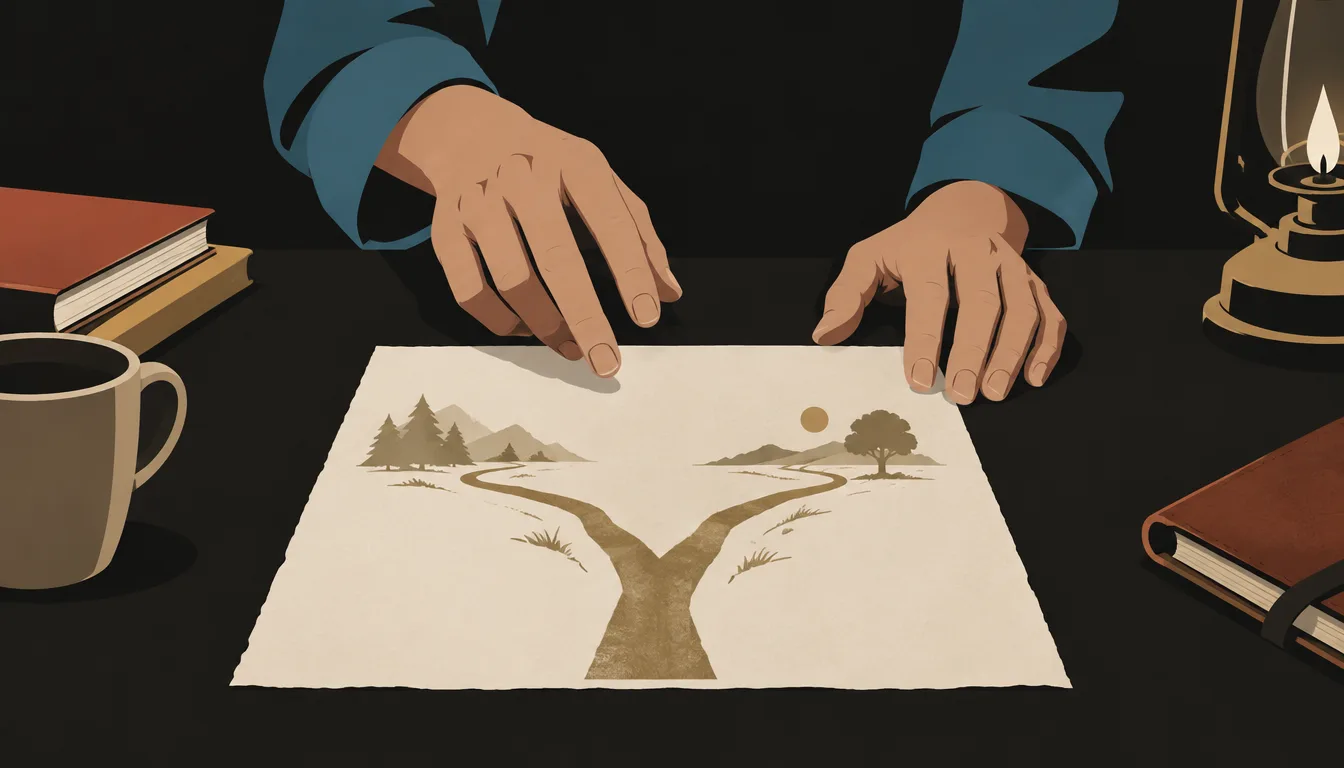
Start with the criterion that scares you most. If sequence is the problem, the Hero’s Journey gives the clearest route; if your story is about feeling, Vonnegut’s graph keeps you honest. Whichever you pick, track the character’s inner shift beside the plot. For a low-commitment start, print the free First-Novel Finisher’s Kit and plan on paper this weekend. Other formats exist, such as the three-act structure and the Snowflake Method; judge them by the same four tests. Unsure whether you plan at all? Read plotter vs pantser before committing.
FAQ: Frequently Asked Questions
What is the correct way to format a novel?
There is no single correct outline format. Choose one that fits how you think: stages for a clear sequence, a graph for emotional flow. Manuscript layout for submission is a separate question decided by publishers or agents.
What are the five parts of a novel?
A common five-part model is exposition, rising action, climax, falling action and resolution. It is one way to describe a story’s shape, and it maps loosely onto three-act and stage-based outlines alike.
How do you create an outline for a novel?
Summarise the story in one line, define the protagonist’s goal and inner change, choose a format, then break it into chapters. This guide to create a novel outline from scratch walks through it.
How to start writing a novel step by step?
Pin down your premise, sketch your main character’s starting point and goal, outline the major turns, then draft chapter by chapter. Set small milestones and keep moving forward rather than polishing early pages endlessly.
Do I need software to outline a novel?
No. Pen and paper work perfectly well, and the free First-Novel Finisher’s Kit needs nothing more. ClearARC is optional, useful if you want planning, character arcs and drafting together in one place.
Can I mix outline formats?
Yes. Many writers use stages for plot and a Vonnegut-style graph for emotion. Keep one format as the backbone so you are not juggling competing maps when you sit down to write.
Conclusion

Ranked by clarity, flexibility, character focus and workflow fit, the order holds: a planning tool that ties structure to character, then the Hero’s Journey for a clear route, then Vonnegut’s graph for feel. Start on paper with the free kit if you like. When you want everything in one place, the ClearARC writing app was built for first-time novelists like you. Choose a shape, sharpen the pencil, and finish the book.