
The three-act structure is the backbone of nearly every story you have loved, from the novels on your shelf to the films you have watched twice. Understanding it does not mean following a rigid formula. It means seeing how skilled storytellers move a character from a flawed starting point through struggle to hard-won change. ClearARC helps novelists map that journey before the first chapter is written.
What the Three-Act Structure Actually Is
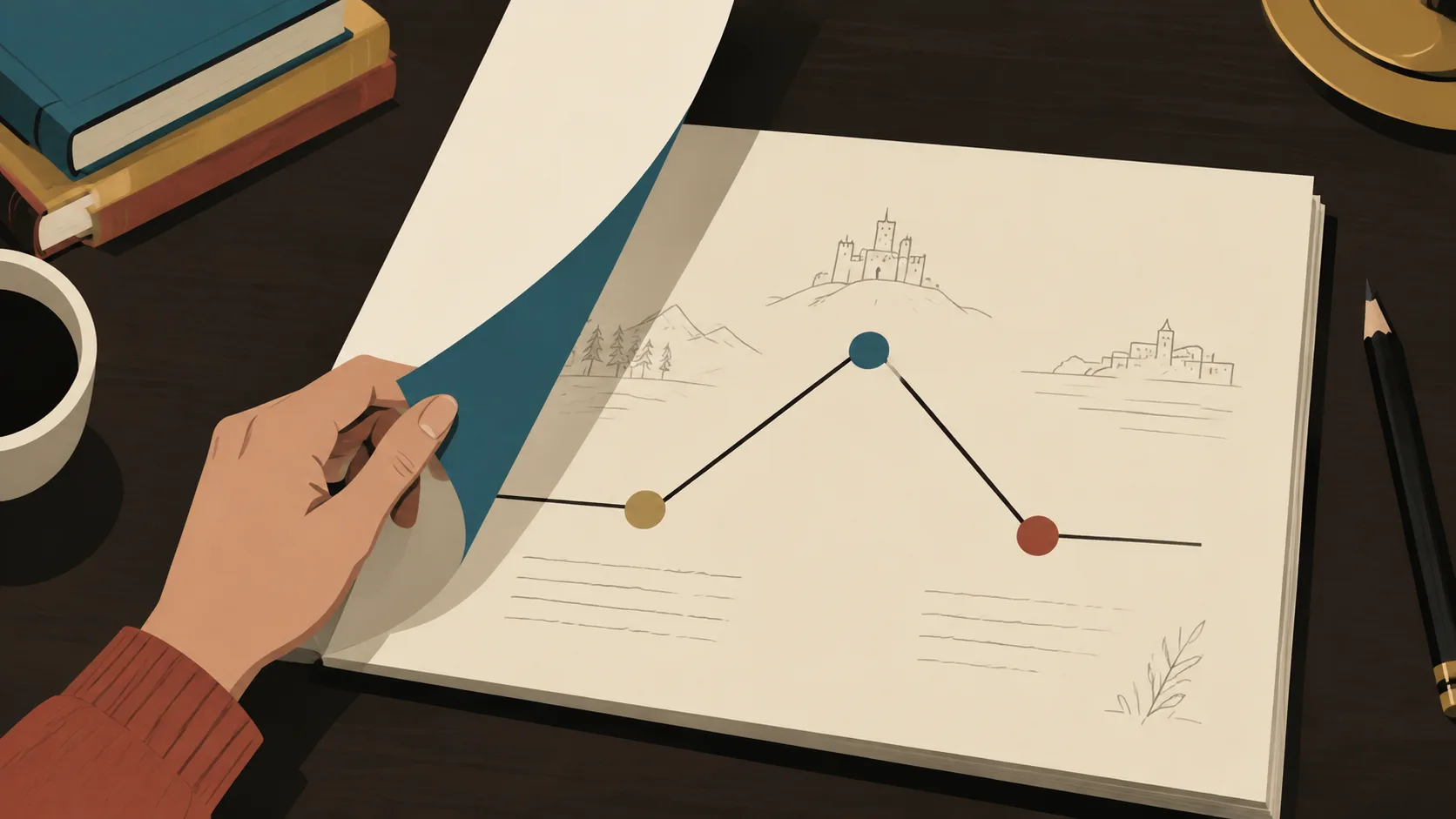
Before you can study examples, you need the shape in your head. The three-act structure is old, well-documented, and simpler than most craft books make it sound. Once it clicks, you will see it in almost every finished story on your shelf, and you will start to notice, in your own drafts, where the shape is missing.
The Core Idea in Plain English
Aristotle, writing in the fourth century B.C., argued that every story needs a beginning, a middle, and an end, and that the three must be linked by cause and effect rather than accident. Screenwriter Syd Field carried that idea into modern craft with his 1978 book Screenplay, labeling the three acts Setup, Confrontation, and Resolution. Novelist Mary Adkins offers a plainer version that many working writers prefer: Act 1 is “I have a problem,” Act 2 is “I think I know how to solve it,” and Act 3 is “I was wrong.” That last shift is what turns a sequence of events into a character arc worth reading.
The Key Structural Beats
Inside those three acts sit a small number of load-bearing beats. Act 1 closes with a plot point that locks the protagonist into the main conflict. Act 2 has a midpoint that raises the stakes or reframes the problem. Act 3 delivers a climax that answers the dramatic question, followed by a resolution that shows the character changed, hardened, or ruined. The scaffold is there to hold weight, not to cage you; writers who use a story structure template tend to subvert the beats on purpose rather than by accident.
Takeaway: Learn the three sentences and the four beats. That is enough theory to start reading published novels structurally.
Classic Novel Examples Worth Studying

Novels teach the structure differently than films do. The beats can be stretched across dozens of chapters, buried inside letters, or hidden in long stretches of interior thought. That is what makes them worth studying: if you can spot the shape under all that prose, you can build one under yours.
Pride and Prejudice: Internal Bias as the Real Antagonist
Austen’s Act 1 sets up Elizabeth Bennet’s wit and pride, Darcy’s cold reserve, and the Netherfield ball that first throws them together. Act 2 escalates through misunderstanding, Wickham’s charming lies, and Darcy’s disastrous first proposal, a midpoint that forces Elizabeth to reread every scene of the book so far. Act 3 arrives when both characters correct their perceptions and act on the corrected view. The true antagonist of the novel is internal bias, not any single character, which is why Austen still gets taught.
To Kill a Mockingbird: Moral Awakening in Three Movements
Harper Lee opens with Scout’s ordinary Maycomb life and the inciting decision of Atticus agreeing to defend Tom Robinson. Act 2 tracks the trial, the town’s slow turning, and the growing threat around the Finch home. Act 3 arrives with the verdict and Bob Ewell’s night-time attack, forcing Scout to a new understanding of her father, her neighbors, and Boo Radley. Notice how the protagonist’s core belief about people is tested at every beat rather than only at the end.
The Great Gatsby: A Dream That Cannot Survive Act 3
Fitzgerald uses Act 1 to establish Gatsby’s wealth, his parties, and his fixed longing for Daisy. Act 2 builds the affair and the escalating pressure with Tom. Act 3 collapses the dream through Myrtle’s death, Gatsby’s murder in the pool, and Nick’s quiet retreat from the East. The perspective shift here belongs to Nick and, more importantly, to the reader; the tragic version of Act 3 confirms rather than corrects the protagonist’s flaw, which is a structural twist worth studying on its own.
Takeaway: In each of these novels, the external plot events mirror the internal change. The midpoint is where the character either doubles down on a wrong belief or first glimpses the truth they will later have to face.
Film Examples That Make the Structure Visible

Films compress the same beats into roughly two hours, which makes them easier to diagram. Watching a familiar film with the acts in mind is one of the fastest ways to internalize pacing before you plan your own novel in depth.
Star Wars: A New Hope, The Archetypal Blueprint
Star Wars (1977) is the example most craft books reach for, and for good reason. Act 1 ends when Luke returns to the burned homestead and commits to leaving Tatooine with Obi-Wan. The Act 2 midpoint is the capture aboard the Death Star, where the mission changes shape. Act 3 opens with the rebel briefing and closes with Luke switching off his targeting computer and trusting the Force. Every structural beat lands cleanly, which is why the film is still taught in first-year screenwriting classes.
The Matrix, Setup, Red Pill, Confrontation
The Wachowskis open on Neo’s ordinary life as a bored programmer, then break Act 1 with Morpheus’s call and the red pill. Act 2 covers training, the oracle, betrayal by Cypher, and Morpheus’s capture, which functions as the midpoint reversal. Act 3 resolves with Neo accepting his identity and defeating Agent Smith in the hallway. The film is a clean example of how the inciting event forces a new identity rather than just a new goal.
Jurassic Park, Wonder Turns to Threat
Spielberg spends Act 1 selling the wonder of the park and quietly seeding the flaw: cost-cutting on security and one disgruntled programmer. Act 2 breaks the moment the fences fail, and the middle of the film is pure escalation as the group scatters. Act 3 compresses into raptors in the kitchen, a helicopter escape, and Hammond’s quiet admission that the dream is over. Films hit these marks near-precise page counts, with Act 1 typically closing around minute 25 of a 100-minute runtime; novels perform the same structural function across longer stretches.
Takeaway: The beats are about function, not format. An inciting incident that takes three chapters in a novel does the same structural work as a two-minute scene in a film.
How to Apply These Examples to Your Own Novel
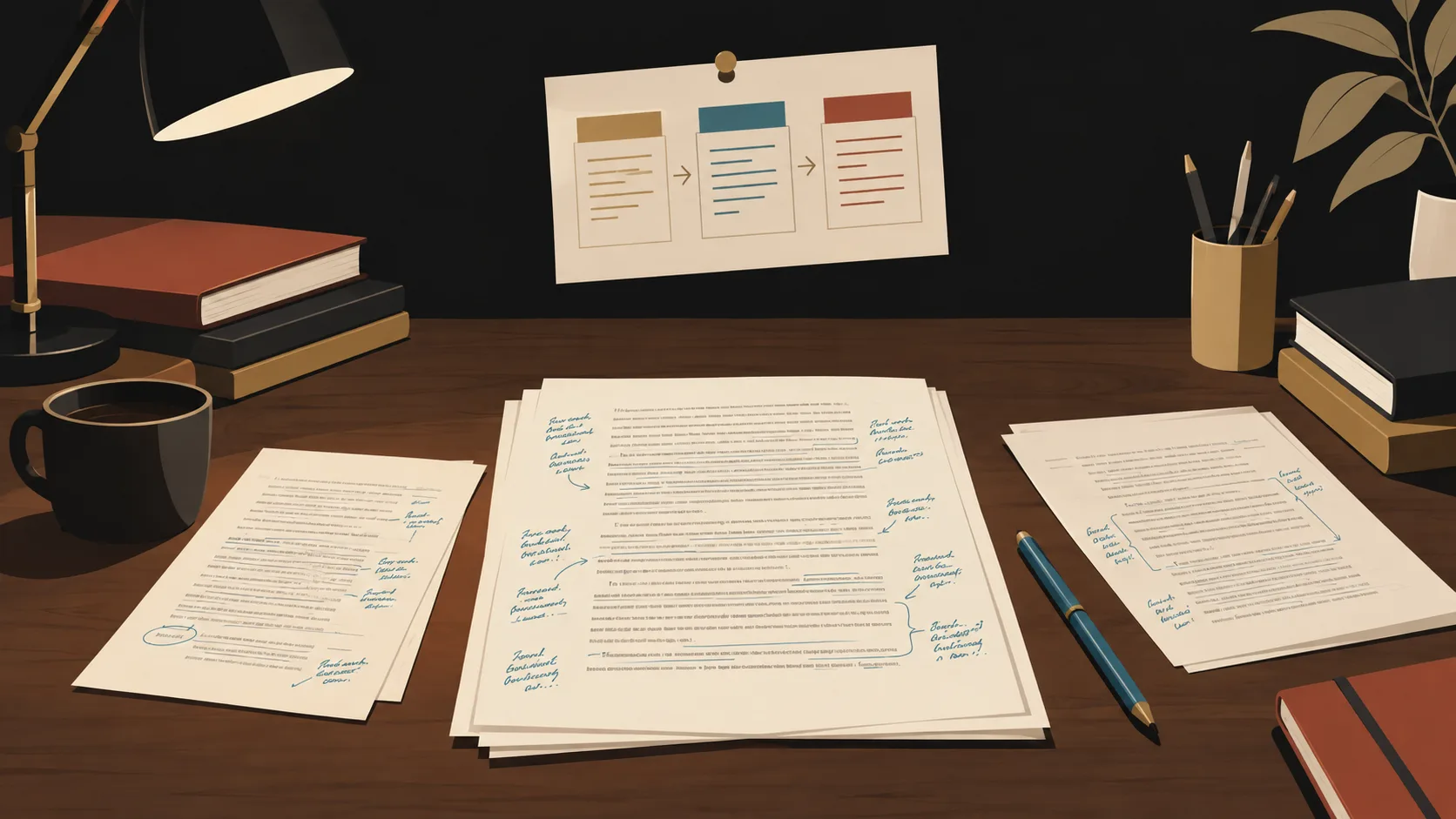
Studying is one thing. Sitting down at the desk with your own manuscript is another. The examples above are useful only if they change what you do with the pen tomorrow morning.
Finding Your Three Core Statements First
Before you open a new document, write three plain sentences on a single sheet of paper: one for Act 1 (“I have a problem”), one for Act 2 (“I think I know the answer”), one for Act 3 (“I was wrong”). If you cannot finish those sentences with specifics, the story is not ready to draft, and no amount of pantsing will rescue it. Writers who outline in broad strokes still leave room for discovery inside each act.
Mapping Beats Without Losing the Story
The inciting incident should arrive within roughly the first ten to fifteen percent of the manuscript, late enough that the reader cares about the world being disrupted, early enough that momentum builds. Act 2 is where most first novels stall; without a midpoint that raises stakes or shifts the protagonist’s approach, the middle drifts into loosely related scenes rather than rising confrontation. The climax of Act 3 should answer the dramatic question raised at the end of Act 1. If you cannot state that question in one sentence, pause and clarify before you write another chapter.
Takeaway: Three sentences on paper today can save you from writing sixty thousand words and discovering the story has no third act.
Common Misconceptions About Three-Act Structure
Every craft tool attracts myths. The three-act structure has attracted more than most, usually from writers who tried it once, felt boxed in, and blamed the scaffold rather than the assembly.
Misconception: It Makes Every Story Feel the Same
Reality: The structure describes the shape of cause and effect, not tone, genre, or voice. The Great Gatsby and a supermarket thriller both use it and sound nothing alike. What varies is prose, pacing, and the emotional weight of the subplot layer, not the underlying arc.
Misconception: Pantsers Cannot Use It
Reality: Discovery writers can use the framework in reverse. After a messy first draft, map what you wrote onto the three acts and look for the gaps; it reveals missing beats faster than another read-through. Even committed pantsers benefit from a light structural check between drafts.
Misconception: It Only Works for Genre Fiction
Reality: Literary fiction frequently uses the structure while appearing to subvert it. The resolution may be ambiguous, the protagonist may fail, but the arc of change, or the refusal to change, still follows the same underlying logic. Aristotle’s Poetics was rooted in Greek tragedy and comedy from the fourth century B.C., and parallel structures appear across many storytelling traditions, from folk tales to modern autofiction; you can read a fuller history at Writers.com’s three-act overview.
Takeaway: Writers who dismiss the structure often discover, after struggling through a broken second act, that the beats they resisted were the ones the story was missing.
Conclusion
The three-act structure is not a formula to follow blindly. It is a lens for understanding why stories work, and why yours might not yet. Study the classics on your shelf, watch a familiar film with a pen in hand, and let the rhythm of Setup, Confrontation, and Resolution become instinct rather than calculation. A clear structural plan before drafting saves months of revision on the far side. If you want a working companion for that planning stage, ClearARC’s novel planning workflow is built for exactly this kind of quiet, deliberate craft.
Frequently Asked Questions
What are the three acts in a three-act structure?
The three acts are Setup, Confrontation, and Resolution, labels popularized by Syd Field in 1978. They correspond to the beginning, middle, and end that Aristotle described, connected by cause-and-effect beats that push the protagonist through change.
What is a good example of three-act structure in a novel?
Pride and Prejudice is one of the clearest. Act 1 introduces Elizabeth, Darcy, and the Netherfield ball. Act 2 escalates through Wickham’s lies and the failed proposal. Act 3 resolves when both characters correct their earlier misjudgments.
How long should each act be in a novel?
A common rule of thumb is roughly 25 percent for Act 1, 50 percent for Act 2, and 25 percent for Act 3. Treat those numbers as targets, not laws; the beats matter more than exact word counts.
What is the difference between the inciting incident and the first plot point?
The inciting incident is the disruption that hooks the reader, usually early in Act 1. The first plot point is the later, larger commitment that locks the protagonist into Act 2. In Star Wars, the message from Leia is the inciting incident; burning the homestead is the plot point.
Can literary fiction use three-act structure?
Yes, and much of it does. The Great Gatsby follows the shape while ending in tragedy rather than triumph. Literary fiction often disguises the beats with interiority and ambiguity, but the underlying cause-and-effect arc is usually still there on close reading.
Do I need to outline my novel using three-act structure before I start writing?
You do not have to, but you should at least write the three core sentences (“I have a problem,” “I think I know the answer,” “I was wrong”) before drafting. That much scaffolding takes ten minutes and protects months of work.
What happens in the middle of Act 2 and why does it matter?
The midpoint is where the protagonist either commits harder to a wrong belief or first glimpses the truth they will have to accept. It matters because without it, Act 2 becomes a sequence of loosely related scenes rather than an escalating confrontation.
Is three-act structure the same as the hero’s journey?
No. The hero’s journey, from Joseph Campbell, is a specific pattern of stages within a mythic arc. The three-act structure is a broader scaffold that can hold the hero’s journey, a domestic drama, or a quiet literary novel with equal ease.